Cast: Hannah Einbinder, Gillian Anderson, Jack Haven, Patrick Fischler
Genre: Drama, Horror, Romance, Thriller
Director: Jane Schoenbrun
In Irish Cinemas: 21st August 2026
Jane Schoenbrun has built a distinctive body of work around a simple but powerful idea: the things we become obsessed with as teenagers can shape our identities just as profoundly as the people around us. Their films often treat pop culture not merely as entertainment, but as a kind of shelter — a private language that can make outsiders feel understood. That sensibility ran through We’re All Going to the World’s Fair, their unsettling 2021 debut about a teenager immersed in an online challenge, and became even more pronounced in I Saw the TV Glow, the 2024 story of two young people whose friendship grows around an uncanny television show. Beneath its supernatural surface, that film became an affecting exploration of identity, repression and the experience of being transgender.
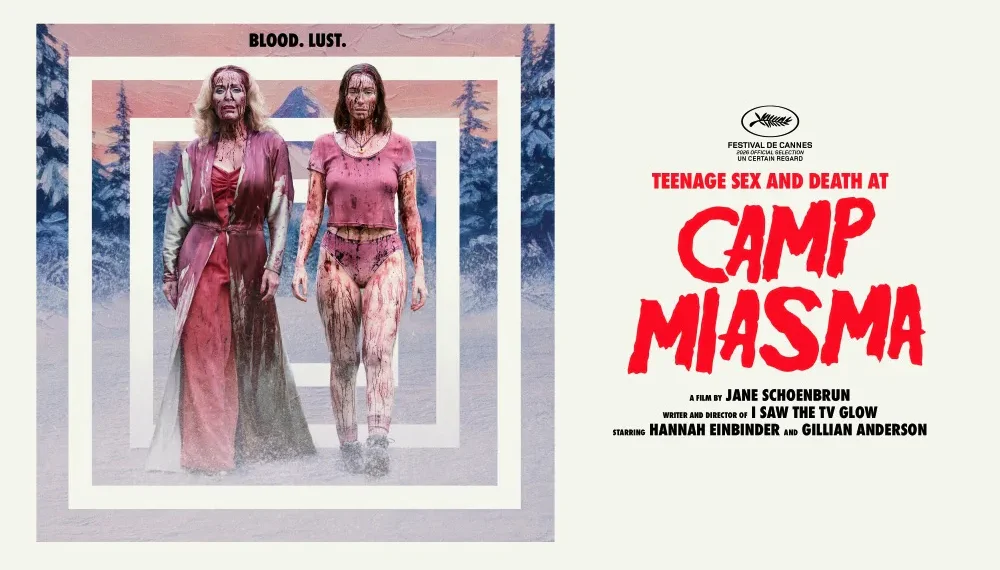
With Teenage Sex and Death at Camp Miasma, Schoenbrun turns their attention toward horror fandom itself. The film takes its name from a fictional 1980s slasher series, Camp Miasma, whose popularity has produced a long succession of increasingly desperate sequels. Before the story even begins, Schoenbrun delivers a rapid-fire history of the franchise through its opening credits. It’s both a parody of horror mythology and an affectionate tribute to the obsessive detail with which fans build entire universes around their favorite movies.
At the center of the story is Kris Williams, played by Hannah Einbinder, a 29-year-old filmmaker attempting to revive Camp Miasma for a new audience. Her biggest challenge is convincing Billy Presley, the actress who appeared in the original film, to return. Billy has disappeared from public life and now lives alone in a secluded cabin in the Pacific Northwest, on the same property where the original movie was filmed. Their paths cross at a cinema screening, where Kris is watching the old film and Billy unexpectedly appears. Played by Gillian Anderson, Billy carries herself like a faded Hollywood legend — mysterious, glamorous and considerably less interested in film theory than Kris expects.
The movie gets plenty of mileage from the absurdities of modern filmmaking. Schoenbrun pokes fun at Hollywood’s endless appetite for remakes, sequels and origin stories, while also skewering the industry’s tendency to turn trauma into a narrative shortcut and social awareness into a marketing strategy. Kris approaches Camp Miasma with the vocabulary of contemporary queer criticism, particularly because the original film’s depiction of its gender-fluid killer has attracted accusations of transphobia. Her proposed remake is intended, in part, to reclaim and reinterpret that legacy.
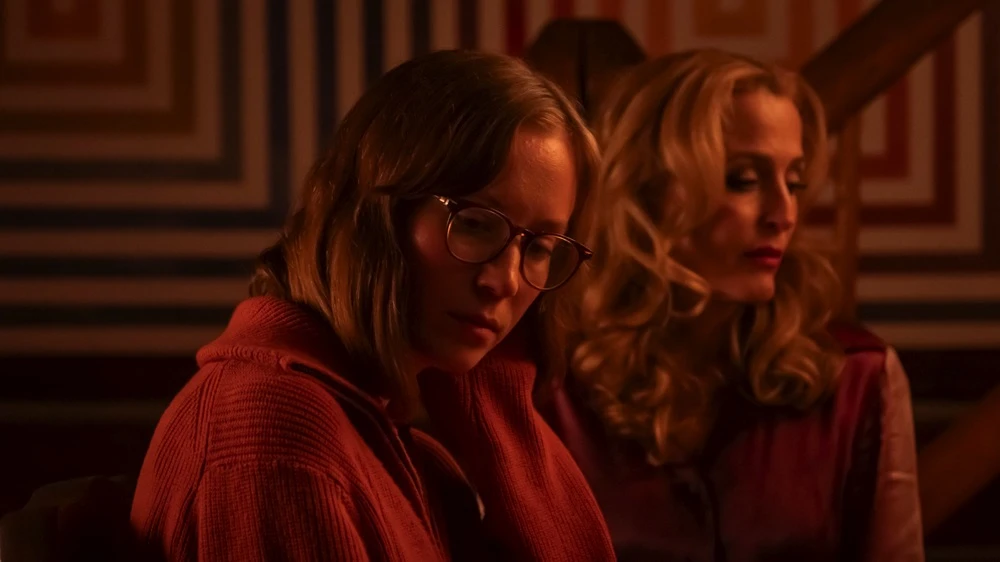
Billy, however, isn’t convinced that every horror movie needs an academic explanation. She repeatedly challenges Kris’s tendency to intellectualize the material, arguing that the fundamental appeal of sex and horror is physical and instinctive. That tension becomes central to the film. Schoenbrun is interested in why the same images can provoke both attraction and fear — and what happens when those supposedly opposite impulses begin to overlap.
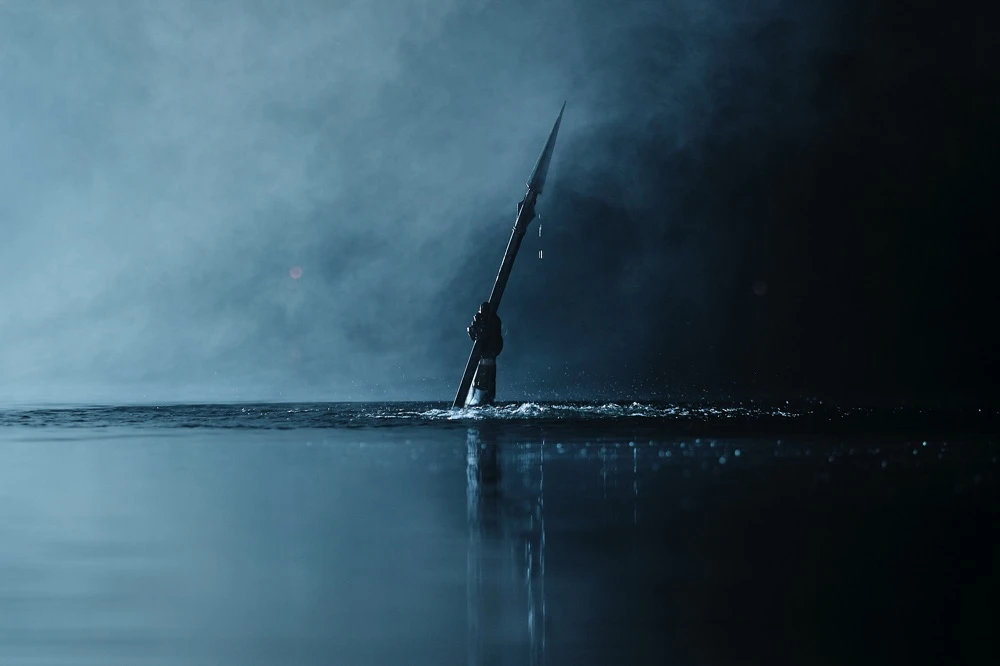
That idea naturally carries into Kris and Billy’s relationship. Their attraction develops gradually, with the film finding humor in their encounters while also allowing their intimacy to become unexpectedly sincere. Anderson and Einbinder have an easy chemistry, and their characters’ relationship eventually becomes more than a device for the satire. Both women have complicated histories with sex, desire and their own bodies, and their growing closeness gives them a space in which those anxieties can be confronted rather than hidden.
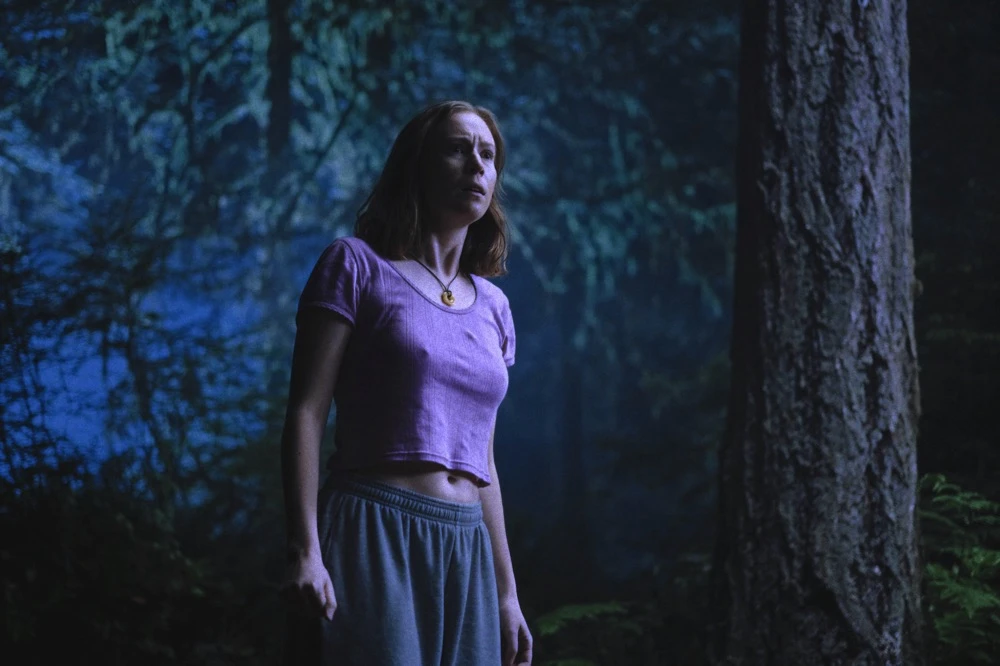
For Kris especially, that means looking directly at the darker fantasies that helped make Camp Miasma meaningful to her. Schoenbrun finds an intriguing contradiction in this: the horror that once frightened or excited Kris can ultimately become a place where she feels most secure. In that sense, the film understands something essential about horror fandom. Sometimes the frightening images we seek out are frightening precisely because they allow us to process feelings that are harder to face in ordinary life.
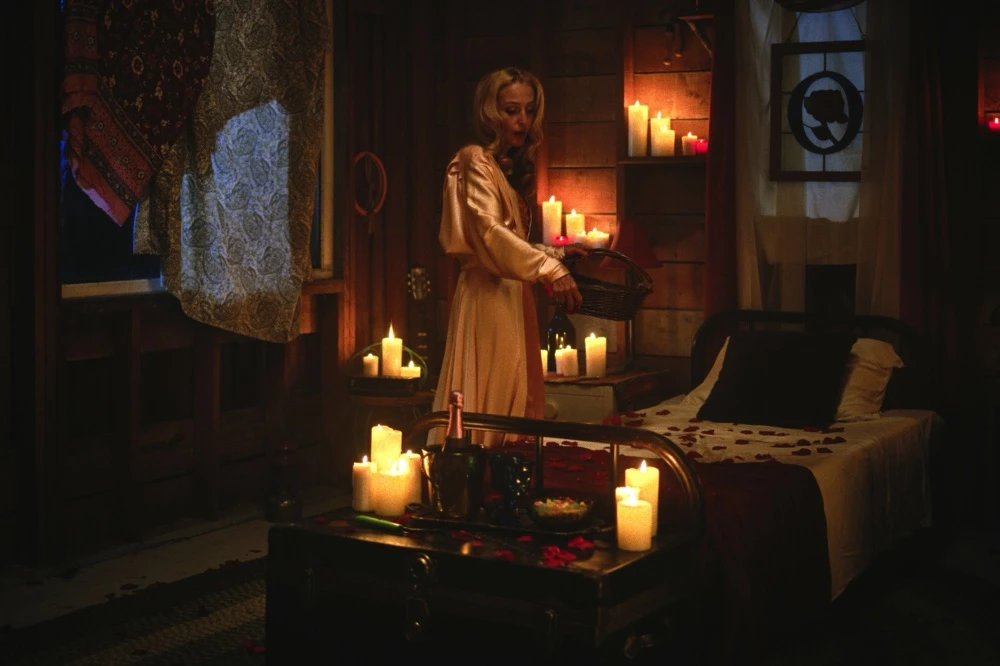
Schoenbrun’s filmmaking is ambitious enough to move constantly between ideas. One scene may be dissecting the mechanics of genre cinema, while the next slips into an eerie, dreamlike atmosphere reminiscent of David Lynch. The sheer number of concepts occasionally makes the film feel overextended, and a particularly elaborate massacre — accompanied by a recognizable 1990s pop song — may test the patience of viewers who are more interested in Kris and Billy than in spectacle.
For me, those two characters are where the movie is most compelling. Schoenbrun’s affection for them is unmistakable, and Einbinder and Anderson give the film an emotional center beneath all its intellectual games. Teenage Sex and Death at Camp Miasma may be fascinated by horror franchises, fandom and the machinery of contemporary cinema, but ultimately its most interesting subject is something much more personal: the strange, sometimes embarrassing things that help us discover who we are.
Overall: 6.5/10
Movie Reviewer