Cast: H.E.R., Liza Soberano, Dave Franco, Jenny Slate, Manny Jacinto, Dolly de Leon, Jo Koy, Ronny Chieng, Lea Salonga
Genre: Animation, Children
Directors: Joel Crawford and Januel Mercado
In Irish Cinemas: 16th October 2026
‘Forgotten Island’ Review: A Magical Filipino Adventure About Growing Up and Letting Go.
DreamWorks Animation blends Filipino folklore, dazzling visuals, and heartfelt storytelling in an imaginative adventure led by H.E.R., Liza Soberano, and Dave Franco.
Some animated films entertain through spectacle, while others leave a lasting impression through the emotions they stir. Forgotten Island manages to accomplish both. Directed by Joel Crawford and Januel P. Mercado, the creative team behind Puss in Boots: The Last Wish, this animated fantasy combines supernatural adventure with a deeply personal story about friendship, change, and the difficult process of moving forward. Its greatest strength, however, lies in the way it brings Filipino culture and mythology to the forefront of a story that feels both universal and refreshingly distinctive.
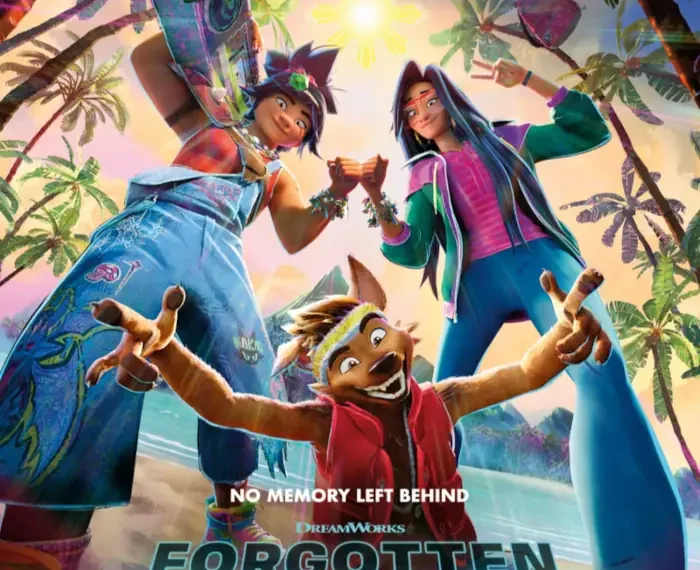
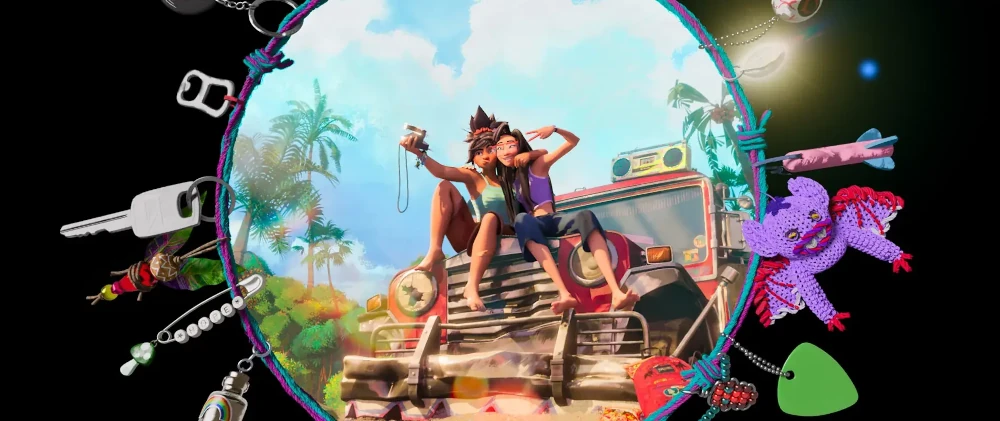
At the center of the film are Josephine “Jo” Yuson, voiced by H.E.R., and Raissa Molina, played by Liza Soberano. The two girls form a close bond after an encounter at school, discovering in each other a companion for their dreams, mischief, and imaginative adventures. Jo is energetic and impulsive, with a fascination for the legends passed down by her grandmother, Lola, voiced by Dolly de Leon. Having grown up without her father, she finds comfort in these stories, particularly those surrounding Nakali, a mysterious island inhabited by extraordinary beings.
As children, Jo and Raissa build a shared fantasy world inspired by these tales. But the carefree days of childhood eventually give way to more complicated realities. With Raissa preparing to leave the Philippines to attend Caltech in the United States, their friendship faces a turning point. Jo struggles to accept that the person who has been her constant companion may soon become a distant presence in her life. The death of her beloved grandmother makes that uncertainty even more difficult to bear, forcing her to confront the possibility of losing another important connection.
Determined to preserve their bond, Jo persuades Raissa to embark on one final adventure before her departure. What begins as a nostalgic night together takes an unexpected turn when they discover a magical sand dollar that transports them to Nakali. The island they once imagined as children is no longer merely a product of their creativity. It is a living, unpredictable world filled with creatures drawn from Filipino folklore.
Their arrival is anything but straightforward. The girls awaken on a beach with no clear recollection of how they got there, the magical object that brought them across worlds has disappeared, and Raissa has mysteriously developed wings. They also discover matching tattoos connected to Raww, a peculiar were-aspin voiced by Dave Franco. Part dog and part human, Raww becomes their unlikely guide through the island’s strange landscape.
Their search for a way home leads them to Batiba, a feline supernatural being voiced by Jenny Slate, who offers to help them return to their world in exchange for the childhood bracelets that symbolize their friendship. Unwilling to surrender such meaningful keepsakes, Jo and Raissa decide to find the missing sand dollar themselves. With Raww accompanying them, they journey across Nakali, encountering an assortment of bizarre, enchanting, and occasionally dangerous inhabitants along the way. Their mission becomes increasingly urgent as Raissa’s scheduled departure approaches, turning an extraordinary adventure into a race against time.
Although the premise follows a recognizable fantasy formula, the filmmakers give it a distinctive identity through their cultural influences. Rather than relying solely on familiar fairy-tale creatures and established fantasy conventions, Forgotten Island draws extensively from Filipino mythology, introducing audiences to supernatural beings and traditions that rarely receive this kind of attention in mainstream American animation.
This cultural specificity is one of the film’s most compelling qualities. The mythology is not simply decorative material added to make the setting appear exotic; it shapes the island’s atmosphere, its inhabitants, and the challenges the protagonists must overcome. The filmmakers approach folklore with a playful imagination, finding humor in unexpected places while allowing moments of genuine danger and emotional weight to emerge naturally.
Raww is an especially effective example of this approach. His connection to the aspin, the beloved native dog associated with the streets and communities of the Philippines, gives the character a cultural grounding beyond his supernatural appearance. Other inhabitants are considerably more eccentric. Mermahn, a self-important merman, brings an absurd theatricality to the proceedings, while the diminutive Truffle Wuffle, voiced by Ronny Chieng, offers an appealing burst of comic energy.
The island is also home to creatures that are far less welcoming. Among them is Manang, voiced by Lea Salonga, a terrifying, vampire-like figure whose relentless pursuit of Jo and Raissa introduces a genuine sense of peril. Her presence ensures that the film never becomes too comfortable in its whimsical surroundings. Nakali can be beautiful and amusing, but it is also a place where the consequences of poor decisions can be frighteningly real.
That tonal variety may surprise viewers expecting a straightforward children’s cartoon. The film occasionally ventures into deliberately crude humor, including a particularly memorable digestive gag, while some of its monsters are genuinely unsettling. Its PG rating seems appropriate for a production that balances lighthearted comedy with frightening imagery and mature emotional themes. Younger viewers may delight in the cuddly inhabitants and colorful landscapes, but some scenes could be overwhelming for particularly sensitive children.
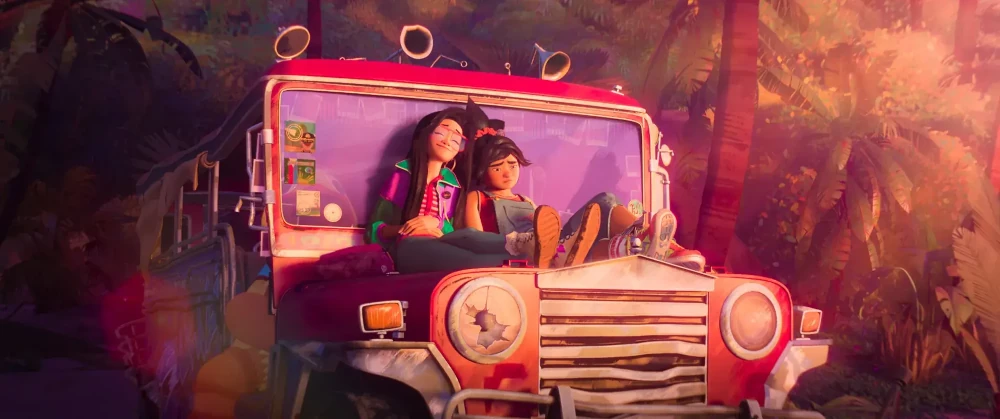
Importantly, the film’s darker moments serve a larger purpose. Beneath the supernatural encounters is a story about grief, separation, and the realization that love cannot always prevent change. Jo’s instinct is to resist anything that threatens the life she knows. Her determination to keep Raissa close is understandable, but it also prevents her from recognizing that friendship must sometimes evolve rather than remain frozen in childhood.
Raissa faces a different challenge. Her decision to pursue an education abroad has been interpreted as an acceptance of her parents’ ambitions, yet the truth is more complicated. She has personal reasons for choosing this path, but her failure to communicate them honestly creates distance between her and Jo. Their conflict is therefore not simply about one friend leaving and the other being abandoned. It reflects the misunderstandings that can develop when two people care deeply about each other but struggle to express what they need.
This emotional foundation gives the fantasy its meaning. The island’s dangers and strange inhabitants repeatedly push the girls into situations that test their trust, forcing them to reconsider what their friendship actually requires. The film understands that growing up does not necessarily mean leaving people behind. Sometimes, it means learning to accept that someone can remain important to you without staying beside you every day.
The themes of sacrifice and mortality also lend the adventure a surprising maturity. Lola’s influence remains central to Jo’s journey, even after her death, as the stories she shared become a source of strength and understanding. The film treats grief as something that cannot simply be overcome through courage or a triumphant confrontation with a villain. Instead, it suggests that accepting loss is part of learning how to cherish the relationships that remain.
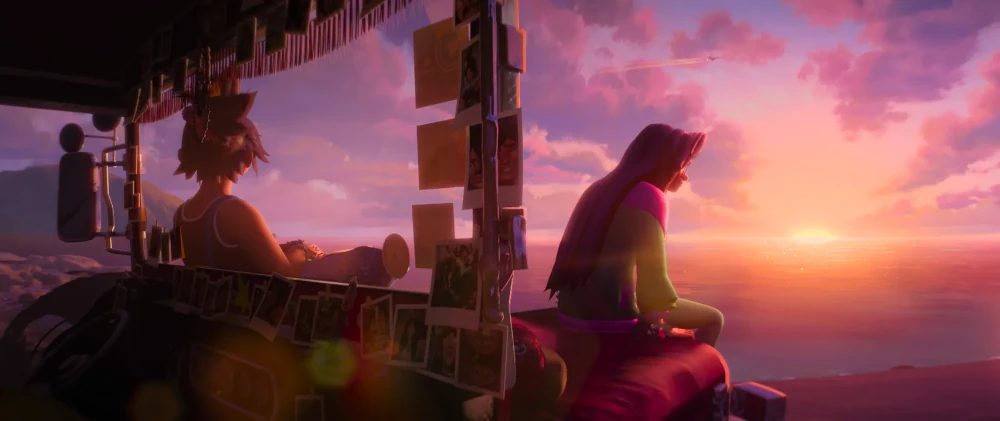
Visually, Forgotten Island is equally ambitious. The animation combines the smooth precision of computer-generated imagery with the expressive qualities of hand-drawn illustration. Fine lines, textured surfaces, and carefully layered details give the environments an almost storybook quality, while the changing landscapes ensure that each stage of the journey feels distinct.
The result is a film that rewards attention to its visual composition. Its creatures possess individual personalities even before they speak, and the contrast between the island’s lush natural beauty and its more menacing corners creates a world that feels alive. Some of the mythology is introduced so quickly that viewers unfamiliar with Filipino folklore may occasionally struggle to keep track of the different beings and their significance. A little more time devoted to explaining certain elements would have strengthened the storytelling. Nevertheless, the sheer inventiveness of the imagery makes exploration enjoyable even when the lore becomes difficult to follow.
The music further enhances the film’s sense of nostalgia and adventure. Nathan Matthew David’s score supports the emotional passages without overwhelming them, while the inclusion of familiar songs from the 1980s and 1990s establishes a connection to the girls’ childhood memories. INXS’s “Never Tear Us Apart” is particularly meaningful, reinforcing the story’s central concern with the bonds that persist through periods of separation and uncertainty.
The vocal performances are another major asset. H.E.R. gives Jo an appealing combination of restless energy, vulnerability, and stubborn determination. Soberano complements her with a more measured portrayal of Raissa, making the contrast between the two characters feel natural rather than exaggerated. Their performances establish a believable friendship, allowing the emotional stakes to remain convincing even when the plot becomes increasingly fantastical.
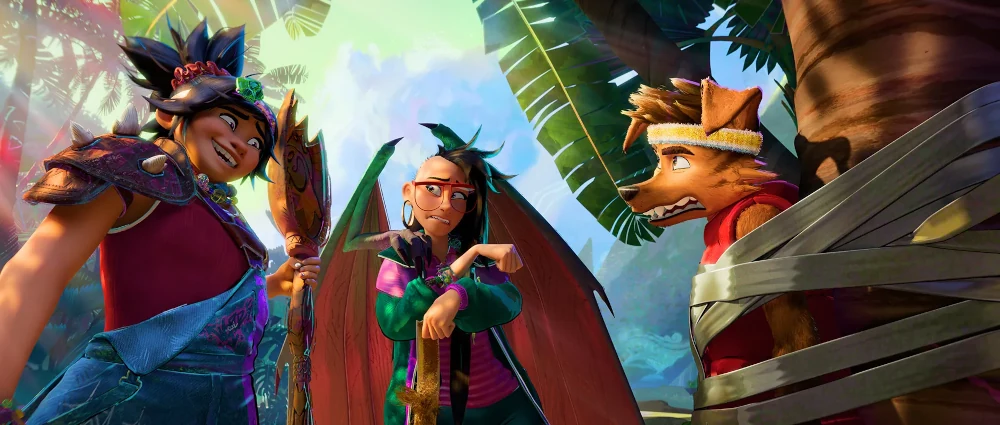
Franco brings an endearing awkwardness to Raww, whose unconventional mannerisms make him an entertaining companion for the protagonists. Slate gives Batiba an intriguing mixture of sweetness and menace, while Jacinto makes a memorable impression as a baby demon. Salonga’s performance adds a particularly ominous presence to Manang, and the supporting cast contributes to the impression that Nakali exists independently of the girls’ journey.
Not every narrative thread receives a definitive conclusion. Questions about Jo’s absent father and Manang’s underlying resentment remain unanswered, leaving room for interpretation and possibly future storytelling. These omissions may frustrate viewers who prefer every mystery to be resolved, but they do little to undermine the emotional completeness of the central relationship.
Ultimately, Forgotten Island succeeds because it understands that its magical setting is only part of the attraction. The creatures, supernatural dangers, and spectacular landscapes provide the excitement, while the friendship between Jo and Raissa gives the adventure its emotional purpose. Its occasional pacing issues and dense mythology are outweighed by the originality of its cultural influences, the strength of its performances, and its willingness to address the uncomfortable realities of growing older.
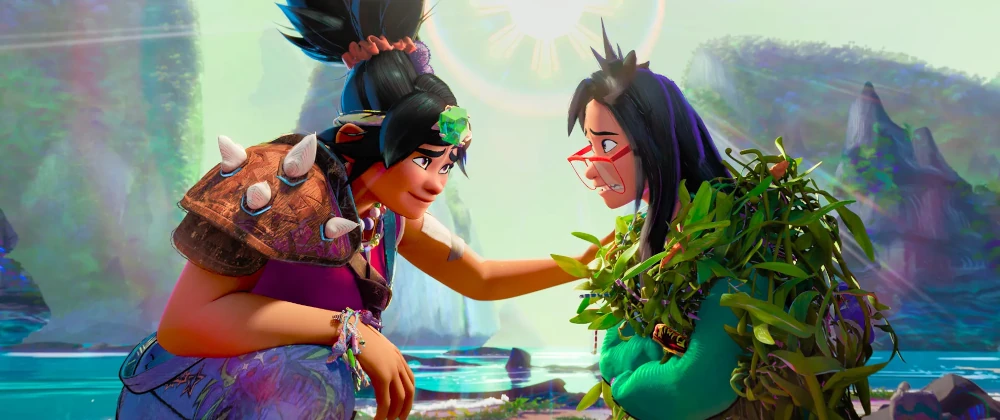
In an animation landscape filled with familiar formulas, the film offers something genuinely distinctive: a fantasy shaped by Filipino traditions and grounded in an experience audiences everywhere can recognize. Friendships change, childhood eventually ends, and saying goodbye is rarely easy. But the memories created along the way can become part of what helps us move forward.
Forgotten Island is a heartfelt, visually imaginative, and culturally rich adventure that delivers more than a collection of supernatural encounters. Its most meaningful discovery is that holding on to a friendship does not mean refusing to let life change. It means finding the courage to embrace what comes next while remembering what made the relationship special in the first place.
A charming and emotionally resonant animated adventure that pairs Filipino folklore with a thoughtful coming-of-age story. Best experienced with someone whose friendship has helped shape your own journey.
Overall: 7/10

Movie Reviewer