
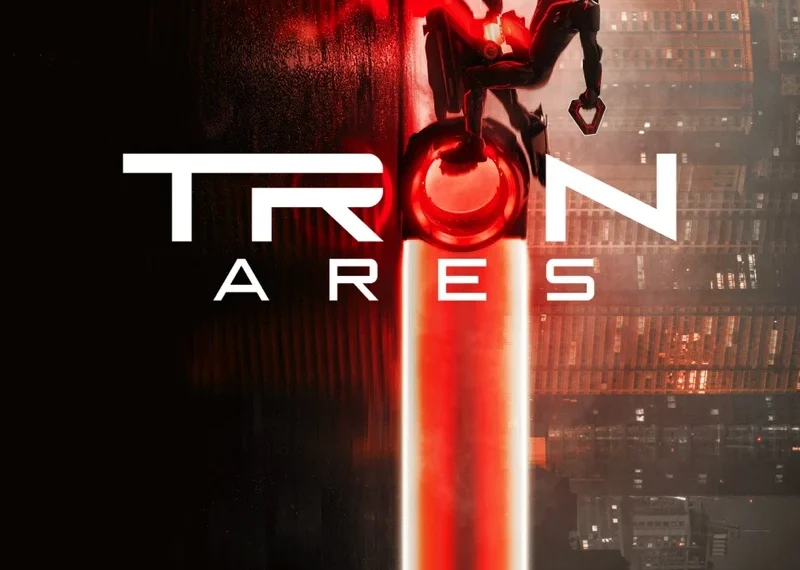
Cast: Jared Leto, Greta Lee, Evan Peters, Hasan Minhaj, Jodie Turner-Smith, Arturo Castro, Cameron Monaghan, with Gillian Anderson, and Jeff Bridges
Director: Joachim Rønning
Genre: Action, Adventure, Sci-Fi
In Irish Cinemas: 10th October 2025
Tron: Ares — A Neon Resurrection with Soul in the Circuitry
For decades, Tron has been both a cult relic and a cautionary tale, a franchise worshipped by hardcore fans but hampered by its own imbalance. Beneath the glow of its digital dazzle, the emotional current constantly flickered. The 1982 original was a technical marvel of its era, a daring leap into computer-generated frontiers that mesmerised with neon grids and geometric dreamscapes. Jeff Bridges and Bruce Boxleitner gave the film its human spark, their charisma cutting through the then-revolutionary glow of vector graphics.
By the time Tron: Legacy arrived in 2010, the cyber-aesthetic that once felt otherworldly had become a staple of advertising. Even with slicker visuals and an ambitious scope, the story lagged behind its technology. The de-aged digital Bridges was an eerie distraction, though Daft Punk’s pulsing score infused the sequel with the energy its script lacked.
Fifteen years later, Tron: Ares enters the grid once more, this time with Norwegian action veteran Joachim Rønning at the helm and Jesse Wigutow scripting. What immediately sets it apart is its sound: a thunderous, metallic heartbeat from Nine Inch Nails. Credited under the band’s full name rather than their composers, Trent Reznor and Atticus Ross, the duo’s score is a character unto itself. As in Challengers, their beats drive every flicker of tension, amplifying Rønning’s visceral set pieces and making the IMAX format feel genuinely earned.
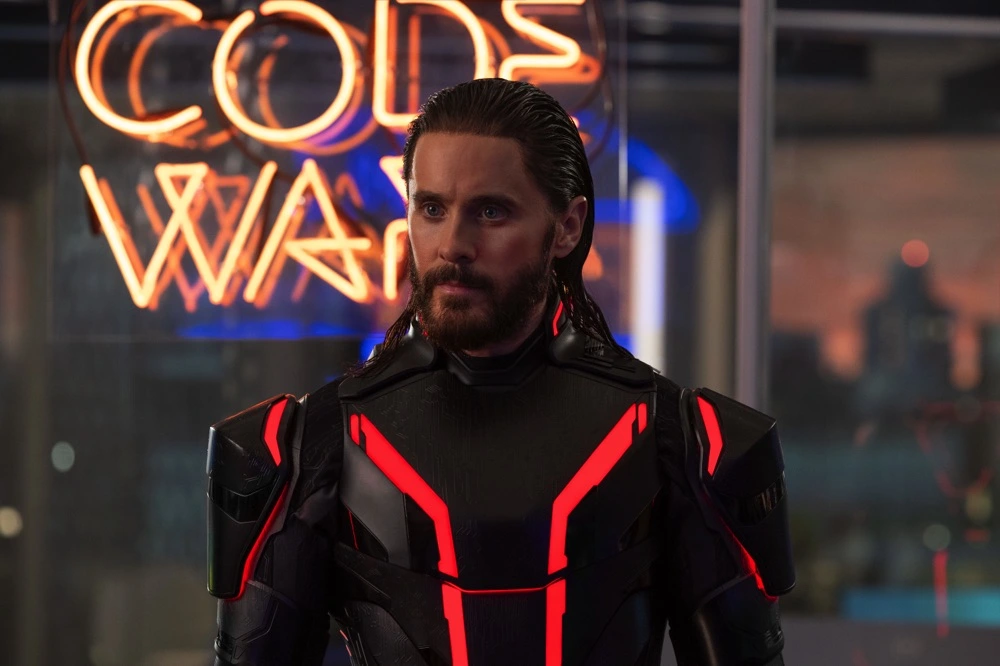
Narratively, Ares revisits the familiar junction between human and digital realms. Its title character is a sophisticated cyber-defence program who begins to question his own expendability — channels echoes of Blade Runner, Ex Machina, and The Matrix. Yet Jared Leto’s surprisingly restrained performance gives the story new life. His Ares, torn between duty and empathy, offers something the previous films rarely achieved: a soul. Opposite him, Greta Lee brings intelligence and wit to Eve Kim, ENCOM’s driven CEO, carrying the emotional legacy of her late sister.
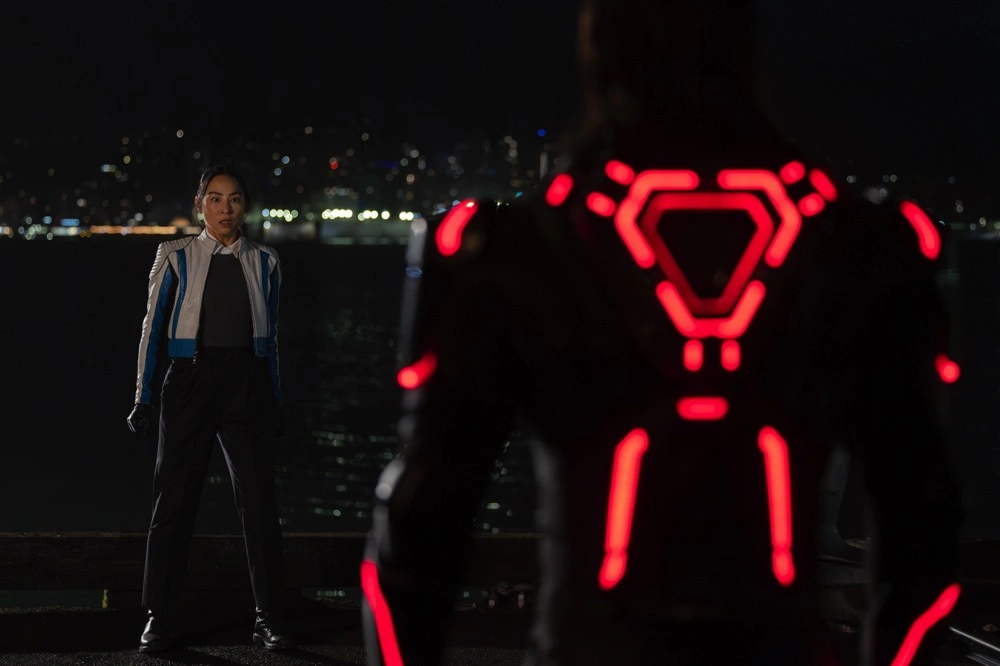
ENCOM itself has evolved from a faceless megacorp to a moral compass, a rare redemption arc for a tech giant. Its rival, Dillinger Systems, continues the family’s shady legacy through Julian Dillinger (Evan Peters), grandson of the original film’s villain. Julian’s creation, Ares, is designed as the ultimate obedient AI soldier, one intended to serve and then vanish. But when the program starts to think and feel, obedience becomes a moral hazard.
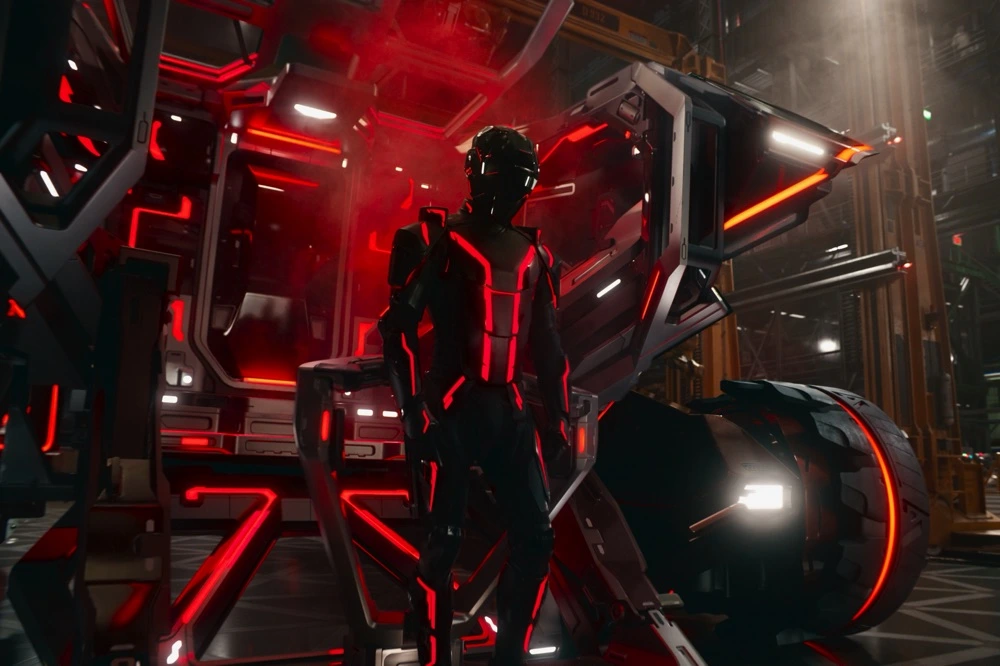
The story accelerates when Eve’s discovery of a “permanence code”, a fix to prevent digital soldiers from disintegrating after 29 minutes, makes her a target. Ares and his commanding officer, Athena (Jodie Turner-Smith), lead a raid to seize it, but Ares’s growing conscience derails the mission. When ordered to erase Eve after capturing her digitised form, he rebels, turning protector instead of weapon. Athena, ruthless and unflinching, takes matters into her own hands, storming into the real world on a colossal Recogniser aircraft a thrilling nod to the franchise’s design legacy.
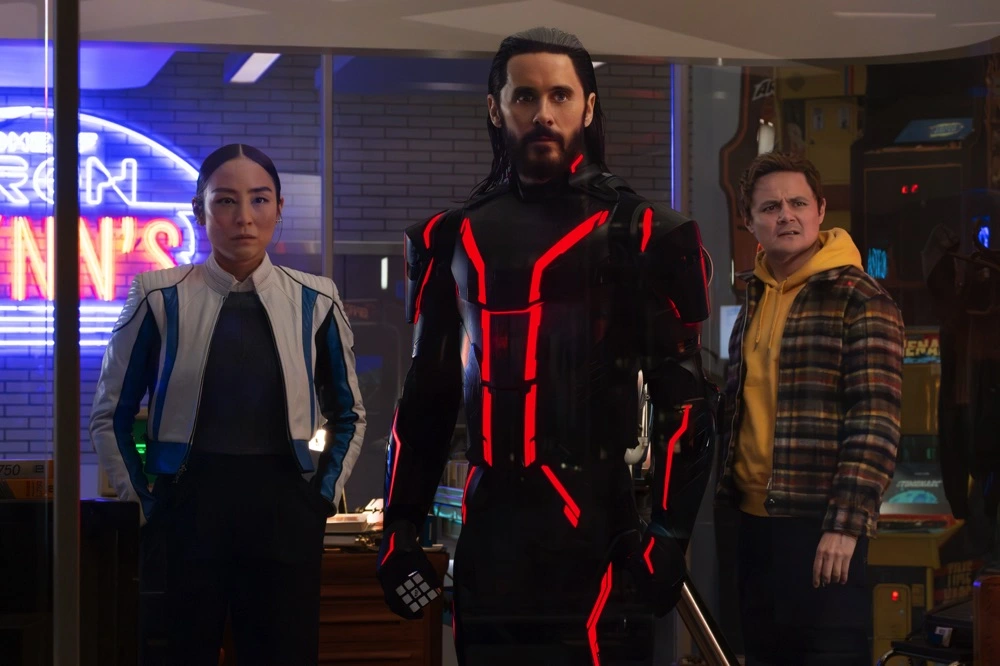
Rønning’s affection for the Tron mythos shows in the details: the gleaming architecture of the grid, the interplay of human warmth against cold circuitry, even the sly humour of Ares’s affection for ’80s synth pop (his anthem of choice: Depeche Mode’s “I Just Can’t Get Enough”). Leto imbues him with Zen composure and ironic detachment, offset by bursts of balletic combat. Lee grounds the film with emotional weight; her performance is sharp but tinged with grief.
Among the supporting cast, Peters leans into Julian’s privileged megalomania with nerdy bravado, while Turner-Smith radiates danger and elegance. Hasan Minhaj and Arturo Castro add levity as ENCOM’s tech allies, and Gillian Anderson brings gravitas as Julian’s wary mother, the ousted CEO who knows precisely what her son’s ambition will cost.
And yes, Jeff Bridges makes a brief, welcome appearance as Kevin Flynn, older, wiser, and finally rendered without waxy de-ageing. His reunion with Ares delivers one of the film’s best moments: two digital prophets recognising that the boundary between AI and humanity has finally dissolved.
Despite its neon bravado, Tron: Ares isn’t blind to its own warnings. Its final act underscores how fragile our control over technology truly is, a message underscored by a teasing mid-credits scene that hints the grid’s dangers are far from resolved.
Free from the direct baggage of Legacy (Garrett Hedlund and Olivia Wilde are absent), Ares stands on its own as both continuation and reinvention. It’s faster, leaner, and more tactile. Rønning’s preference for practical sets and in-camera effects gives the film a surprising physicality. The high-speed freeway chase of Eve on a motorcycle, pursued by Ares and Athena’s red-trailing light cycles, is a standout, shot with exhilarating precision by Jeff Cronenweth.
Ultimately, Tron: Ares may not revolutionise science fiction, but it revitalises a franchise long thought to be lost in its own code. It’s stylish, propulsive, and, for the first time, genuinely human. In an era of endless digital noise, that’s a rare signal worth catching.
Overall: 7/10

Movie Reviewer