
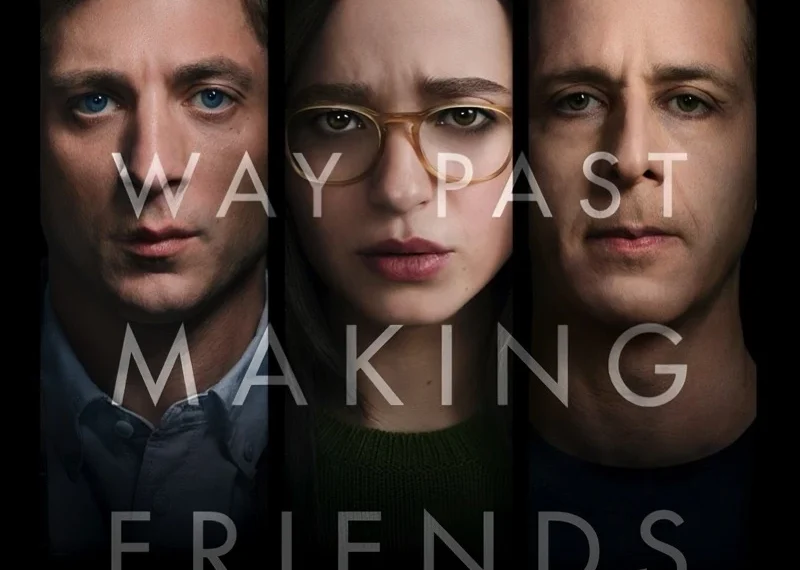
Cast: Mikey Madison, Jeremy Allen White, Wunmi Mosaku, Betty Gilpin, Billy Magnussen, Bill Burr, Jeremy Strong
Genre: Biography, Drama, Thriller
Director: Aaron Sorkin
In Irish Cinemas: Now
‘The Social Reckoning’ Struggles to Match the Power of Its Predecessor. The new film revisits Facebook’s darkest controversies, but its account of corporate negligence, whistleblowing, and political manipulation lacks the unsettling depth that made The Social Network so enduring.
When The Social Network arrived in 2010, Facebook was still widely regarded as a revolutionary way to connect people. The idea that the platform’s success might conceal something deeply troubling had yet to enter mainstream consciousness. Through David Fincher’s precise direction and Aaron Sorkin’s incisive screenplay, the film transformed the creation of a social media giant into a compelling story about ambition, betrayal, and the dangers of unchecked power. Its greatest achievement was not simply recounting how Facebook came into existence, but suggesting that its founder’s extraordinary success might come at a considerable human cost.
More than a decade later, Sorkin returns to that territory with The Social Reckoning, a film that examines the company’s growing list of controversies through the revelations that emerged between 2019 and 2021. This time, however, the central accusation is hardly groundbreaking. Audiences have spent years watching social media become entangled with political extremism, misinformation, and concerns about mental health. What once felt like a disturbing glimpse into an uncertain future now resembles a familiar chapter in a much larger story.
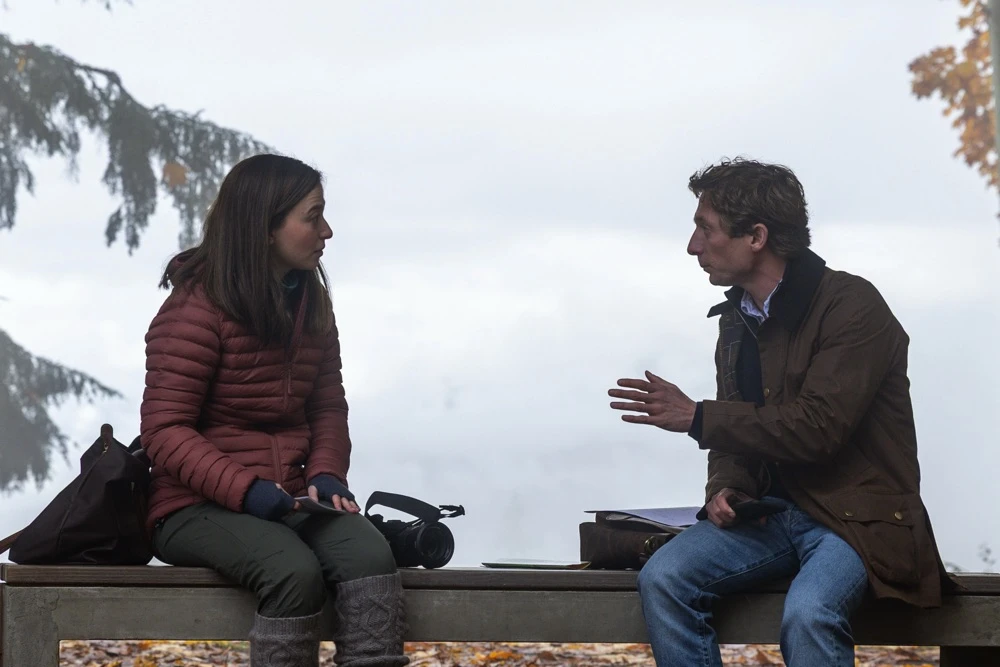
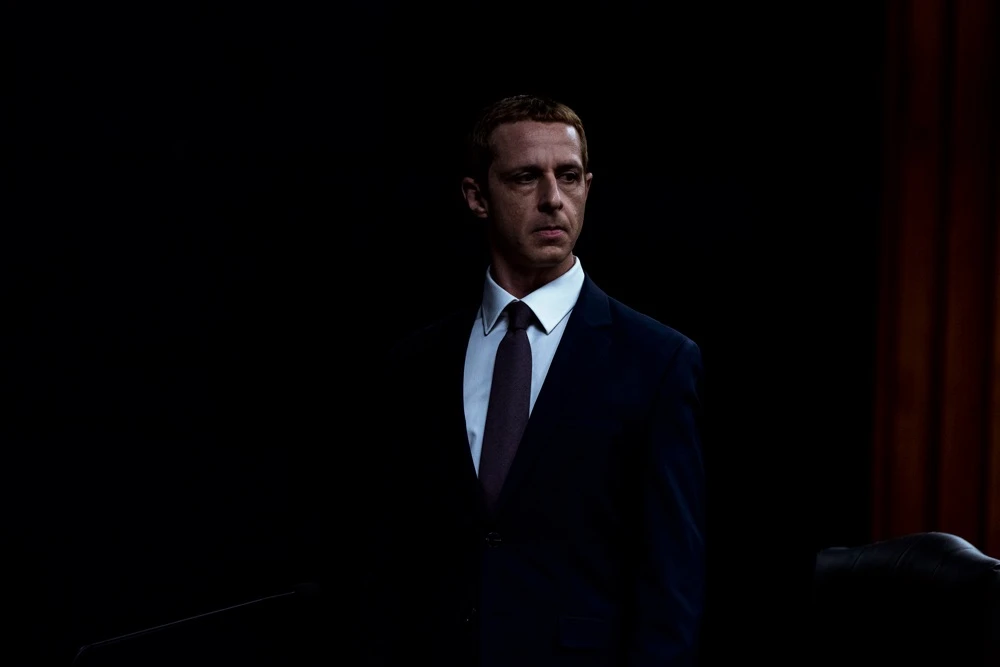
The film follows Wall Street Journal journalist Jeff Horwitz, played by Jeremy Allen White, as he investigates Facebook’s internal practices with assistance from whistleblower Frances Haugen, portrayed by Mikey Madison. Their efforts expose evidence suggesting that the company’s recommendation systems helped direct users toward extremist communities and that Instagram’s effects on younger audiences raised serious concerns within the organization. The narrative culminates in Haugen’s appearance before a U.S. Senate committee, where the consequences of Facebook’s internal decisions are finally presented in public.
As a procedural account of investigative journalism, the film has plenty to offer. It demonstrates how patient reporting, confidential sources, and internal documentation can challenge powerful corporations. Yet its conclusion also reveals a fundamental weakness. By treating Haugen’s testimony as the dramatic resolution, the film gives its audience a sense of accountability that feels disproportionate to the scale of the problem. Public scrutiny may expose corporate misconduct, but exposure alone rarely guarantees meaningful reform.That limitation becomes more apparent when the story is viewed from the perspective of 2026. The technology industry has moved far beyond the specific controversies explored here, with artificial intelligence, increasingly sophisticated recommendation systems, and the continuing spread of online disinformation reshaping the debate. Against this backdrop, The Social Reckoning feels confined to an earlier stage of the technological crisis. Its central revelations matter, but the film struggles to explain what they mean in a world where the problems it describes have continued to evolve.
The contrast with its predecessor extends to the filmmaking itself. Fincher’s The Social Network drew much of its power from ambiguity, allowing the audience to sit with uncomfortable questions about its characters and their motivations. Sorkin’s new film is more direct, often spelling out the moral conclusions it wants viewers to reach. His familiar talent for rapid dialogue and ideological confrontation remains evident, but the result is less atmospheric and considerably more predictable.
An opening sequence establishes the film’s interest in the relationship between social platforms and political radicalization. A young woman named Kayleigh, played by Portia Doubleday, encounters two police officers while waiting beside her broken-down car. What begins as an offer of assistance quickly becomes a hostile confrontation, which she records on her phone. She subsequently posts the footage in a white-supremacist Facebook group, attracting the attention of Haugen, who works on the company’s civic integrity team.
The revelation that Kayleigh was once Haugen’s friend, and previously held liberal political views, gives the scene its intended significance. The incident is meant to demonstrate how quickly online communities can transform personal grievances into ideological hostility. However, the sequence feels engineered to deliver a predetermined message rather than develop a complicated social reality. Its characters serve primarily as illustrations of an argument, leaving little room for the uncertainty that might have made the opening more persuasive.
Haugen’s subsequent investigation provides the film with a stronger foundation. Madison portrays her as determined, impatient, and still convinced that technology can be used to improve society. Her discovery that Facebook’s recommendation systems could help propel users toward extremist groups challenges the company’s public image as a force for connection. Even more troubling is the apparent gap between the evidence gathered by employees and the willingness of senior management to act upon it.
According to the film’s account, internal research indicated that a substantial proportion of users who joined extremist groups had been directed toward them by Facebook’s own recommendation tools. Haugen and her colleagues propose safeguards that could reduce this pattern, but their efforts encounter resistance when the potential impact on engagement becomes part of the discussion. The implication is unmistakable: measures intended to protect users may be less attractive to a company whose business depends on keeping them online.
These scenes provide the film with its clearest moral argument. The problem is not simply that harmful content exists on a social network, but that the platform’s commercial incentives may reward the mechanisms through which that content spreads. Nevertheless, Sorkin frequently undercuts the seriousness of this material with exchanges designed to showcase his trademark verbal agility. Characters debate, interrupt, and deliver polished retorts with a fluency that can make the proceedings feel more like an intellectual contest than a struggle over consequential institutional failures.
The parallel investigation led by Horwitz offers another perspective on the same conflict. Initially skeptical about the significance of the technology beat, the journalist must convince his superiors that Facebook’s influence has become inseparable from political life. His collaboration with Haugen gradually establishes the value of their complementary skills: she understands the company’s internal systems, while he knows how to turn complicated evidence into a story that the public cannot ignore.
White and Madison provide the film with much of its energy. Their characters are prickly, frequently at odds, and united by an uneasy recognition that neither can complete the investigation alone. There is an appealing contrast between Haugen’s insider knowledge and Horwitz’s journalistic instincts, although their relationship sometimes resembles a conventional workplace drama more than a portrait of people confronting a powerful institution. Horwitz, in particular, remains insufficiently developed, with White supplying a degree of weary sincerity that the screenplay does not always give him the opportunity to explore.
Meanwhile, Sorkin alternates their investigation with Facebook’s preparations for a congressional hearing in 2021. The political upheaval surrounding the Capitol attack places additional pressure on the company, particularly as questions mount over whether Donald Trump should remain on the platform. These developments provide a useful reminder that Facebook’s decisions were no longer confined to questions of technology or corporate management. They had become matters of public safety, political responsibility, and democratic accountability.
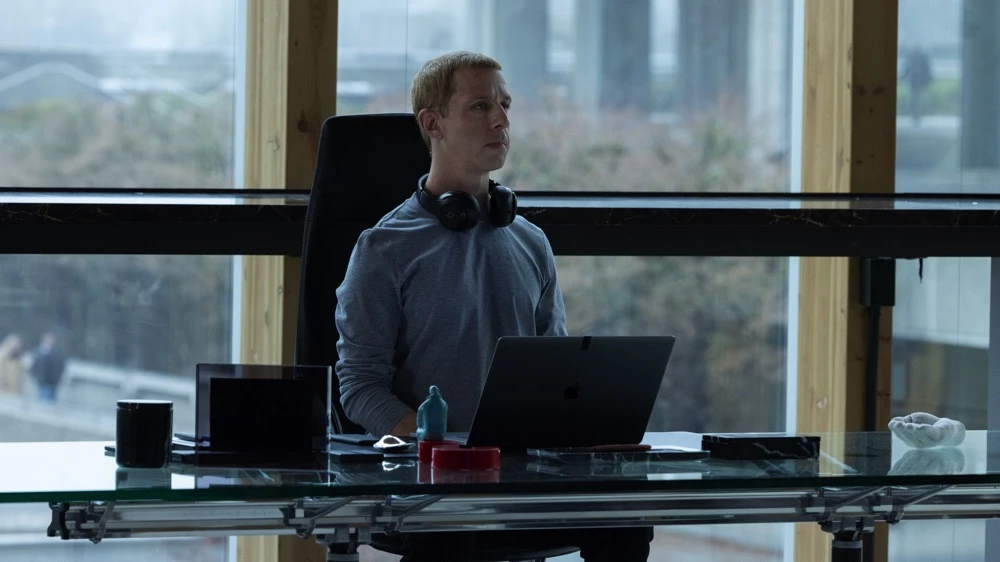
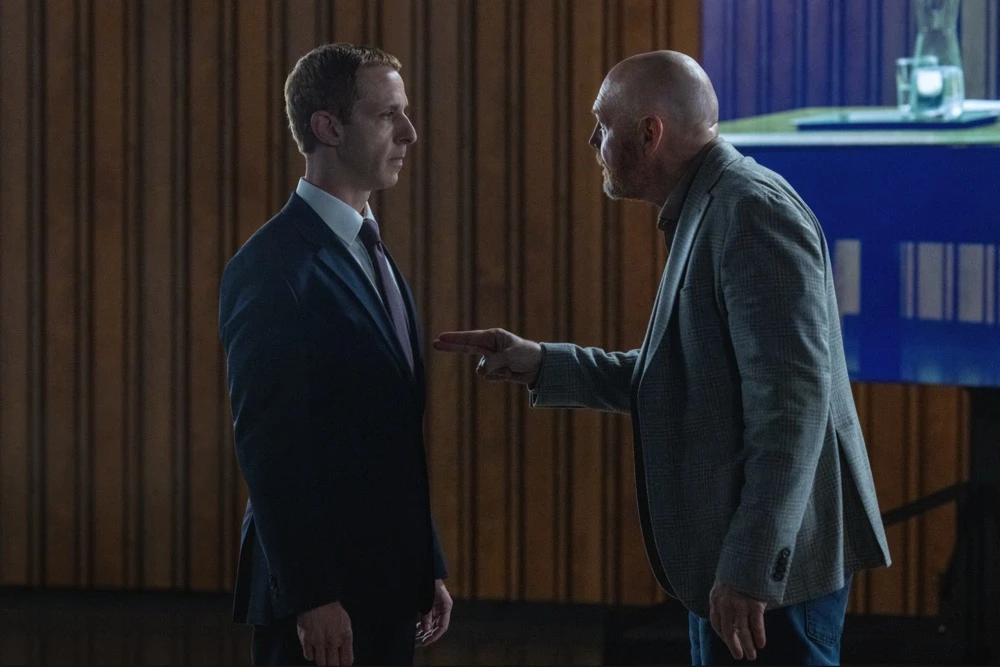
Jeremy Strong plays Zuckerberg as a founder who has become almost entirely insulated from ordinary emotional responses. His performance emphasizes rigidity, calculation, and an inability to engage meaningfully with the concerns of those around him. Bill Burr’s Charlie, a former employee turned skeptical consultant, and Wunmi Mosaku’s Raya, a crisis manager confronting the consequences of the company’s choices, add further perspectives to the increasingly defensive corporate environment.

Yet Zuckerberg proves to be a surprisingly limited dramatic presence. Jesse Eisenberg’s performance in The Social Network suggested a young man whose insecurities, resentment, and hunger for recognition were inseparable from his ambition. The character was unsettling partly because his behavior remained recognizably human, even when his decisions were difficult to defend. Strong’s interpretation is more rigid and remote. It conveys the impression of a man who has already completed his transformation into an impenetrable executive, leaving little room for dramatic discovery.
This is not necessarily an implausible portrait, but plausibility alone cannot sustain a compelling character. Without meaningful access to Zuckerberg’s internal contradictions, the film loses an opportunity to explore how personal ambition becomes institutional power. Its central figure consequently feels less like the source of an unfolding tragedy than a symbol of corporate indifference.
The broader technical execution is similarly competent without being especially distinctive. Jeff Cronenweth, who worked on the original film, returns as cinematographer, but the images rarely achieve the chilly precision and visual tension that characterized Fincher’s approach. Offices, newsrooms, and corporate meeting spaces provide an appropriate backdrop, yet they seldom acquire a personality of their own. The environments feel functional when they should feel quietly oppressive.

Alexandre Desplat’s score faces a related challenge. At times, it recalls the subdued electronic melancholy associated with Trent Reznor and Atticus Ross’s music for The Social Network. Elsewhere, it adopts a more uplifting orchestral style that emphasizes the righteousness of the investigation. The shifts reflect the film’s competing impulses: it wants to be a dark examination of corporate power while also celebrating the possibility that determined individuals can force powerful institutions to answer for their actions.
Ultimately, these impulses never quite come together. Sorkin is clearly interested in the importance of journalism, the responsibilities of technology companies, and the possibility of meaningful public accountability. But his insistence on making those themes explicit leaves little space for viewers to reach their own conclusions. The film explains what went wrong without fully conveying the deeper emotional or social consequences of that failure.
The Social Reckoning is not without merit. Its account of whistleblowing and investigative reporting is engaging, its central performances are strong, and its examination of Facebook’s internal priorities raises questions that remain relevant. Yet it lacks the complexity and unsettling ambiguity that allowed The Social Network to transcend its immediate subject.
The earlier film captured a moment when the cultural consequences of social media were only beginning to emerge. Its questions about power, alienation, and the price of success have become more relevant with time. The new film, by contrast, looks backward at a series of revelations whose implications have already been widely debated, offering a conclusion that feels more reassuring than the circumstances justify.
Sorkin wants to remind us that exposing the truth still matters. He is right, of course. But in a world where public revelations do not necessarily produce lasting change, the harder question is what happens after the truth comes out. The Social Reckoning brings that question into view without fully confronting it, leaving behind a film that is informative and occasionally compelling, but ultimately less daring than the story it seeks to continue.
Overall: 6.5/10

Movie Reviewer