Developer: Eric Rodríguez, JanduSoft
Platforms: PC (Reviewed), PS4, PS5, Switch, Xbox One, Xbox Series X|S
Genre: RPG, Simulation
Publisher: Anotherindie, JanduSoft
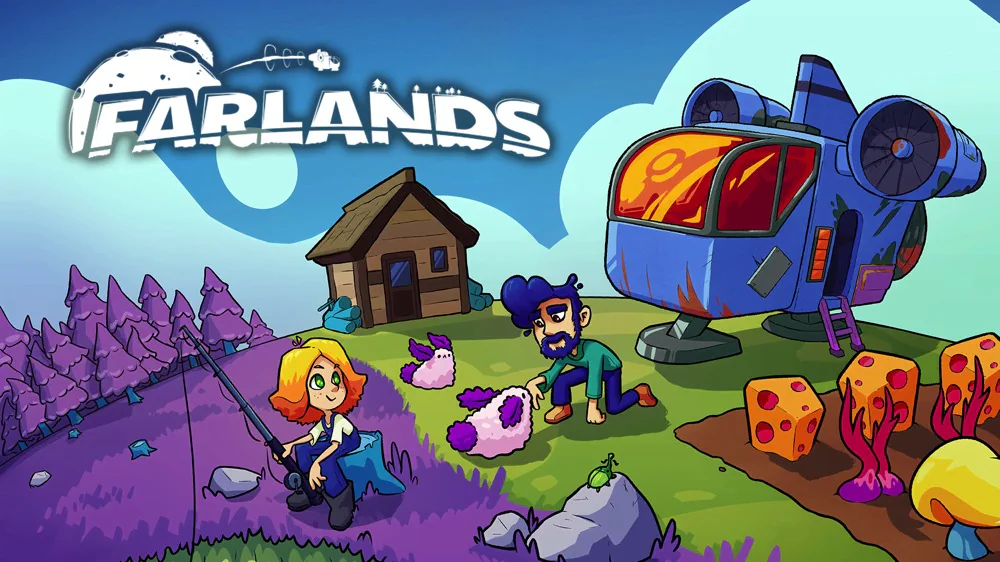
Farming simulators have become one of the most beloved genres over the last decade, but it’s not often that one dares to swap rolling green fields for distant planets. Farlands, developed by JanduSoft and Eric Rodríguez and published by JanduSoft alongside Another Indie, takes the familiar farming formula and launches it into space. While it’s impossible not to notice its inspirations from games like Stardew Valley and Starbound, Farlands manages to carve out an enjoyable adventure through its charming world, engaging story, and relaxing gameplay loop. Although there are a few rough edges that still need polishing, there’s a genuinely enjoyable farming RPG hidden beneath them.
Farlands begins with your character leaving behind their old life to settle on a small abandoned planet in hopes of starting fresh. Unfortunately, things don’t exactly go according to plan. After arriving through a rather questionable arrangement, you quickly become caught in a conflict between the mysterious SR755 and the powerful intergalactic corporation GorCorp, led by the game’s primary antagonist, the greedy CEO Gorman. His goal is simple: strip planets of every valuable resource he can find.
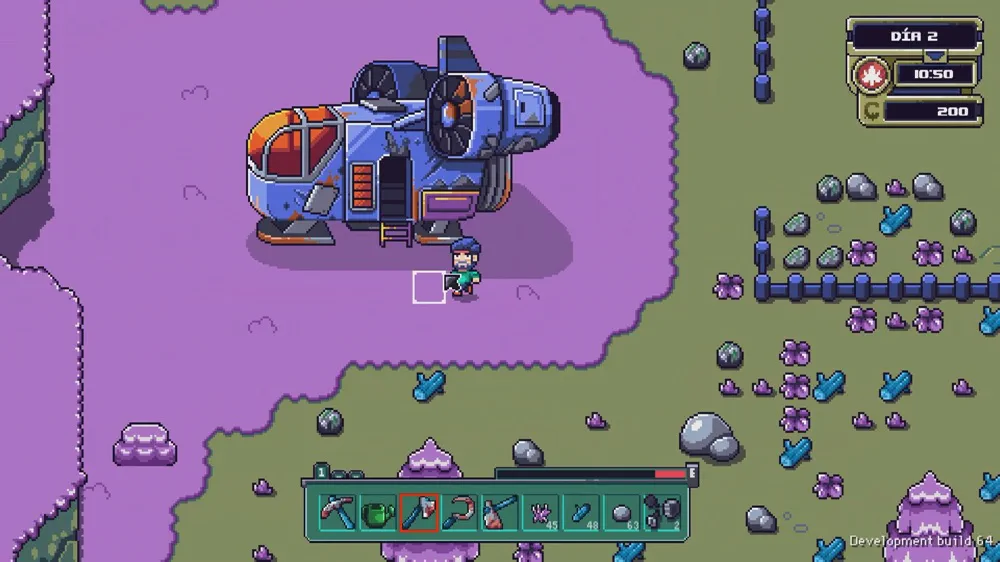
Your objective is to restore the Ark, an ancient repository maintained by the Empyrians. In many ways, this feels similar to rebuilding the Community Centre in Stardew Valley, except on a much grander, galaxy-spanning scale. Throughout your journey, you’ll visit eight unique planets, each featuring multi-layered mines, new resources to gather, and characters to meet.
One of my favourite aspects of Farlands was easily its storytelling. The narrative is surprisingly engaging, with frequent cutscenes, enjoyable character interactions, and dialogue that constantly pushes the adventure forward. Rather than feeling like the story simply exists to justify the gameplay, it becomes one of the driving forces that kept me wanting to explore what came next.
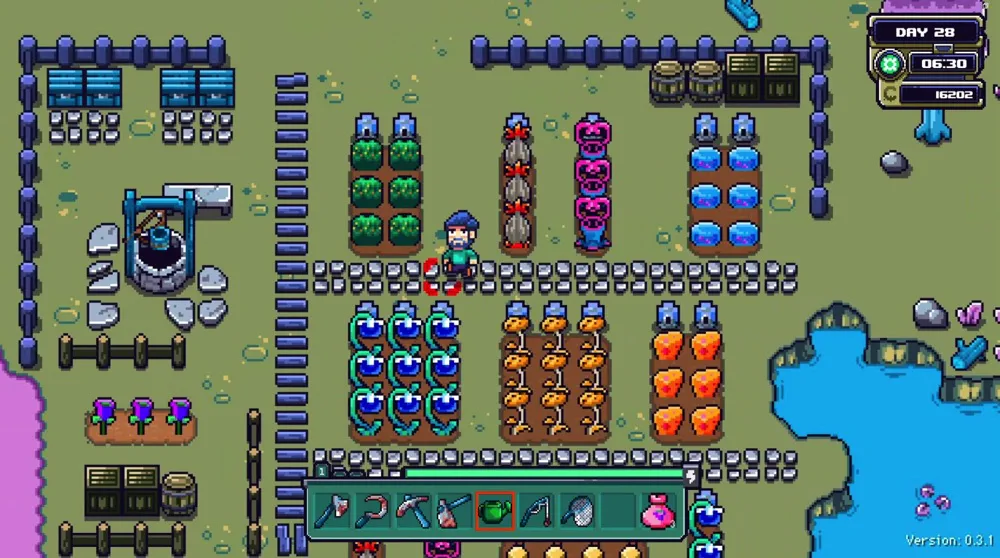
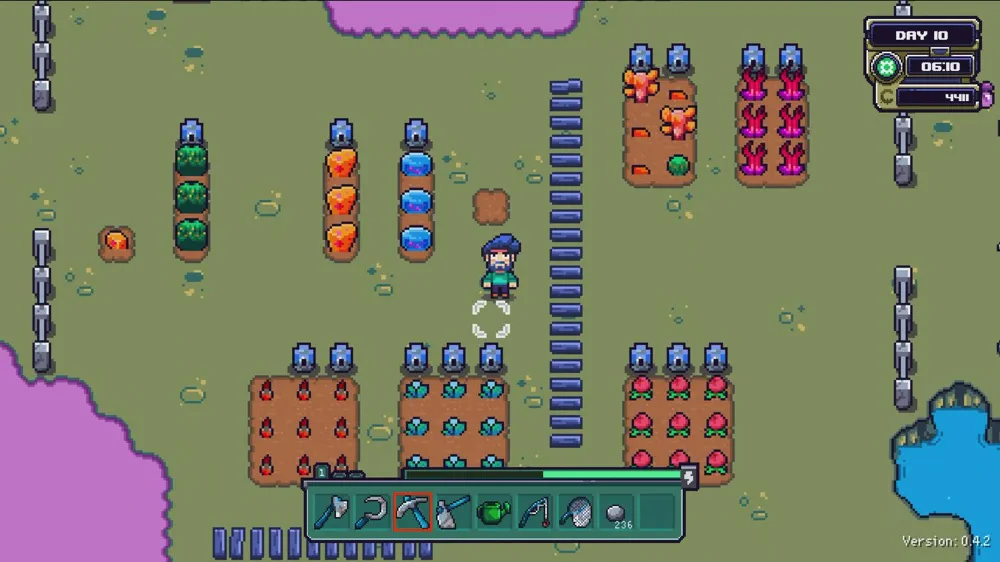
The gameplay will instantly feel familiar to anyone who’s played Stardew Valley, and honestly, that’s not a bad thing. You begin with a cluttered farm that slowly transforms into your own thriving alien homestead. You’ll spend your days clearing debris, planting seasonal alien crops, raising adorable livestock, crafting equipment, fishing, bug catching, mining for resources, and upgrading your tools. The game follows a seasonal calendar consisting of different seasons, each lasting 28 days with crops tied to their respective season.
Much like Stardew Valley, Farlands also features seasonal festivals, relationship building with NPCs, romance options, and nearby settlements containing useful merchants like blacksmiths for upgrading equipment. It blends farming, exploration, crafting, progression systems, and light RPG mechanics into one satisfying gameplay loop.
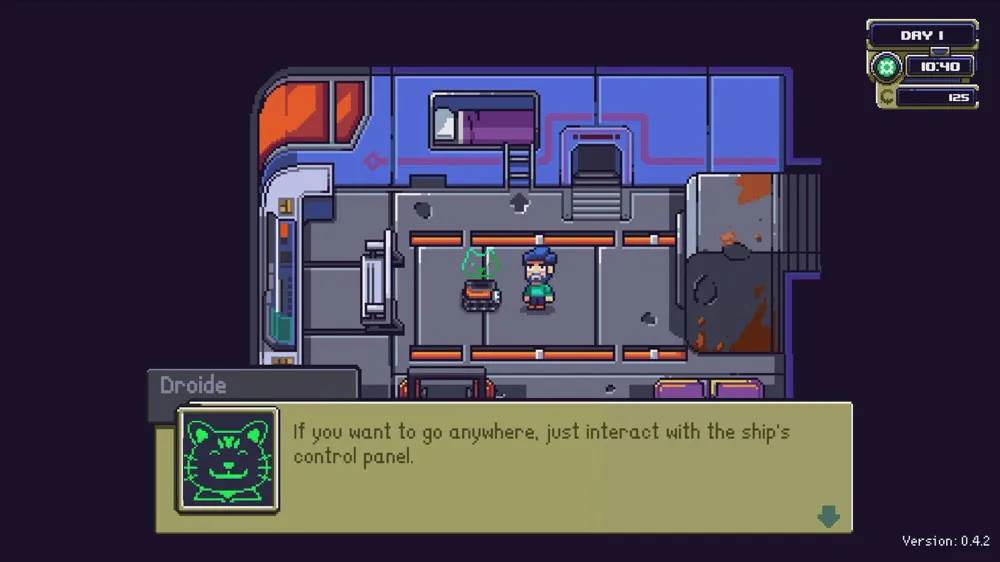
What I appreciated most was the pacing. The game never pressures you into rushing the main storyline. I found myself spending hours simply tending to my farm, gathering materials, and slowly building everything up before progressing the main objectives. That slower pace really complements the relaxing atmosphere and allows you to enjoy everything the game has to offer without constantly feeling like you’re falling behind.
The biggest mechanic that helps Farlands stand apart is its space setting. Travelling between planets aboard your ship gives exploration a completely different feel compared to traditional farming sims. Managing your ship’s fuel adds another small layer of planning that reminded me a little of Starbound and helped reinforce the feeling that you’re surviving on the edge of space.
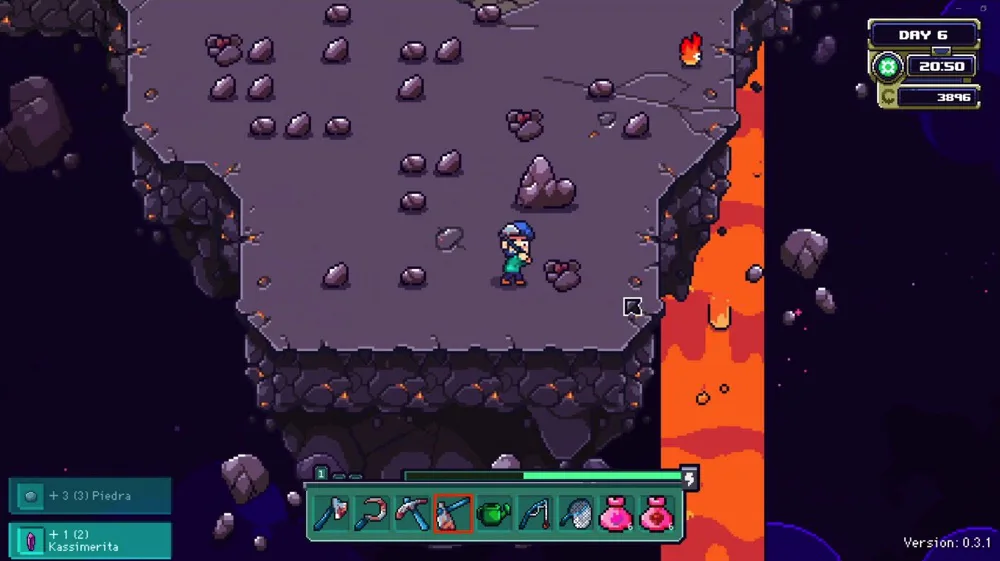
That being said, there are a few mechanics that feel underdeveloped. The romance system lacks the charm and depth found in Stardew Valley, making relationships feel far less rewarding than they could have been. Combat is another area that feels fairly weak. While enemies eventually begin appearing throughout the mines, they’re incredibly easy to avoid and rarely pose much of a threat. Mining often becomes a simple routine of breaking rocks, collecting ore, and heading home rather than offering exciting dungeon exploration or memorable encounters. Travelling between planets can also consume a significant portion of your in-game day. Although it makes sense from a realism perspective, it sometimes interrupts the relaxing daily routine, leaving less time to actually farm or complete other activities.
While Farlands borrows plenty of mechanics from other games, I couldn’t help wishing it introduced a few more original gameplay ideas beyond simply placing the farming formula into space. The sci-fi setting is fantastic, but I would’ve loved to see even more mechanics that truly made the experience feel uniquely Farlands.
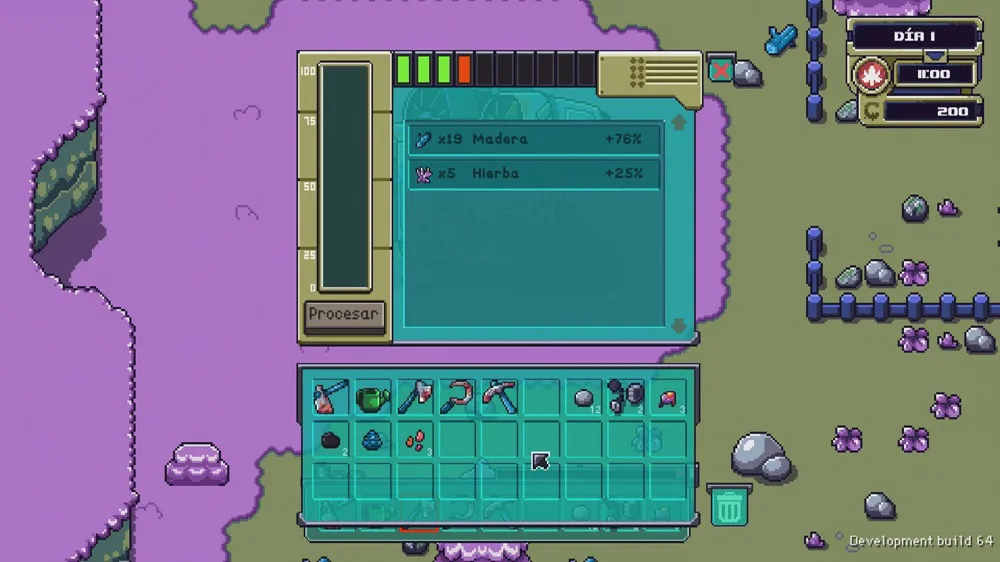
For the most part, the controls are simple and easy to understand, making it easy to settle into the gameplay loop after only a short time. However, there were moments where targeting individual tiles or interacting with specific objects felt slightly imprecise, occasionally becoming frustrating during farming or building.
Unfortunately, I also encountered several bugs throughout my playthrough. The most noticeable involved selling items, where deposited resources sometimes wouldn’t register correctly or would only sell part of the stack instead of everything I had placed into the shipping container. These issues never completely ruined the experience, but they were frequent enough to become noticeable.
Thankfully, the developers have already shared a roadmap of future updates, which gives me confidence that many of these quality-of-life improvements and bug fixes will continue improving the experience over time.
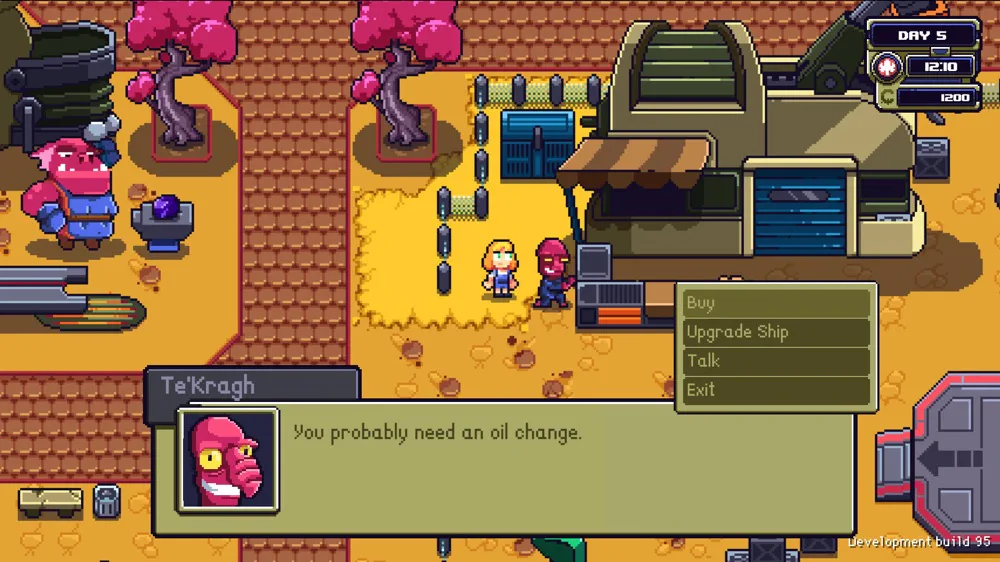
Visually, Farlands absolutely shines. The colourful pixel art creates a world that feels vibrant, expressive, and genuinely alive. Every alien crop, strange creature, and NPC has its own personality, while the various planets all feel distinct thanks to their creative environmental designs. The overall colour palette, filled with rich purples, blues, greens, and greys, perfectly captures the feeling of exploring an unfamiliar galaxy without ever losing the cosy atmosphere the game aims for. I especially loved the character animations and creature designs. Everything moves naturally, making the world feel much more alive than its pixel art style might initially suggest.
The soundtrack does an excellent job creating that relaxing sci-fi atmosphere. Soft ambient music pairs beautifully with the farming gameplay, while environmental sound effects make every planet feel immersive. Although a few tracks can become repetitive during longer play sessions, the overall audio design succeeds in delivering the peaceful yet mysterious feeling of living among the stars.
Farlands is a game that wears its inspirations proudly. Anyone who’s spent countless hours in Stardew Valley or Starbound will immediately recognise many of its mechanics, but its charming story, relaxing pacing, lovable characters, and unique space setting help make it an enjoyable adventure in its own right. Despite some shortcomings, I genuinely had a great time playing it. The satisfying farming loop, enjoyable exploration, engaging narrative, and gorgeous pixel art kept me coming back day after day. With the developers already outlining future updates and improvements, Farlands feels like a game with plenty of room to grow. If you’re looking for a cosy farming simulator with a sci-fi twist and don’t mind a few rough edges, this is definitely worth checking out!
Overall: 7/10

This is S & S. We are world game explorers. We play games. We have played over 10,000+ games! We travel, we write reviews AND we play more games!!!!