

Reviewed on 14th February 2025 at the 75th Berlin International Film Festival
Cast: Mala Emde, John Magaro, Michael Chernus
Genre: Drama, Music
Director: Ido Fluk
In Irish Cinemas: Now
Jazz has always been as much about restraint as expression. The spaces between notes can matter as much as the notes themselves, a principle often associated with Miles Davis, who understood that absence can be every bit as powerful as sound. Köln 75 embraces that philosophy in an unexpected way. Although it tells the story behind Keith Jarrett’s legendary 1975 Köln Concert, the film never actually features the music that made the performance famous.
What could have been a crippling limitation instead becomes the film’s defining strength. Director Ido Fluk doesn’t attempt to disguise the absence of Jarrett’s iconic recording. Instead, he redirects attention toward the remarkable chain of events that made the concert possible, centring the narrative on Vera Brandes, the teenage promoter whose determination and audacity helped bring one of jazz history’s most celebrated performances into existence.

As a result, Jarrett occupies surprisingly little space within the story. The emotional and narrative focus belongs to Vera, portrayed by Mala Emde with relentless enthusiasm and charisma. Emde captures the intensity of a young woman driven by an almost irrational devotion to music, someone willing to bulldoze through obstacles in pursuit of something larger than herself. Her Vera sees jazz not as entertainment but as a calling. Opposite her, John Magaro presents Jarrett as brilliant but perpetually frustrated, a gifted artist whose commitment to perfection often leaves him at odds with the world around him.
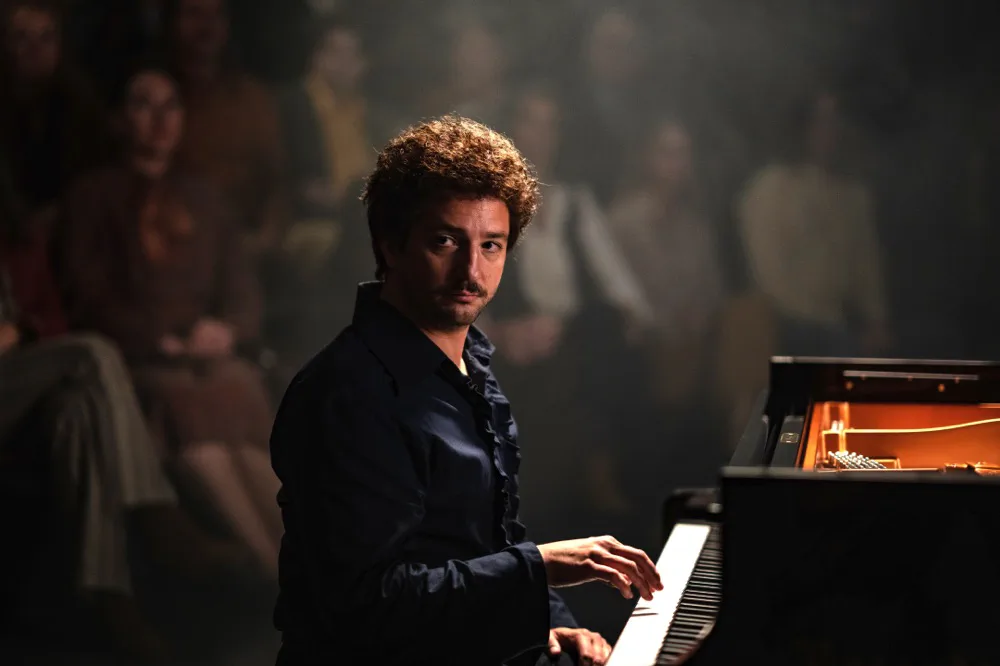
Fluk approaches the material with a playful, energetic style that rarely sits still. The film darts between fourth-wall breaks, rapid editing, and unexpected comedic diversions, creating an atmosphere that feels both contemporary and mischievous. At times, however, that confidence borders on excess. The film occasionally strains to elevate jazz into the realm of myth, and certain supporting characters particularly Michael Chernus’ talkative critic—feel less like participants in the story and more like vehicles for explanation. Not every tonal shift lands cleanly, with some broader comic moments undercutting the sincerity elsewhere. Yet the film’s momentum is difficult to resist.

The final act is where that momentum truly pays off. As obstacles pile up and the concert edges closer to disaster, Köln 75 transforms into something resembling a backstage thriller. Technical failures, exhausted performers, and mounting organisational chaos create a sense of urgency that keeps the tension high, even though the audience already knows the outcome. Fluk wrings genuine suspense from every setback, turning logistical headaches into dramatic stakes.
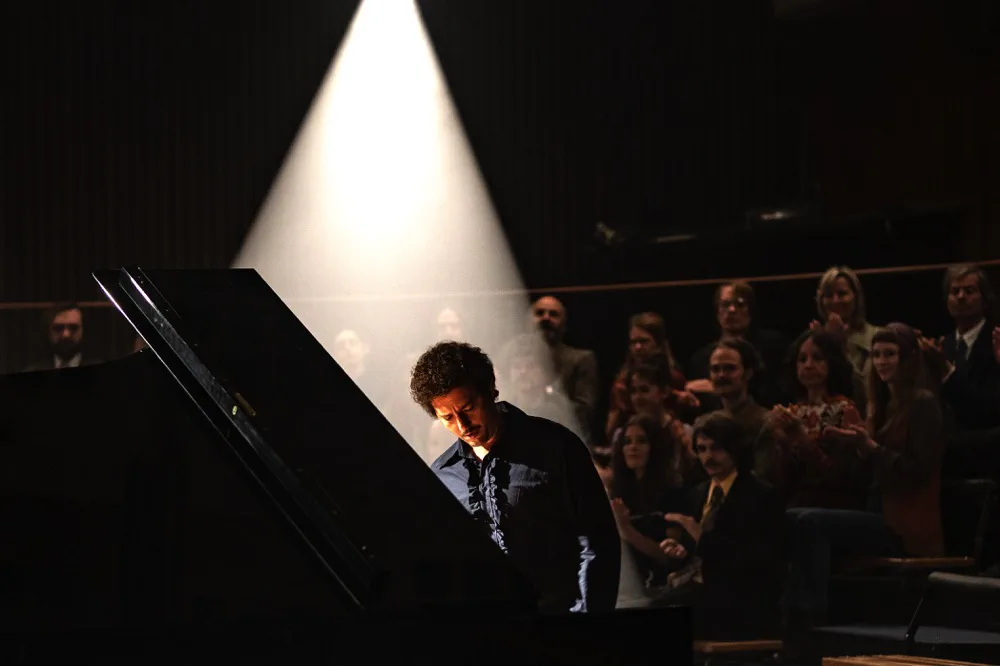
Of course, the film eventually confronts its biggest challenge: the absence of Jarrett’s music. Because the pianist, now in his eighties, was not involved with the production, the climactic performance unfolds without the recording that made the event historic. Some viewers may find this impossible to overlook. Yet there is a peculiar elegance in the way the film embraces that limitation rather than fighting against it. By the time the credits roll, the missing music no longer feels like something withheld; it feels woven into the film’s identity.
Messy, ambitious, and bursting with personality, Köln 75 finds drama in the chaos behind a cultural landmark. Anchored by Mala Emde’s magnetic performance, it thrives on uncertainty, proving most compelling when everything appears on the verge of falling apart.
Overall: 6.5/10

Movie Reviewer