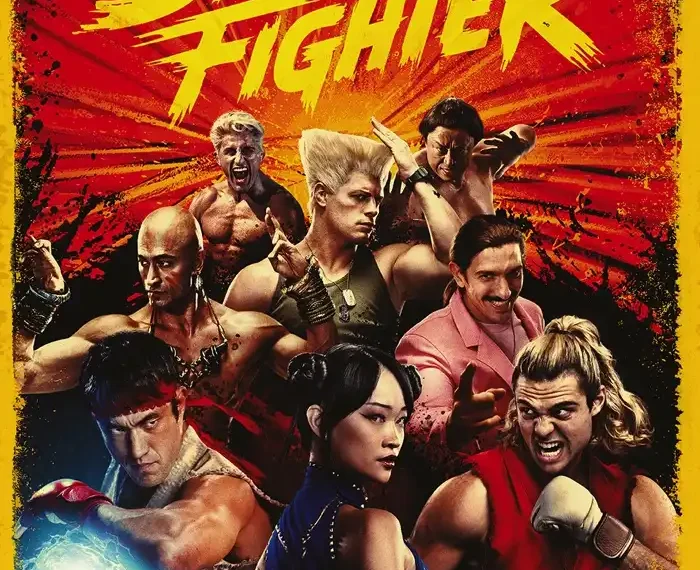
Cast: Noah Centineo, Andrew Koji, Callina Liang , Joe “Roman Reigns” Anoa’i , David Dastmalchian ,Cody Rhodes, Andrew Schulz, Vidyut Jammwal, Eric André , Curtis “50 Cent” Jackson, Jason Momoa, Orville Peck , Olivier Richters, Hirooki Goto, Rayna Vallandingham, Alexander Volkanovski, Kyle Mooney, Mel Jarnson, Kristy Bes
Genre: Action, Adventure
Director: Kitao Sakurai
In Irish Cinemas: 16th October 2026
Street Fighter Review: A Tournament That Forgets to Fight
Adapting a video game for the cinema should, in theory, be a relatively straightforward exercise. Take a recognisable cast of characters, build a story around their established rivalries, and give audiences the kind of spectacular action that made the original games popular in the first place. Yet Hollywood has spent decades demonstrating that translating a successful gaming franchise into a compelling film is considerably harder than it sounds. For every adaptation that manages to capture the spirit of its source material, there are countless others that misunderstand what made it appealing in the first place.
Few franchises illustrate this problem quite as well as Street Fighter. Capcom’s legendary fighting series has enjoyed enormous success across multiple generations of consoles, but its cinematic adventures have proved considerably less consistent. The 1994 adaptation, starring Jean-Claude Van Damme, remains an entertainingly bizarre slice of action cinema, elevated by Raul Julia’s gloriously over-the-top turn as M. Bison and an assortment of creative decisions that have become part of its enduring appeal. Its successor, 2009’s Street Fighter: The Legend of Chun-Li, was a far less memorable affair, leaving the franchise in need of a film capable of doing justice to its colourful collection of warriors.
Naturally, news of another attempt generated a degree of curiosity. The initial involvement of Danny and Michael Philippou, the filmmaking duo behind Talk to Me, suggested the possibility of a more distinctive interpretation of the material. When they departed and Kitao Sakurai assumed directing duties, however, expectations became a little harder to gauge. With T. J. Fixman and Sakurai credited for the screenplay, the resulting film ultimately feels like an opportunity squandered rather than the long-awaited reinvention the series deserves.
Set in 1993, the story revisits a painful chapter in the lives of Ryu (Andrew Koji) and Ken Masters (Noah Centineo). Six years earlier, a violent encounter with the formidable Akuma (Joe “Roman Reigns” Anoa’i) left the two martial artists on separate paths. Their fractured relationship is thrown into uncertainty when they become entangled in a new World Warrior tournament, an event secretly manipulated by the ruthless M. Bison (David Dastmalchian). Meanwhile, Chun-Li (Callina Liang) sees the competition as an opportunity to uncover Bison’s plans and pursue justice for her murdered father. As fighters from around the world converge, old grudges and competing ambitions threaten to derail the proceedings.
On paper, there is absolutely nothing wrong with this setup. Street Fighter has never required an especially elaborate mythology to justify its existence. Its enduring appeal lies in its colourful personalities, distinctive fighting styles and the simple pleasure of watching formidable opponents test themselves against one another. A sinister mastermind, a gathering of international combatants and a handful of personal rivalries should provide more than enough material for an entertaining action spectacle. Somehow, this adaptation manages to make that prospect feel unnecessarily complicated.
The central problem is that Street Fighter appears far more interested in constructing a sprawling narrative than delivering the martial arts spectacle its title promises. There are scraps of action throughout, but the tournament itself rarely commands the attention it deserves. Instead, the screenplay becomes preoccupied with personal histories, strained relationships, revenge plots and supernatural elements, leaving the actual competition feeling like an inconvenient distraction from everything else the filmmakers wish to discuss.
This imbalance becomes particularly noticeable when the film sidesteps encounters that should have been among its biggest attractions. Fans familiar with the franchise will undoubtedly arrive with their own dream match-ups in mind, yet several opportunities for memorable confrontations are hurried through or abandoned altogether. The absence of a proper Guile-versus-Vega showdown is especially frustrating. When a film assembles such an extensive roster of recognisable fighters, failing to capitalise on the possibilities they offer seems almost inexplicable.
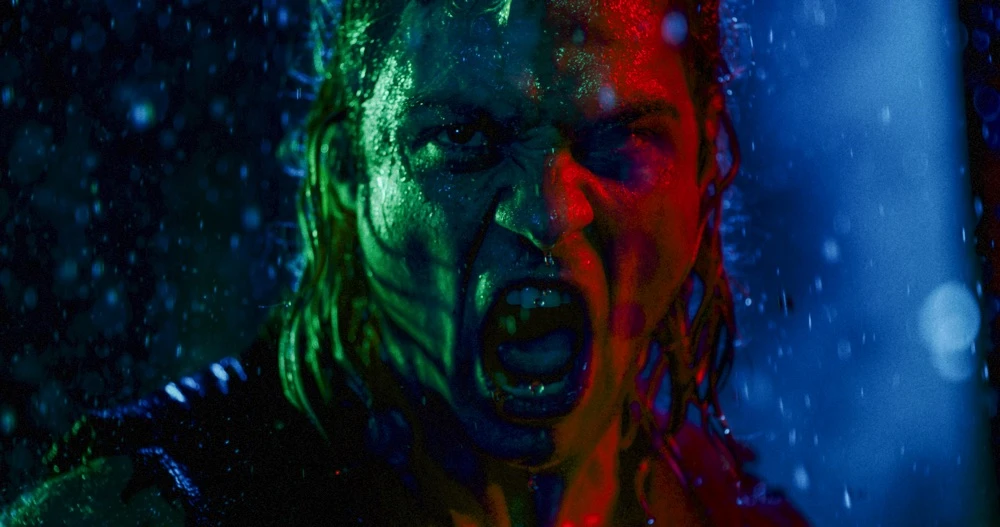
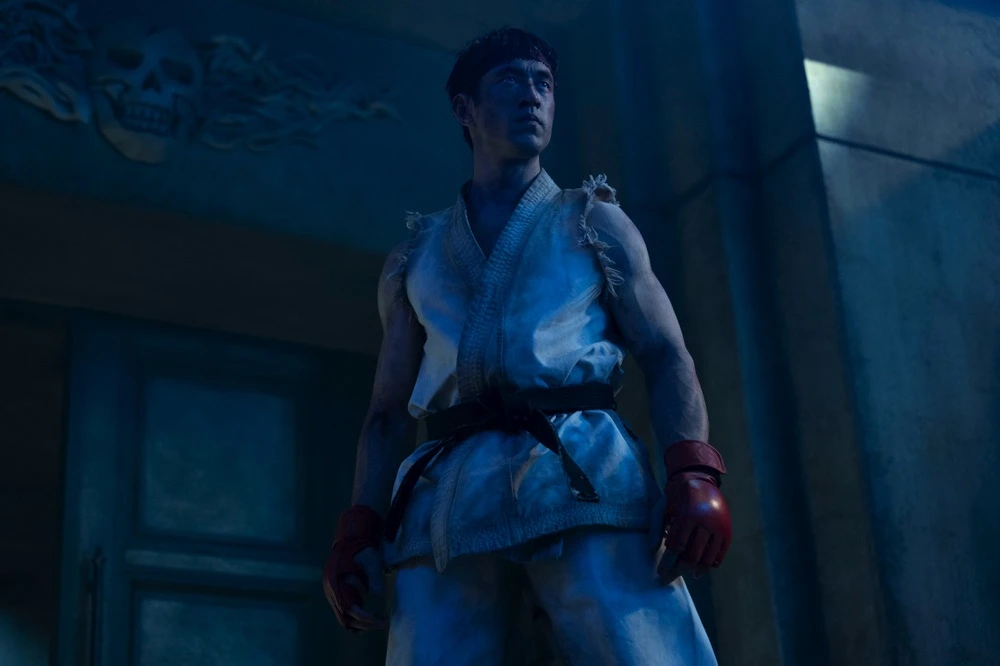
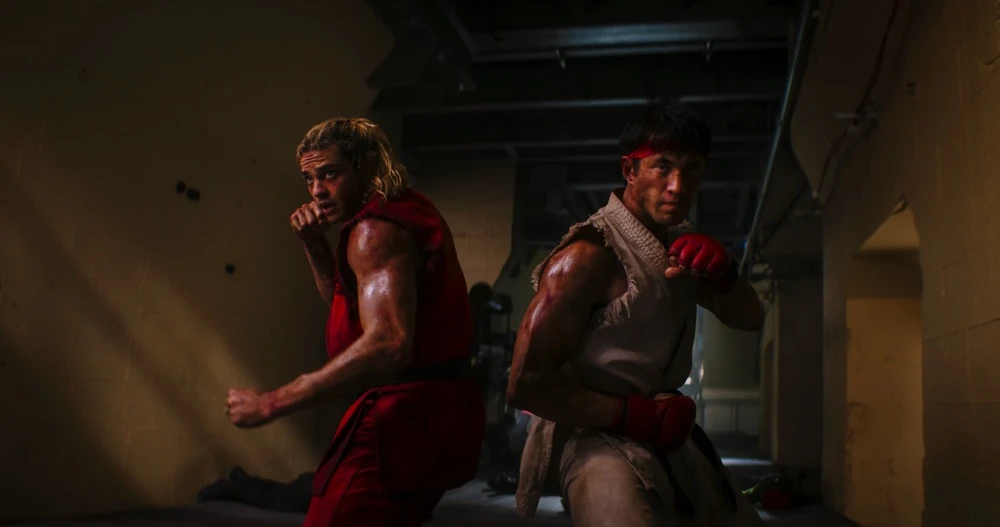
There are, at least, some encouraging performances to be found amid the chaos. Centineo makes a convincing Ken, bringing enough swagger and playful arrogance to the character without reducing him to an obnoxious caricature. His interpretation captures the fighter’s confidence while allowing flashes of vulnerability to emerge beneath the bravado. Koji provides an effective counterbalance as Ryu, whose reserved demeanour and disciplined physicality offer the film a measure of stability. The chemistry between the two leads supplies some much-needed momentum, particularly when their contrasting personalities are allowed to drive a scene rather than being buried beneath another convoluted plot development.
Their performances also highlight what the film could have achieved with a more focused approach. The relationship between Ryu and Ken provides a natural emotional foundation, one that could have been developed through their shared history and renewed rivalry. Instead, the screenplay repeatedly diverts its attention, leaving their dynamic feeling more like one element in an overcrowded ensemble than the heart of the story.
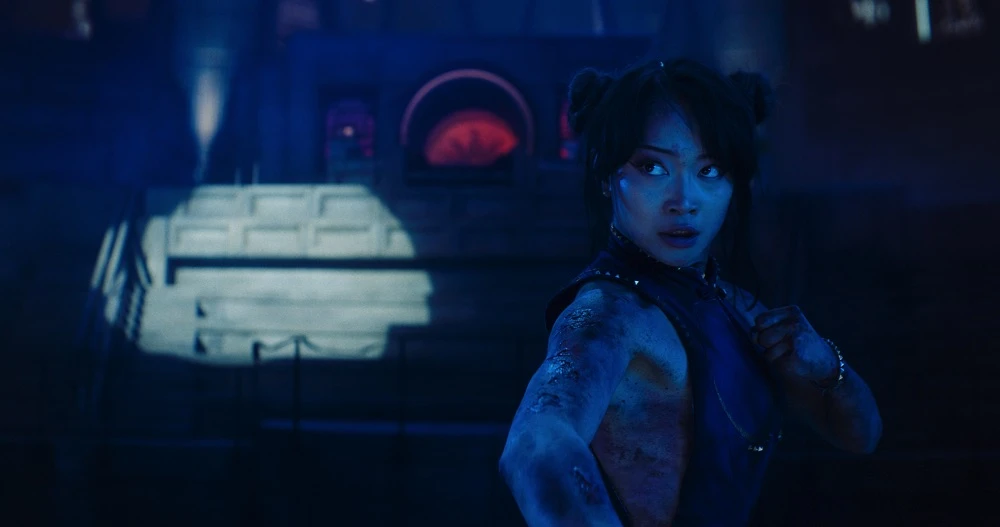
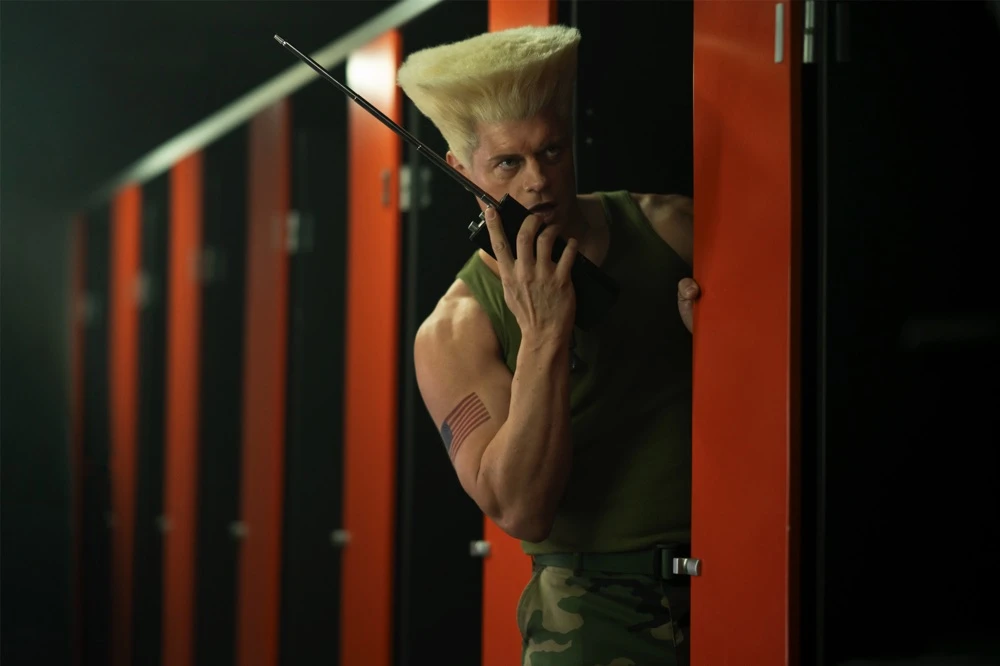
Dastmalchian is another promising piece of casting. Few actors seem better suited to the peculiar theatricality of M. Bison, and he brings an appropriately eccentric energy to the villain. Cody Rhodes also makes an impression as Guile, supplying some welcome comic relief, while Callina Liang demonstrates the physical confidence required of Chun-Li.
Unfortunately, the latter is burdened with dialogue that struggles to communicate the emotional weight of her character’s personal mission. Her determination to expose Bison and avenge her father should provide a compelling throughline, but the film never gives that motivation the attention necessary to make it resonate.
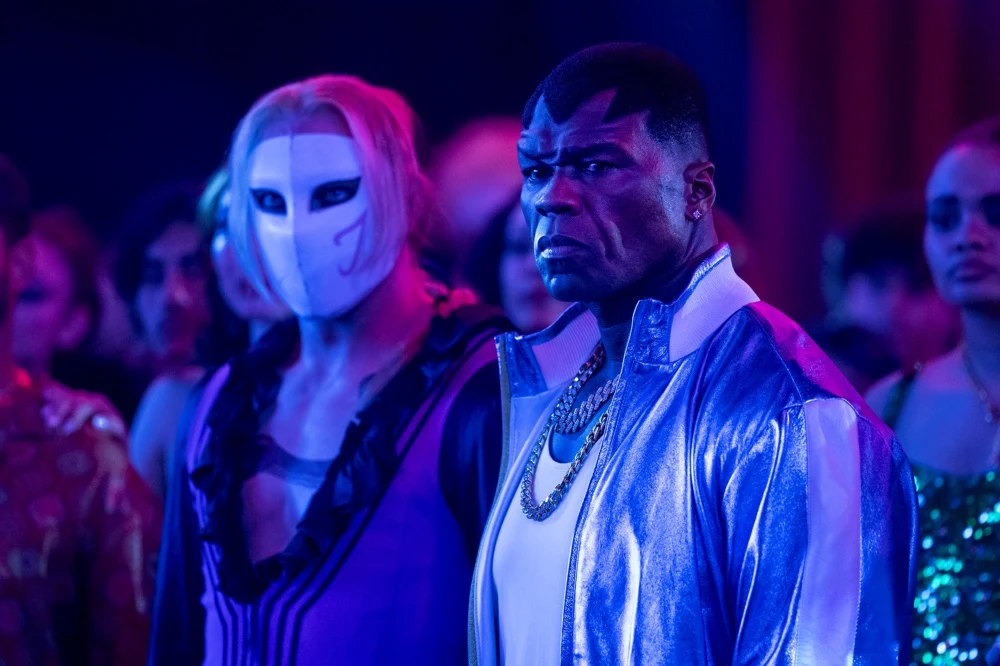
Orville Peck’s appearance as Vega is an inspired bit of casting, particularly given the character’s theatrical vanity and distinctive masked appearance. Anoa’i, meanwhile, has the imposing presence needed to portray Akuma as a genuinely dangerous opponent, although his limited role prevents the character from becoming the formidable force the story requires. Jason Momoa embraces the opportunity to play Blanka with considerable enthusiasm, but the film’s attempt to give the character a more tragic personal history feels needlessly elaborate. Rather than deepening the narrative, it adds yet another subplot to an already crowded production.
That overcrowding becomes increasingly difficult to ignore as the supporting cast rotates through the story. Curtis “50 Cent” Jackson’s Balrog, Rhodes’ Guile and Peck’s Vega all have the potential to leave a lasting impression, yet the film rarely allows them sufficient time to establish themselves beyond their familiar appearances. Other characters receive even less attention, making the ensemble feel more like a checklist of fan favourites than a collection of personalities with meaningful roles to play.
It is a strange contradiction: Street Fighter manages to include an abundance of characters while giving remarkably few of them anything substantial to do.
Visually, the film occasionally demonstrates a stronger understanding of the franchise. The character designs and costumes show a clear appreciation for the games, recreating their distinctive aesthetic without entirely abandoning the requirements of live-action filmmaking. The animated flashbacks are even more successful. Rendered in vibrant two-dimensional anime, these sequences possess a fluidity and visual confidence that the rest of the production struggles to match. Their exaggerated movement and heightened presentation feel entirely appropriate for the material, offering tantalising glimpses of an alternative approach that might have served the franchise considerably better.
Indeed, the animated passages raise an awkward question: would Street Fighter have benefited more from embracing animation throughout? The games have always thrived on exaggerated physical abilities, bold visual identities and confrontations that operate according to their own heightened logic. Animation could have provided the freedom to explore those qualities without the compromises that inevitably accompany a live-action adaptation. The fact that some of the film’s most engaging moments arrive in this format only strengthens the argument.
Unfortunately, the screenplay repeatedly undermines whatever goodwill the visuals manage to generate. The humour is particularly inconsistent, relying heavily on obvious innuendo, juvenile gags and exchanges that feel designed to provoke an easy laugh rather than emerge naturally from the characters. There is nothing inherently wrong with a Street Fighter film embracing its own ridiculousness; in fact, a willingness to lean into the franchise’s inherent absurdity might have been precisely what this adaptation needed. The difficulty is that the comedy rarely feels sufficiently assured to make that approach work.
Instead, the film oscillates between broad slapstick, earnest character drama and attempts at epic spectacle without finding a satisfying balance. One moment invites the audience to laugh at the sheer silliness of the proceedings, while the next expects them to invest in a sombre revelation or a deeply personal grievance. These shifts might have worked if the writing had established a stronger sense of tone, but the transitions are often so awkward that the various elements seem to belong to entirely different films.
Pacing presents another significant obstacle. Despite running for approximately two hours, Street Fighter struggles to distribute its time effectively. Lengthy stretches are devoted to establishing motivations and background details that ultimately have limited consequences, while the fights that should form the film’s principal attraction are frequently abbreviated. The story continually hints at greater confrontations to come, encouraging the audience to anticipate a spectacular payoff that never quite arrives.
Then comes an ending that compounds the frustration. Rather than bringing its competing storylines to a satisfying resolution, the film abruptly shifts its attention towards the possibility of future instalments. Without spoiling the specifics, the conclusion feels less like the culmination of the adventure we have been watching and more like a setup for another film that has yet to earn the right to exist. Sequel teases are hardly unusual in modern franchise filmmaking, but they work best when they follow a story that feels complete in its own right. Here, the groundwork for potential future adventures comes at the expense of the experience immediately in front of us.
For a property attempting to establish itself on the big screen once again, that is a considerable miscalculation. There is little reason to assume that audiences will automatically return for another instalment simply because the characters have decades of gaming history behind them. A successful adaptation must first demonstrate that it understands its own appeal, and this film too often seems distracted by the possibilities of an expanded franchise to concentrate on delivering a satisfying standalone adventure.
What makes the disappointment particularly acute is the simplicity of the solution. Street Fighter does not need an intricate mythology or a succession of overlapping character arcs to justify a feature-length story. Its fundamental ingredients are already in place: an eclectic group of combatants, a variety of competing motivations, distinctive personalities and the prospect of increasingly spectacular fights. Build the narrative around those elements, allow the characters to develop through their encounters, and bring everything together in a suitably explosive finale. The franchise practically writes its own blueprint.
Instead, the filmmakers attempt to do too much while neglecting the most important ingredient. More characters, more backstory and more elaborate plotting do not automatically produce a richer experience, particularly when they leave so little room for the action that should hold everything together.
To its credit, Street Fighter is not an entirely joyless undertaking. Centineo and Koji make an appealing central pairing, Dastmalchian understands the theatrical demands of his role, and several supporting performances offer fleeting moments of genuine amusement. The costumes and animated sequences also demonstrate a visual affection for the source material that prevents the film from feeling completely disconnected from its origins. There are glimpses of an entertaining adaptation buried beneath the clutter, and those glimpses make the shortcomings all the more frustrating.
Ultimately, however, affection for a franchise cannot substitute for effective storytelling. Street Fighter arrives with an enviable collection of characters, a rich visual identity and a premise practically designed for cinematic action, yet struggles to turn those advantages into a cohesive film. Its competing ambitions dilute the spectacle, its crowded cast leaves too many fighters stranded on the sidelines, and its reluctance to deliver a proper conclusion only adds to the sense of incompleteness.
The ingredients for a terrific video game blockbuster are all here. What is missing is the discipline to use them properly. For a film built around a legendary fighting tournament, the greatest irony is that Street Fighter spends so much time arranging the competition that it never delivers the knockout punch.
Overall: 6/10

Movie Reviewer