Cast: Ethan Hawke, Mason Thames, Madeleine McGraw, Demián Bichir, Miguel Mora, Jeremy Davies, Arianna Rivas
Genre: Horror
Director: Scott Derrickson
In Irish Cinemas: 17th October 2025
Ethan Hawke returns to masked mayhem in The Black Phone 2, a blood-soaked sequel from director Scott Derrickson that shamelessly tips its hat to the A Nightmare on Elm Street franchise. The result is a grisly, visually striking horror follow-up that knows exactly which genre buttons to push, even if it pushes them a little too predictably.
Derrickson has built a career on turning film grain into something sinister. In his collaborations with writer C. Robert Cargill, notably Sinister and the first Black Phone, the haunted textures of Super 8 footage become gateways to dread. That aesthetic returns with full force here: the images are thick with noise, so much so that faces melt into shadow and silhouettes, giving the movie a dreamlike, haunted quality. It’s a stylistic trick Derrickson has mastered and one he’s clearly unwilling to let go of.
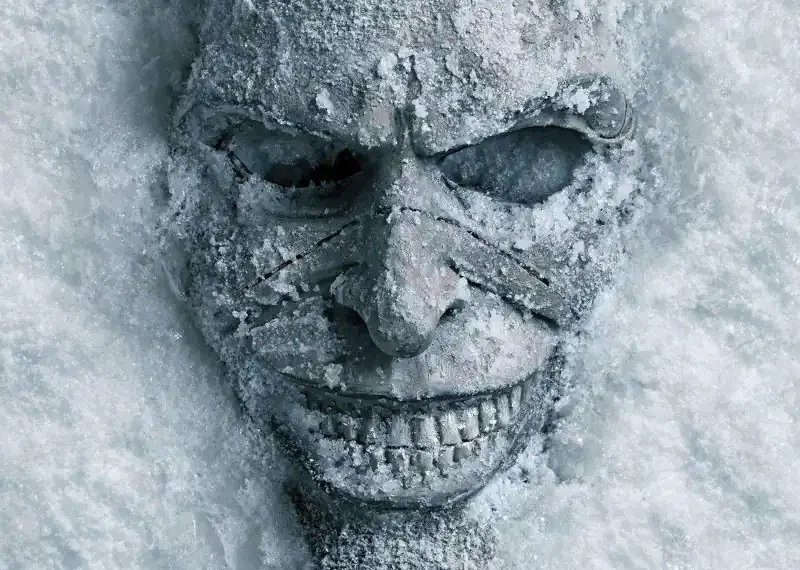
The film’s analogue inserts, shot on modified Super 16, deliver its most indelible horror moments: a scattering of crimson feathers in snow beside a child’s empty coat; syrupy blood seeping from a tree stump in a frozen forest. These fragmented, flickering visions haunt the dreams of Gwen (Madeleine McGraw), sister to Finney (Mason Thames), the siblings who survived the original film’s ordeal.
At the end of The Black Phone, Finney seemed to have escaped his nightmare, killing the child-abducting psychopath known as the Grabber (Hawke) with help from ghostly victims and his sister’s psychic foresight. But death is rarely a final verdict in horror, especially supernatural horror. The Grabber has found a way to reach across the grave, his presence now felt through eerie calls that once again threaten Finney and Gwen’s fragile peace.
Hawke slides back into the role with unnerving ease, his voice guttural beneath that unsettling mask and later beneath stomach-turning prosthetics. His performance anchors stretches of dialogue that would crumble under a lesser actor; he gives the absurd weight, the grotesque dignity of a slasher icon.
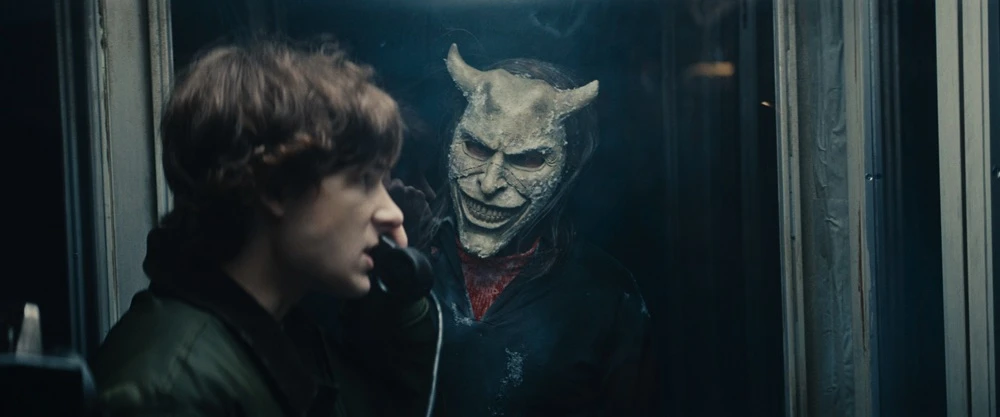
One of the pleasures of The Black Phone films lies in their old-fashioned premise. The idea of a ghost using a pay phone to torment kids already feels like an artefact, a relic of the analogue age. Derrickson leans into that nostalgia, setting this sequel in 1981 and loading it with period winks: jokes about disco, vintage slang, and a constant hum of Reagan-era malaise.
Like the Elm Street movies it emulates, The Black Phone 2 thrives on teenage isolation, kids left to fend for themselves in a world where adult supervision is either useless or nonexistent. Gwen takes centre stage this time, in a role reminiscent of Patricia Arquette’s dream-fighting heroine from A Nightmare on Elm Street 3: Dream Warriors. Instead of a psychiatric ward, she’s surrounded by the caretakers and campers of a snowbound Christian retreat, an equally eerie, if slightly campier, setting.
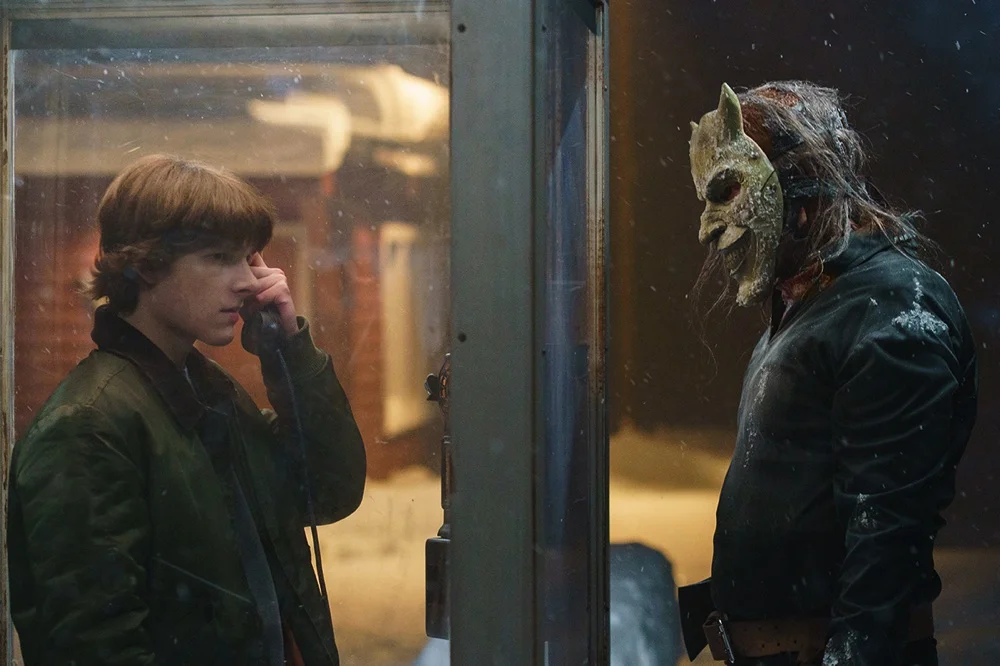
Among them are Ernesto (Miguel Mora), Gwen’s awkward crush and the younger brother of a character from the original film (also played by Mora); Armando (Demián Bichir), the camp’s weary overseer with ties to its bloody past; and Mercedes (Arianna Rivas), his no-nonsense niece. Attempts to weave in Spanish dialogue and cultural flavour mostly fall flat, but Bichir brings gravitas to the film’s clunky myth-building. When the movie needs someone to dump lore without boring us, he’s the man for the job.
Unfortunately, the film’s weakest link is its script. The dialogue veers from stiff to outright corny, the exposition piles up like snowdrifts, and the movie’s flirtation with Christian theology, Heaven, Hell, and divine judgment never gels into a coherent idea. Horror has always been fascinated by faith, from The Exorcist to The Conjuring, but Derrickson’s screenplay hints at a critique of religious hypocrisy that it never follows through on. By the finale, the movie shrugs and sends the Grabber “back to Hell,” skipping over the more interesting questions it raises.
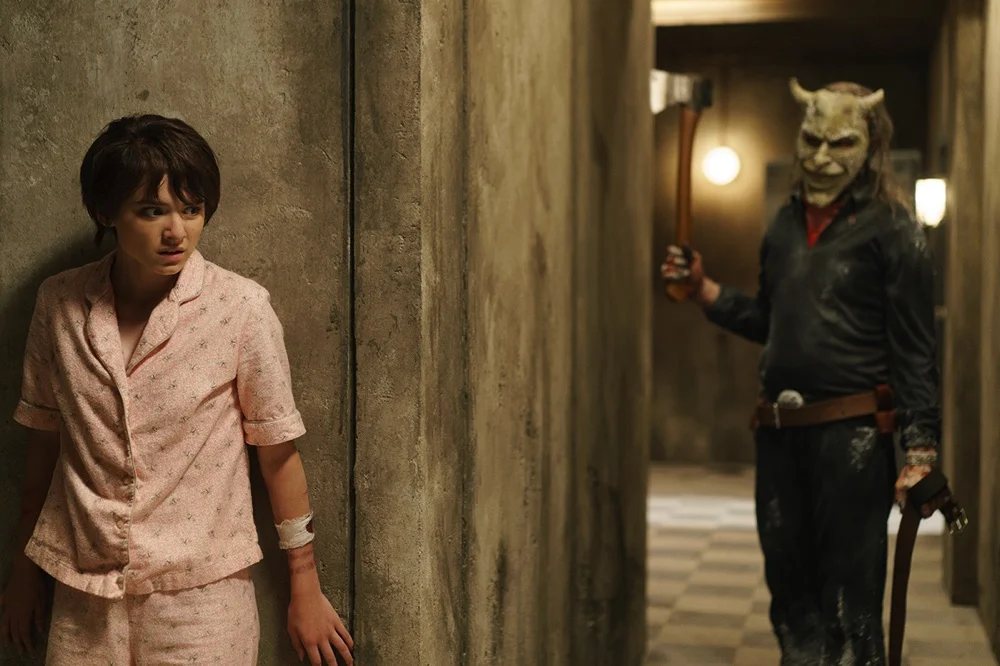
As a visual craftsman, however, Derrickson remains in top form. He stages the film’s violence with painterly precision: one sequence, involving the spectral reappearance of three murdered boys from 1957, features one of the year’s most memorable kills, a head sliced diagonally in two against a frosted window, twitching and spurting as it hits the floor. Elsewhere, bodies whip and levitate like possessed marionettes, echoing A Nightmare on Elm Street’s most iconic kills but amping up the blood and brutality.
Still, the nagging problem with The Black Phone 2 is that nearly everything that works has been borrowed from Derrickson’s earlier efforts, from Elm Street, even from The Shining, with its snowbound paranoia and cabin fever dread. These echoes are deliberate and often entertaining, but they also underscore how little new ground the sequel breaks.
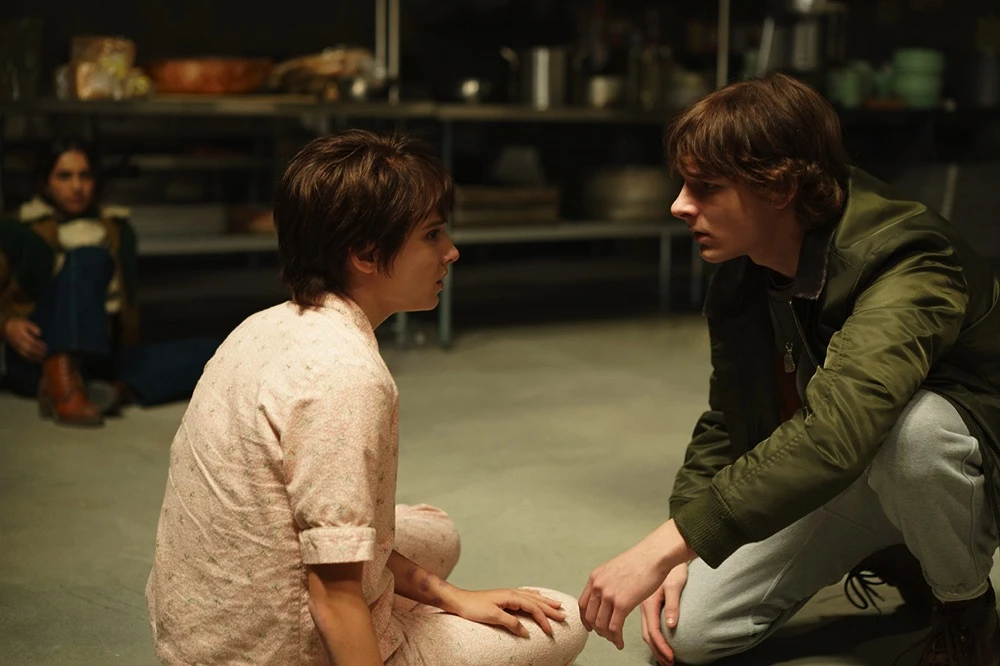
In the end, The Black Phone 2 is a stylishly shot, competently acted echo chamber, a haunted remix of other, better nightmares. It’s not bad; its influences haunt it. And in horror, “good enough” is often the most frightening kind of verdict.
Overall: 6.5/10

Movie Reviewer