

Cast: Léa Seydoux, Laurence Rupp, Catherine Deneuve, Jella Haase
Genre: Drama, Thriller
Director: Marie Kreutzer
In Irish Cinemas: Now
On Netflix November 18th 2026
When a police investigation exposes disturbing allegations against her husband, Lucy (Léa Seydoux), a celebrated pianist and mother, finds herself facing the collapse of the life she thought she knew. With her family suddenly under scrutiny and her young son caught in the middle, she must confront the possibility that the man she trusted has been hiding a deeply disturbing secret.
Set against the isolation of an expansive home outside Munich, Marie Kreutzer’s film follows Lucy as the foundations of her marriage begin to crumble. Her world initially appears comfortable and secure, shaped by family life and a successful musical career. Through her performances, Lucy has built a reputation for reinterpreting songs originally written and performed by men, transforming familiar pop tracks into intimate, stripped-back arrangements. As the investigation into her husband Philip (Laurence Rupp) intensifies, however, these musical interpretations take on a more unsettling significance, reflecting a woman beginning to question everything around her.
The arrival of investigator Elsa (Jella Haase) brings the allegations into the heart of Lucy’s domestic life. But the film also explores the uncomfortable contradictions within Elsa’s own circumstances, particularly her relationship with her elderly father, whose inappropriate behaviour towards his carer reveals another disturbing abuse of power. This parallel storyline broadens the film’s examination of exploitation and the ways women are forced to navigate the consequences of male misconduct, although it occasionally pulls attention away from Lucy’s increasingly painful journey.
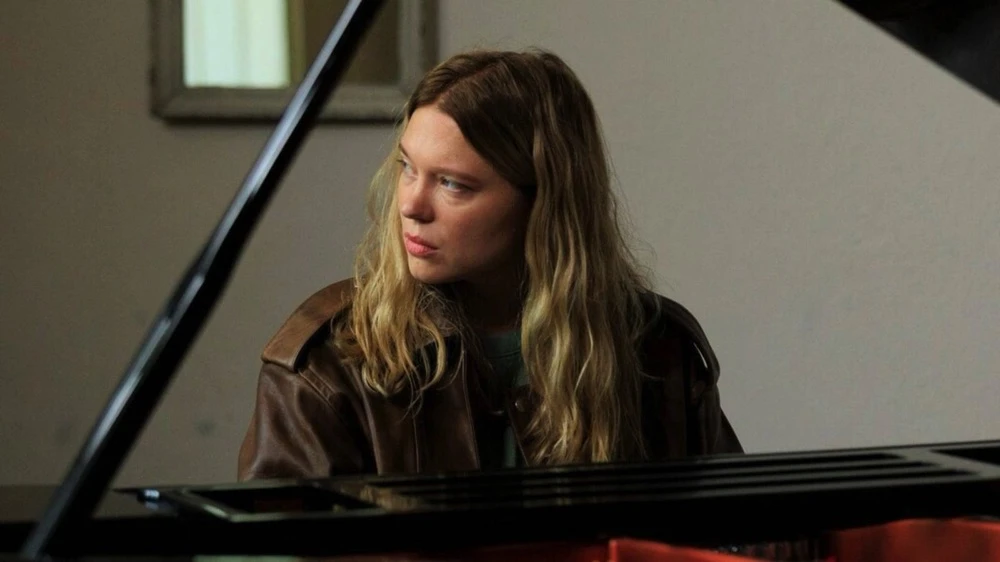
It is in Lucy’s emotional unravelling that the film finds its greatest strength. Seydoux delivers a compelling portrayal of a woman struggling to process betrayal while attempting to preserve some sense of normality for her child. Kreutzer frequently holds the camera close, allowing the smallest changes in Lucy’s expression to communicate the shock, confusion and isolation that words cannot. Although certain moments feel overly symbolic and the film occasionally leans too heavily on its emotional messaging, Seydoux gives the character a convincing mixture of fragility, resilience and disbelief.
Haase provides a strong supporting performance, though her character’s personal storyline sometimes feels underdeveloped in comparison. The film raises difficult questions about complicity, responsibility and the hidden realities within seemingly ordinary families, without offering straightforward conclusions.
Overall: 6.5/10

Movie Reviewer