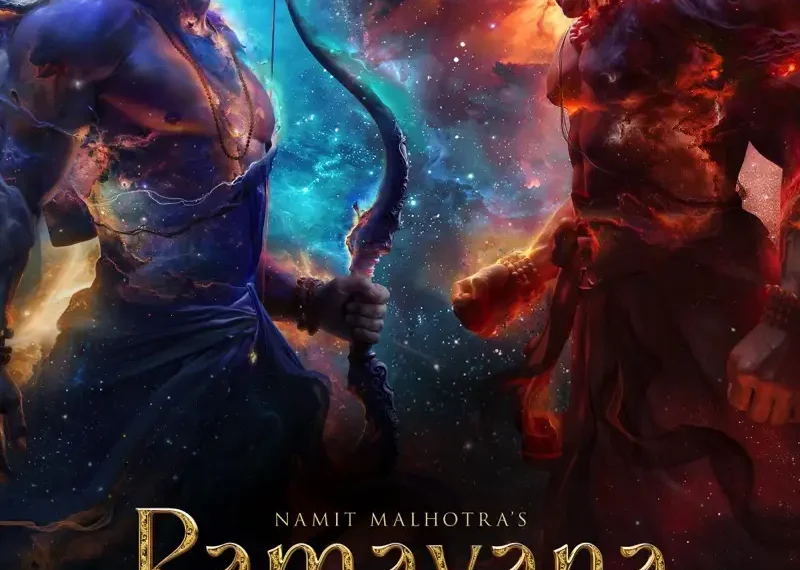
Cast: Ranbir Kapoor, Yash, Sai Pallavi, Ravie Dubey, Sunny Deol
Genre: Adventure, Fantasy
Director: Nitesh Tiwari
In Irish Cinemas: 5th November 2026
Ramayana: Rise of a Legend – A Spectacle That Loses Its Way
Bringing the Ramayana to the big screen is no ordinary filmmaking exercise. Few works of literature hold such a significant place in Indian culture, spirituality and collective identity. Any cinematic interpretation therefore carries enormous expectations, particularly when it comes from a production as ambitious as Nitesh Tiwari’s adaptation. Featuring Ranbir Kapoor as Rama, Yash as Ravana and Sai Pallavi as Sita, the film aims to transform one of the world’s most familiar mythological stories into a large-scale cinematic franchise. With a second instalment already planned, the English-language release arriving in Western cinemas on November 5 is positioned as the beginning of something much bigger.
Running for 162 minutes, this English edition is noticeably shorter than its Hindi counterpart and carries the subtitle Rise of a Legend instead of the original Part 1 designation. However, the new title does little to disguise the film’s biggest limitation: it spends almost its entire runtime preparing for the story audiences have actually come to see. Rather than delivering a complete dramatic experience, it functions largely as an extended introduction to a conflict that has yet to reach its most important stage.
The narrative begins with an ancient struggle between the Devas and Asuras, establishing the mythology behind the rise of Ravana. Initially driven by a desire to liberate his people from divine oppression, the ruler of Lanka gradually becomes consumed by ambition, expanding his power through conquest. His growing influence eventually threatens the balance of the universe, prompting Vishnu to take human form as Rama, a prince of Ayodhya destined to restore order.
Much of the early storytelling revolves around establishing these characters and their respective destinies. Rama’s childhood, his royal responsibilities and the circumstances surrounding his eventual exile receive considerable attention. When he finally agrees to spend 14 years away from Ayodhya to ensure his brother’s succession, the film has already devoted a substantial amount of time to groundwork. Unfortunately, the pacing rarely generates the excitement needed to make this lengthy introduction compelling. More significantly, Rama and Ravana never come face to face, leaving the central confrontation entirely for the next instalment.
One of the film’s most imaginative creative choices concerns Ravana’s ten heads. Rather than presenting them as a conventional physical feature, Tiwari interprets them as separate personalities competing within a single consciousness. These conflicting identities represent different aspects of the character, ranging from confidence and aggression to insecurity and vulnerability. It gives the antagonist an unusual psychological dimension and becomes one of the production’s most memorable ideas.
Yash makes excellent use of this interpretation. His Ravana possesses an imposing physical presence, but the performance is not entirely dependent on intimidation. There is considerable personality beneath the aggression, particularly in scenes depicting his devotion to Shiva and his gradual transformation into a figure consumed by vengeance. His ability to move between menace, arrogance and emotional vulnerability makes him one of the film’s strongest assets.
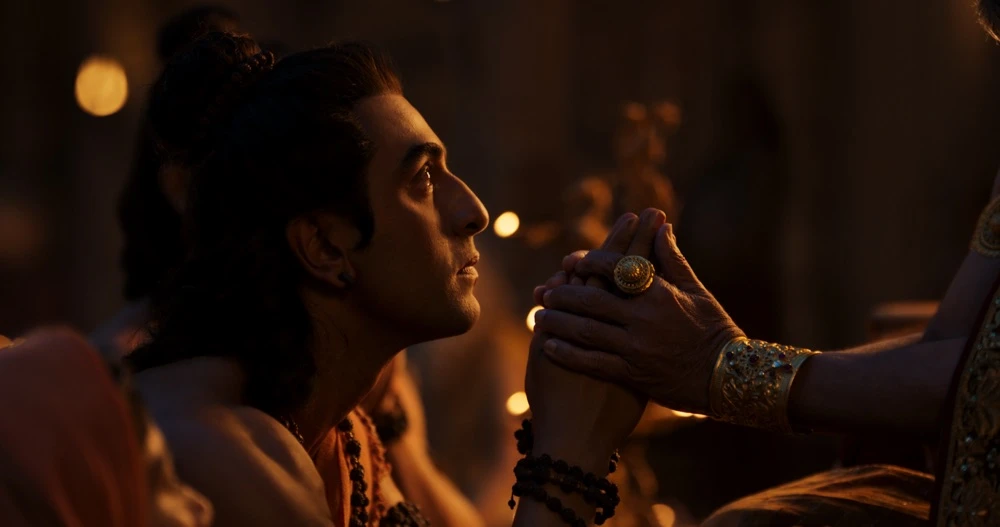
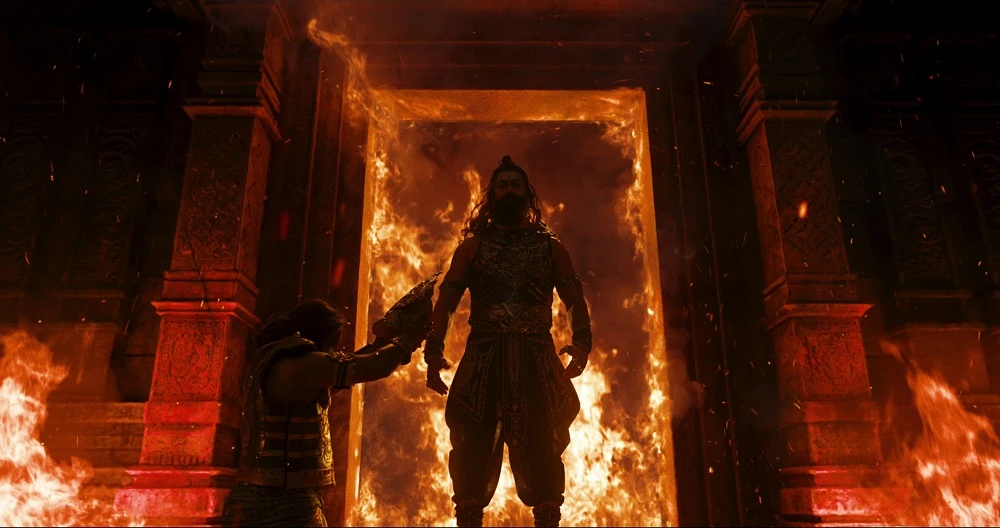
The visual presentation of Lanka further strengthens the character. Its architecture, colours and extravagant surroundings create a world that feels vibrant and distinctive. By comparison, Ayodhya is depicted with considerably more restraint, giving the two kingdoms contrasting visual identities. Yet this difference also exposes an unexpected imbalance in the storytelling: Ravana’s world often feels more fascinating than the supposedly righteous kingdom from which the hero emerges.
That imbalance becomes particularly noticeable when the film explores the antagonist’s motivations. Ravana is not introduced as someone who simply desires destruction. His initial opposition to the Devas is rooted in a sense of injustice, providing a foundation for a character who might have developed into something considerably more complicated than a conventional villain. Unfortunately, the screenplay rarely follows this possibility to its logical conclusion. Whenever the narrative approaches questions of morality, power and revenge, it retreats into a straightforward distinction between good and evil. Ravana consequently becomes an intriguing character whose complexity is never fully explored.
The same problem affects the film’s central protagonist, although in a very different way. Rama is presented as an almost flawless embodiment of righteousness, compassion and courage. However, these qualities are more frequently explained through dialogue than established through meaningful character moments. The audience is repeatedly reminded of his greatness without being given enough opportunities to understand what makes him exceptional.
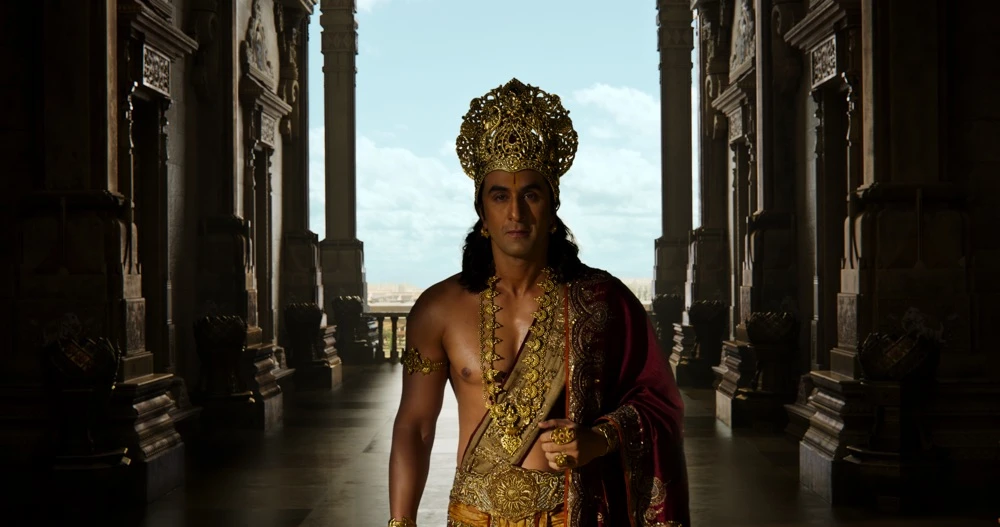
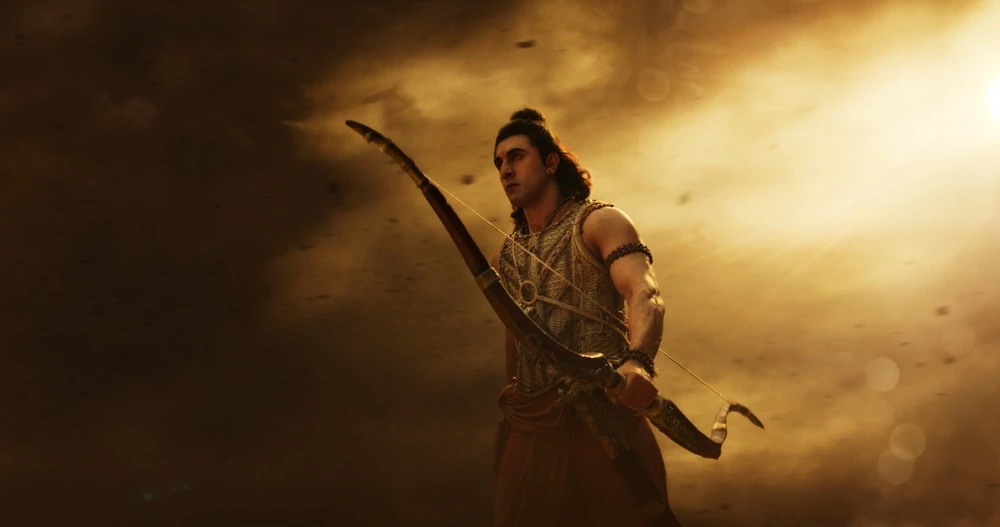
Ranbir Kapoor approaches the role with considerable seriousness, adopting a restrained performance style that reflects the film’s reverential treatment of the character. Nevertheless, the writing offers him limited emotional material to work with. His journey towards discovering his divine abilities also feels unusually convenient. Rather than building his strength through meaningful challenges, the film frequently relies on spiritual guidance and the unlocking of hidden powers. This makes several developments feel less like personal achievements and more like predetermined rewards.
The episodic structure does little to help. Rama moves from one encounter to another, encountering new threats, supernatural creatures and opportunities to demonstrate his growing abilities. Although these sequences contribute to the mythology, they rarely develop into emotionally satisfying turning points.
Sai Pallavi brings a welcome presence to Sita, and there are occasional indications that the filmmakers intended to give her a more assertive personality. A few moments involving her ability to defend herself suggest a potentially interesting direction for the character. However, these opportunities are relatively limited, and she eventually settles into a more conventional supporting position.
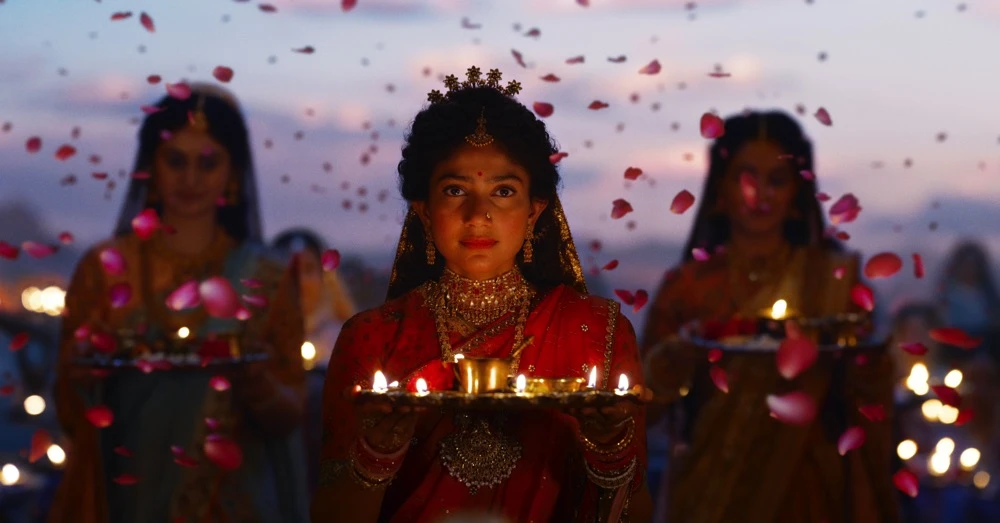
The relationship between Rama and Sita is another significant weakness. Their connection is central to the larger Ramayana narrative, yet the film struggles to establish the emotional intimacy required to make their eventual separation meaningful. The chemistry between Kapoor and Pallavi never quite develops, leaving their relationship feeling more symbolic than personal. Ravi Dubey’s Lakshmana provides occasional humour, but the dialogue frequently feels out of place within the otherwise solemn atmosphere.
The English-language adaptation introduces another distraction through its use of Brahma A.I., an internally developed generative artificial intelligence system designed to modify the performers’ lip movements to correspond with the translated dialogue. The concept is certainly ambitious, particularly for a production hoping to reach audiences beyond India. However, the finished effect is inconsistent. Facial movements can appear exaggerated and unnatural, making certain close-ups particularly distracting. Even the appearance of Brahma, portrayed through a celestial digital form, is undermined by an animated mouth that feels more artificial than convincing.
The English performances also struggle to maintain the appropriate tone. Some dialogue sounds noticeably contemporary, occasionally clashing with the grandeur and traditional atmosphere the film is attempting to establish. The decision to remove much of the original musical material creates an additional problem. Songs and dance sequences are an important part of the storytelling language of mainstream Indian cinema, contributing to emotional expression, pacing and cultural identity. Their reduction leaves this version feeling considerably less distinctive.
For viewers unfamiliar with the Hindi version, the English cut may offer greater accessibility. However, accessibility comes at the expense of some of the original production’s character. The musical sections in particular could have provided welcome variety in a film that already struggles to maintain narrative momentum.
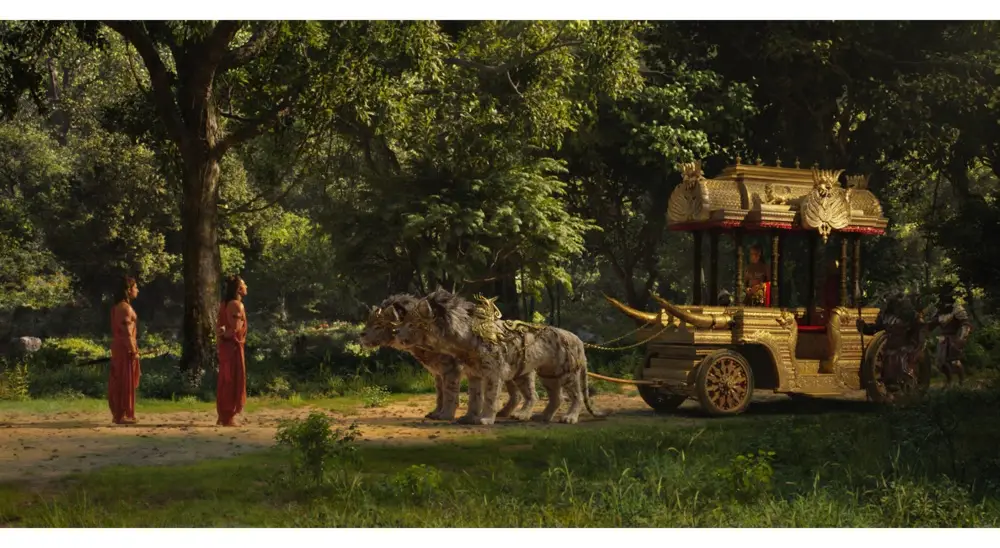
Visually, the production demonstrates considerable investment. The costumes are elaborate, the palace environments are impressive and several individual compositions create a convincing sense of scale. When the film slows down and allows its environments to occupy the frame, the craftsmanship becomes much easier to appreciate.
Unfortunately, the action sequences do not consistently match that visual ambition. Many battles are assembled through rapid editing and excessive digital effects, making it difficult to understand where characters are positioned or what is happening around them. The creature designs are uneven, and the combat frequently lacks physical impact. Rather than creating excitement through choreography and tension, the film relies heavily on spectacle.
The musical contribution of Hans Zimmer and A.R. Rahman is undoubtedly substantial, bringing an appropriately grand sound to the production. Their score frequently attempts to provide the emotional intensity missing from the action itself. However, even powerful music cannot compensate for sequences that lack clarity, rhythm and a convincing sense of consequence.
There are occasional reminders of what the film might have achieved with stronger storytelling. One particularly effective transition connects a disturbing dream with the image of an unoccupied throne, communicating the isolation and responsibility associated with leadership without requiring excessive explanation. The final aerial confrontation also stands out for its visual imagination and relatively clear execution. Curiously, however, this is a supporting character’s moment rather than a defining achievement for Rama. It is difficult not to notice that one of the film’s most entertaining action sequences takes place away from its central hero.
Ultimately, Ramayana: Rise of a Legend feels like a production caught between its enormous ambitions and an incomplete screenplay. Its scale is undeniable, its mythology offers endless cinematic possibilities and Yash delivers a compelling interpretation of Ravana that deserves considerably more narrative attention. Yet the film struggles to create an equally engaging hero, establish a convincing central romance or deliver action sequences that consistently justify their impressive scale.
There is clearly a much larger story waiting to unfold, and the decision to divide the epic into multiple films is understandable given the source material. However, the first instalment still needs to function as a satisfying cinematic experience in its own right. Here, too much time is spent setting the stage, while the characters and conflicts that should provide the emotional foundation remain underdeveloped.
Audiences with a strong attachment to the Ramayana may appreciate the familiar mythology, elaborate production design and the opportunity to see these legendary figures recreated on such an enormous scale. Those approaching the story without prior knowledge, however, may find the experience less rewarding. Despite its impressive intentions and occasional flashes of brilliance, Ramayana: Rise of a Legend feels more like an expensive promise of a great film than a great film in itself. Its most important moments are still waiting to happen.
Overall: 6/10

Movie Reviewer