Reviewed on 9th September 2025 at the 50th Toronto International Film Festival
Cast: Leo Woodall, Havana Rose Liu, Dustin Hoffman, Tovah Feldshuh, Lior Raz, Jean Reno
Genre: Crime, Drama, Music, Romance, Thriller
Director: Daniel Roher
In Irish Cinemas: 6th June 2026
After conquering the documentary world with his Oscar-winning portrait of Alexei Navalny, filmmaker Daniel Roher pivots sharply into fictional territory with Tuner. This genre mash-up trades political urgency for slick suspense and offbeat romance. The result is an ambitious but uneven debut feature film packed with personality and technical flair, yet constantly torn between breezy caper comedy and grim crime thriller. Ironically, for a story built around the power of sound, it never quite finds its own rhythm.
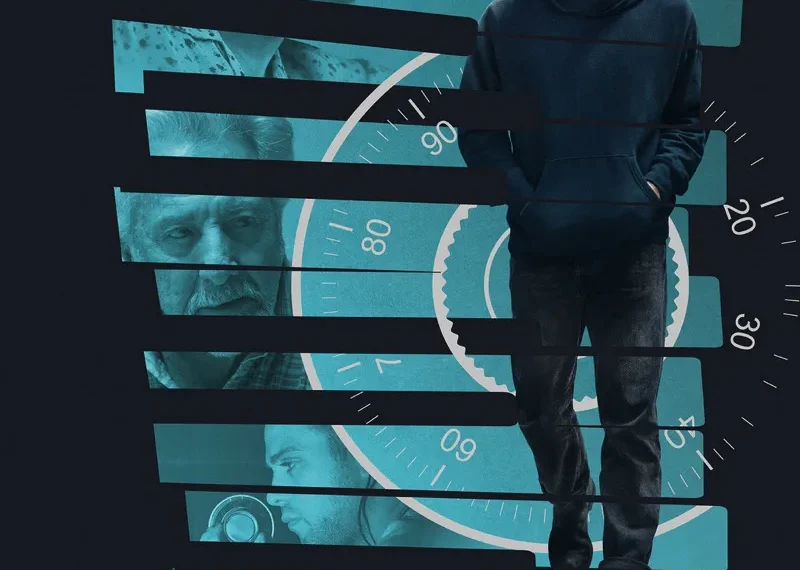
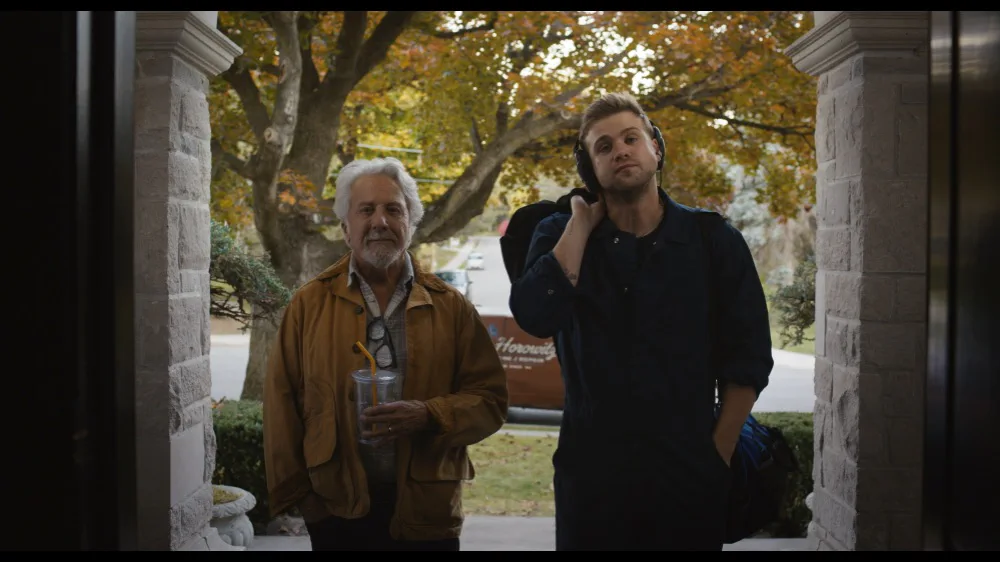
The story follows Niki (Leo Woodall), a gifted piano tuner whose hypersensitive hearing has left him stranded between talent and torment. Once destined for a career in music, he instead found his condition drove him toward a quieter existence working under veteran tuner Harry Horowitz (Dustin Hoffman), a revered figure among elite musicians. Niki’s extraordinary ear, however, turns out to have value beyond concert halls. After stumbling into a criminal operation and realising he can identify safe combinations through sound alone, he’s lured into carrying out high-stakes robberies. At first, the money offers a lifeline for Harry’s deteriorating health, but as the jobs escalate, so do the consequences, especially for Ruthie (Havana Rose Liu), Niki’s fiercely driven pianist girlfriend, who becomes collateral damage in a world neither of them can control.
For much of its opening stretch, Tuner is enormously appealing. Roher captures a jittery, streetwise New York energy, mixing snappy dialogue with quirky character details and an undercurrent of tension. The mystery surrounding Niki’s hearing condition immediately draws attention, while the script smartly balances humour with intrigue. Hoffman, unsurprisingly, dominates every moment he’s given. Harry is cantankerous, charming, and effortlessly funny, a man whose warmth masks decades of exhaustion. Whether he’s trading insults with wealthy clients or grumbling through another impossible workday, Hoffman injects the film with vitality. The early scenes crackle with confidence, blending romance, comedy, and low-level criminal chaos into something genuinely entertaining.
Then the film veers in an entirely different direction. As the narrative darkens, the playful spirit that made the first half so engaging begins to disappear. The humour fades, Hoffman largely exits the picture, and the film becomes a far more conventional crime thriller, complete with bursts of violence and escalating menace. Instead of evolving naturally, the tonal shift feels abrupt, as though Roher abandoned one movie halfway through to make another. The charm that initially carried the story drains away, leaving behind a far heavier experience that never feels fully earned.
Still, some elements continue to impress. Roher’s use of sound is consistently inventive, immersing viewers in Niki’s distorted sensory world. Everyday noises become oppressive, music turns physical, and silence itself acquires tension. The film owes a clear debt to Edgar Wright’s Baby Driver, particularly in the way audio cues drive momentum and shape emotion, but Tuner develops enough of its own style to avoid feeling derivative. The sound design is not decorative; it’s central to how the audience experiences the film.
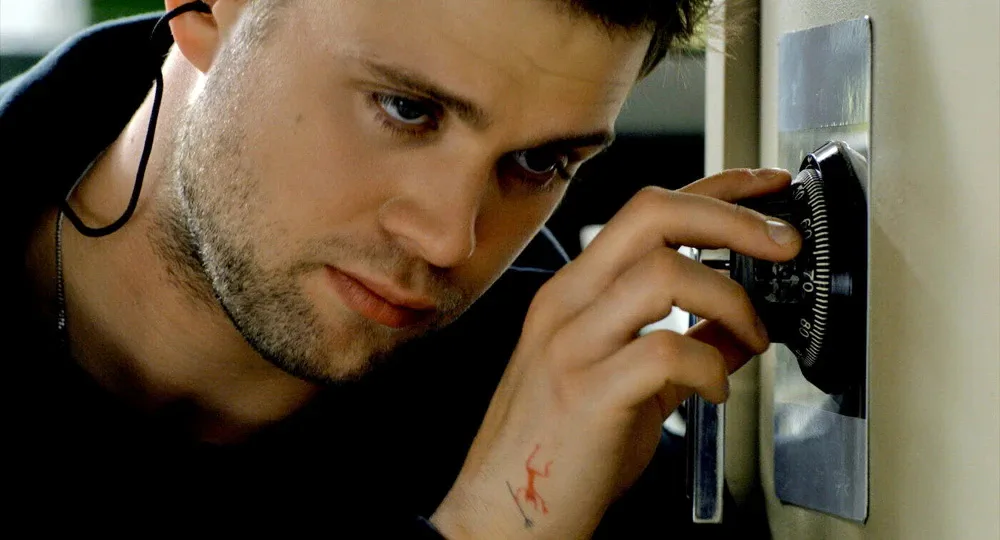
Woodall, meanwhile, proves increasingly compelling as a leading man. His performance balances vulnerability with understated charisma, and his chemistry with Hoffman gives the film much of its emotional grounding. Even when the script loses focus, Woodall remains watchable, carrying the latter half through sheer screen presence. Over the last few years, he’s steadily moved beyond “rising star” status, and Tuner reinforces the sense that he’s capable of much bigger things. Unfortunately, the film surrounding him never quite reaches the same level. It’s stylish, ambitious, and intermittently brilliant, but ultimately too conflicted to fully deliver on its strongest ideas.
Overall: 7/10

Movie Reviewer