
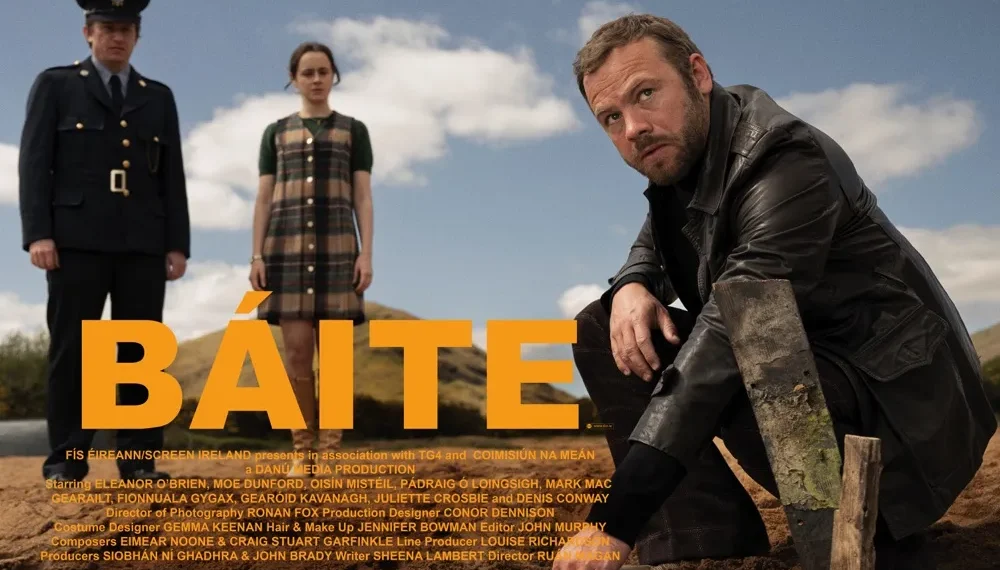
Cast: Eleanor O’Brien, Moe Dunford, Juliette Crosbie, Pádraig Ó Loingsigh, Denis Conway, Mark Mac Gearailt, Gearóid Kavanagh, and Fionnuala Gygax.
Genre: Drama
Director: Ruán Magan
In Irish Cinemas: 6th March 2026
The hush that hangs over a tight-knit parish in the west of Ireland is ruptured when human remains surface from the depths of a drained lake in Baite. Set against the rolling expanses of County Galway, Ruan Magan’s first Irish-language feature blends whodunnit mechanics with a study of familial strain, suggesting that in small communities, the past is never fully submerged. Adapted by Sheena Lambert from her own 2015 novel The Lake, the film carries the reassuring shape of familiar storytelling, favouring steady, television-friendly rhythms over cinematic daring, even after its bow at the Galway Film Fleadh.
Magan, whose background spans shorts, documentaries and television work such as The Flourishing and Steps of Freedom, opens with sweeping aerial views of lush fields and stone-walled pastures. The camera glides reverently above postcard vistas while a mournful score hums beneath. It is handsome but overly familiar terrain, imagery long associated with Irish rural drama. Rather than establishing a distinctive tone, the film settles into a visual and narrative comfort zone that recalls countless Sunday-night mysteries.
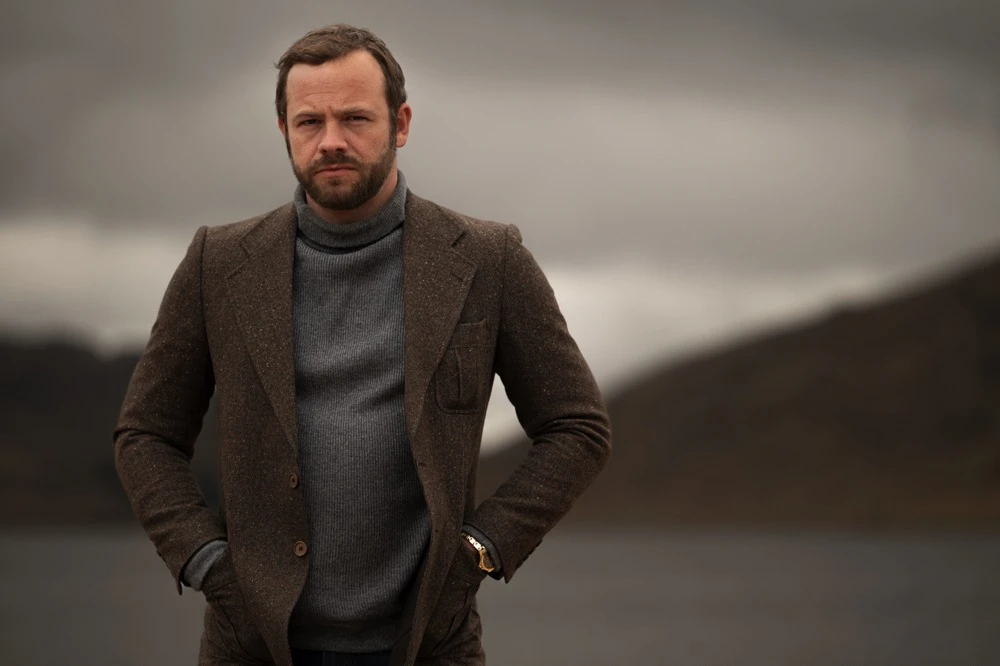
The story unfolds in the late summer of 1975 in the fictional hamlet of Glanaphuca, a place defined by routine and the comforting myth that little of consequence ever occurs there. That illusion dissolves when two visiting fishermen uncover a woman’s body in a man-made lake, whose waters receded after an unusually dry spell. The lake itself conceals the ruins of an earlier village and its graveyard, submerged years before, an evocative metaphor that the script returns to often. Many locals would prefer to believe the remains belong to that lost cemetery. The arrival of Dublin detective Frank Ryan, played with restrained weariness by Moe Dunford, threatens to disturb that convenient narrative.

At the centre of the community stands Peggy Casey, embodied with raw intensity by Eleanor O’Brien. Proprietor of the village pub and fiercely protective of its reputation, she insists it serves the finest fare in the county. Peggy is already under pressure. Her siblings see dwindling prospects and argue for selling up. Carla dreams of emigration to Australia; Jerome eyes a fresh beginning in the capital; Hugo has made good abroad in London and sees sentimentality as a luxury. The pub’s uncertain future mirrors the investigation’s slow excavation of buried tensions. As suspicion ripples outward, long-guarded secrets seep into view.
The film leans into classic mystery conventions: tight circles of potential suspects, wary glances exchanged over pints, and the slow drip of revelations. There is a touch of dry humour in the portrayal of 1970s provincial life, casual chauvinism, limited resources, and a local garda operating with little more than determination and a faulty phone line. Beneath the surface plot runs a more compelling thread: the suffocating weight of tradition and the lure of escape. Characters chafe against expectations shaped by church, family and geography, their private frustrations lending texture to the drama.
Flashbacks revisit the era when the valley was first flooded, sketching the social climate that shaped the dead woman’s fate. These sequences provide context and emotional shading, though they also steer the narrative towards tidy resolution. As strands converge, the film opts for closure over ambiguity, tying its knots with care but little surprise. A tentative romantic undercurrent between Peggy and the visiting detective feels more dutiful than organic, another familiar beat in an otherwise competently assembled mystery.

Baite ultimately proves engaging without ever quite gripping the throat. Its strengths lie in performance and atmosphere, and in its gentle probing of how communities rewrite their own histories. Yet the film rarely ventures beyond the well-trodden path of rural crime drama. Like the lake at its centre, it reflects its surroundings faithfully, calm, composed, and faintly opaque while keeping its deeper currents safely contained.
Overall: 7/10

Movie Reviewer