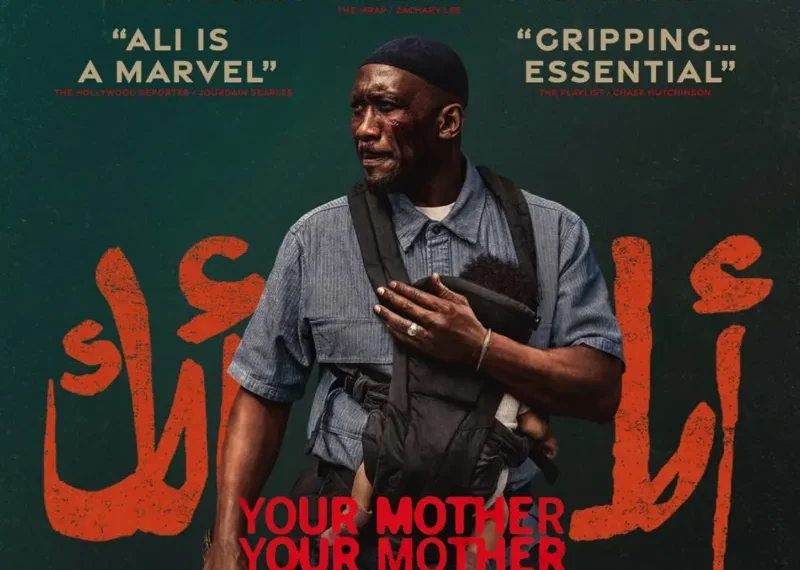
Cast: Mahershala Ali, John Cho, Abubakr Ali, Laith Nakli, Tramell Tillman, Tiffany Boone, and Giancarlo Esposito, also starring Adia, Jahleel Kamara
Genre: Action
Director: Bassam Tariq
In Irish Cinemas: 20th November 2026
Explores the Collision Between Faith, Violence and Family
Mahershala Ali delivers a compelling performance as a grieving father whose religious devotion clashes with his secret life as a professional killer in Bassam Tariq’s unconventional action drama.
Few films capture the strange contradictions of modern American life quite like Bassam Tariq’s Your Mother Your Mother Your Mother. Set in a working-class Houston neighborhood, the film presents a community where vastly different cultures, religious beliefs and lifestyles exist side by side. Churches occupy buildings that once housed strip clubs, religious communities share the same streets, and faith often seems inseparable from the pursuit of wealth, power and violence. It is an unusual setting, but one that reflects the film’s central interest in the complicated relationship between personal beliefs and the world people inhabit.
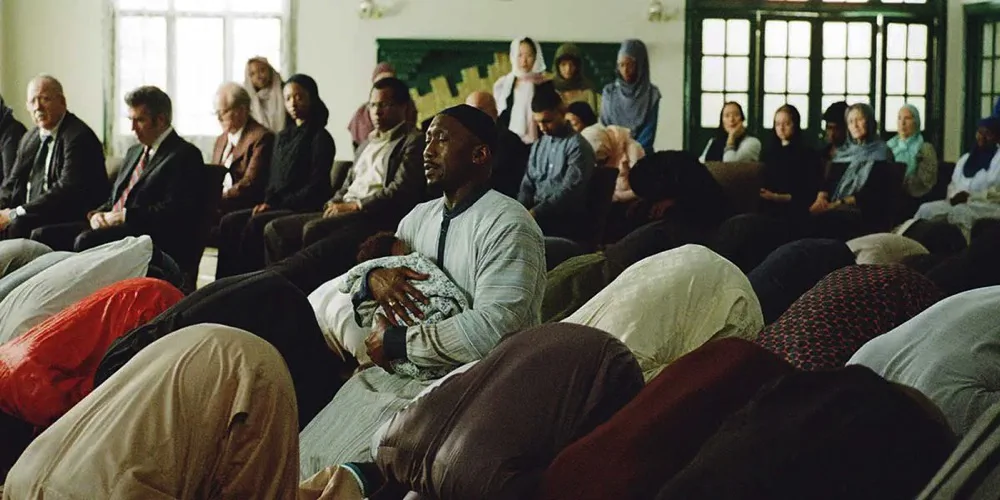
At the heart of the story is Latif, played by Mahershala Ali, a father attempting to raise three children following the death of his wife, Khadijah. With a teenage daughter, Fatiha (Adia), a young son, Qadir (Jahleel Kamara), and a baby daughter, Aziza, depending on him, Latif is under enormous pressure to keep his family together. His faith provides him with a sense of direction, while the local mosque and its compassionate leader, Abdul Malik (Giancarlo Esposito), offer him a much-needed support system. However, Latif has a dangerous secret that threatens everything he is trying to preserve: he earns his living as a highly skilled contract killer.
The film wastes little time revealing the darker side of its protagonist. An opening confrontation in a neglected basement bathroom establishes Latif as a man capable of extraordinary brutality. The camera stays uncomfortably close as he fights his opponent, eventually killing him with a knife before calmly cleaning the weapon and leaving. It is a shocking introduction, particularly when contrasted with the image of a devoted father who spends the rest of his life trying to maintain a stable home. Although the film occasionally returns to physical confrontations, Tariq is less concerned with delivering a conventional action spectacle than examining the psychological consequences of living two completely opposing lives.
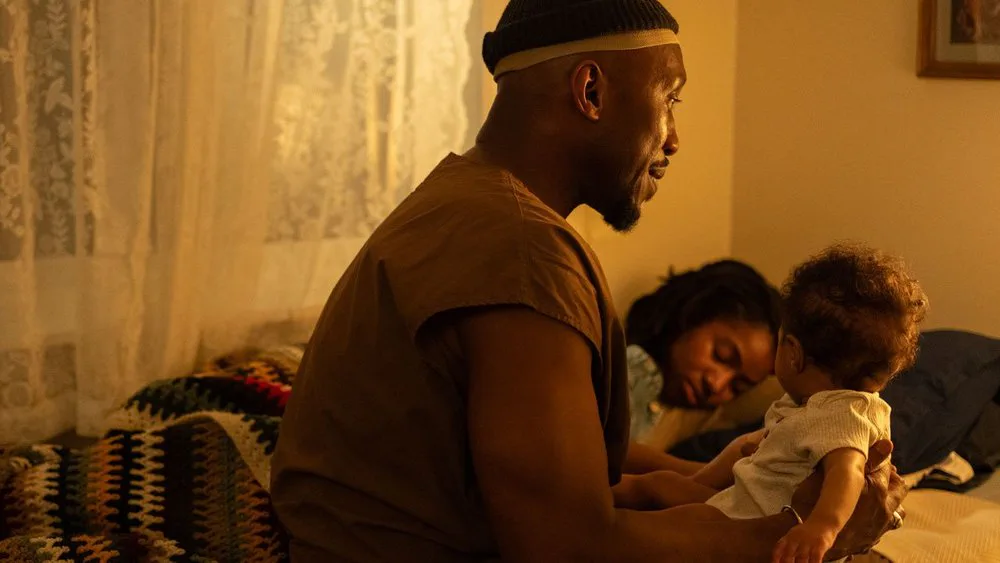
Much of the film’s strongest material emerges from Latif’s everyday struggles. His youngest daughter is unable to tolerate formula, and the supply of frozen breast milk left behind by her mother has finally run out. This forces Latif and Fatiha into an increasingly desperate search around Houston for an alternative. What initially appears to be a relatively ordinary parenting problem becomes a deeply personal crisis. Latif has built his identity around being someone who can provide and protect, yet he finds himself unable to solve one of the most basic problems facing his family. His helplessness exposes the fragility of the control he believes he has over his life.
Their search eventually leads them to Fugazi (Tiffany Boone), a sex worker with connections to Haddy (Abubakr Ali), an eccentric pornography businessman and nephew of Latif’s associate Mike Mahmoudi (Laith Nakli). Haddy’s bizarre business model, which includes supposedly halal-certified adult content, is representative of the film’s unusual sense of humour. Tariq creates a world in which religion, commercial exploitation and personal indulgence frequently overlap in absurd ways. Even the most outrageous characters seem to belong naturally within this environment.
Perhaps the most striking example is Pastor Hwan Yoon (John Cho), a flamboyant religious leader whose congregation combines evangelical Christianity with an almost obsessive devotion to firearms. Dressed in cowboy clothing, decorated denim and extravagant jewellery, he leads a community fascinated by weapons such as the AR-15. The character could easily feel like an exaggerated caricature, but his resemblance to real-world religious movements gives the satire an uncomfortable degree of credibility. Tariq uses these figures to illustrate how easily religious conviction can become entangled with political identity, commercial interests and the glorification of violence.
This mixture of disturbing subject matter and unexpected comedy gives Your Mother Your Mother Your Mother its distinctive personality. The film moves between intimate family drama, dark humour and bursts of action without always maintaining a consistent balance. Its grounded locations and rough visual style suggest a serious examination of faith and morality, yet its characters and occasional narrative detours introduce an almost surreal quality. These tonal changes are sometimes entertaining, although they can also make the film feel as though it is struggling to decide what kind of story it wants to tell.

Latif’s situation becomes increasingly complicated when Mike offers him a particularly troubling assignment. His hesitation creates the foundation for the film’s more action-driven second half, forcing him to confront the difference between the religious principles he claims to follow and the violent work that finances his family’s existence. It is an interesting moral conflict, especially because Latif does not appear to have a straightforward answer to the contradictions in his own behaviour. His faith is genuine, but so is his capacity for violence. The film raises important questions about whether morality can exist independently of the institutions and communities that claim to define it.
Unfortunately, these ideas become less developed as the story progresses. The increasingly extravagant supporting characters and escalating violent encounters occasionally overshadow the more thoughtful examination of grief, responsibility and religious identity. Some of the film’s most interesting possibilities are introduced without being explored as deeply as they deserve. Its ambition is evident, but its different elements do not always come together successfully.
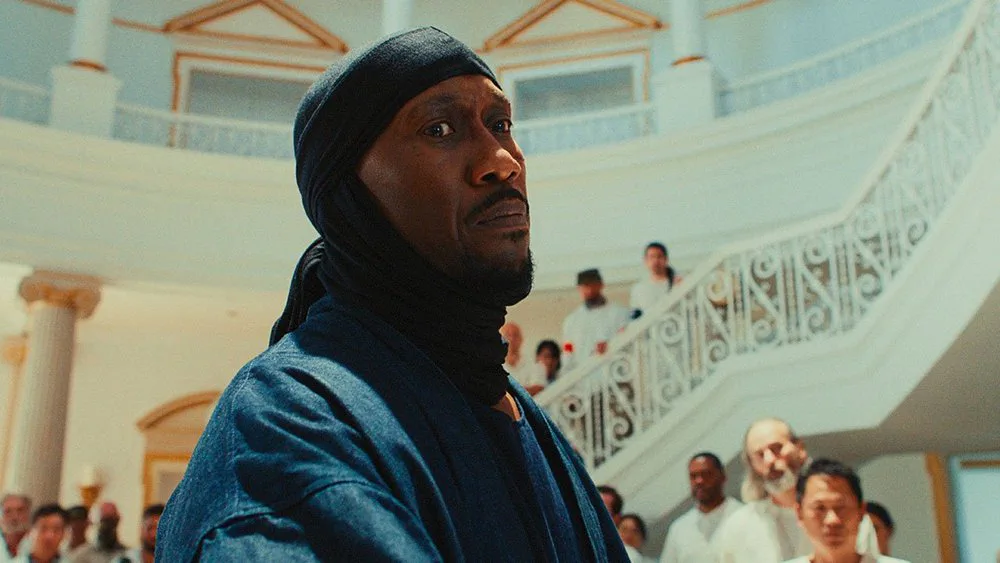
Nevertheless, the performances provide a strong emotional foundation. Ali brings a restrained intensity to Latif, communicating much of the character’s inner turmoil through his expressions and physical presence rather than lengthy explanations. His portrayal makes the protagonist’s contradictions believable, allowing audiences to understand both his devotion to his children and the disturbing choices he makes outside the home. Adia is equally effective as Fatiha, whose experience of losing her mother is complicated by her growing awareness of her father’s hidden life. Her performance captures the confusion, resentment and vulnerability of a teenager forced to reconsider everything she thought she knew about her family.
Ultimately, Your Mother Your Mother Your Mother is an imperfect but fascinating film that attempts to examine the uneasy coexistence of faith, violence, identity and responsibility in contemporary America. Its narrative occasionally loses focus, and its tonal shifts can be frustrating, but its unusual characters and central performance make it difficult to dismiss. Beneath the gunfights, eccentric personalities and moral contradictions is a much simpler story about a father struggling to hold on to his children after losing the person who once held their family together. In a world where almost everything seems uncertain, family becomes the one thing Latif cannot afford to lose.
Overall: 7/10

Movie Reviewer