
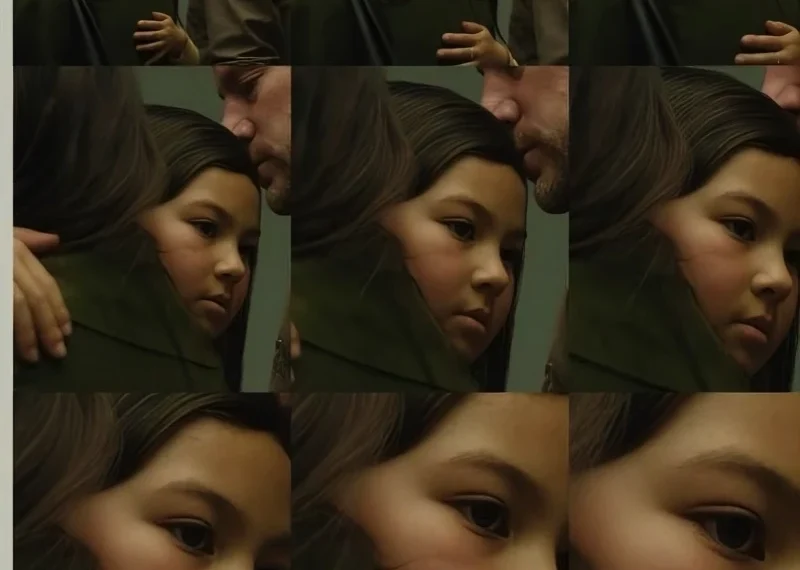
Cast: Gemma Chan, Channing Tatum and Mason Reeves
Genre: Crime, Drama, Political, Social
Director: Beth de Araújo
In Irish Cinemas: 20th November 2026
Beth de Araújo’s Josephine is a deeply unsettling examination of childhood trauma, parental helplessness and the lasting consequences of witnessing something no child should ever have to see. Anchored by an extraordinary performance from its young lead, Mason Reeves, and a surprisingly affecting turn from Channing Tatum, the film explores how a single moment can completely transform the lives of an otherwise ordinary family.
At the centre of the story is eight-year-old Josephine, a spirited young girl whose world revolves around spending time with her father, Damien (Tatum). Their relationship is established through a series of playful, affectionate moments that make their closeness immediately apparent. Whether running around San Francisco’s Golden Gate Park or enjoying a game of football, there is an unmistakable sense of security between them. Josephine is comfortable in her father’s company, and he clearly adores her. It is a simple but effective introduction to a family whose sense of normality is about to be shattered.
During an afternoon at the park, Josephine witnesses a horrific sexual assault against a female jogger. The experience becomes the defining moment of the film, marking the end of her childhood innocence and introducing a level of fear and confusion she is far too young to process. De Araújo makes the decision to confront the audience with the incident rather than relying entirely on implication. It is an exceptionally difficult sequence to watch, made all the more distressing by the fact that the events unfold through the eyes of a child. The contrast between Josephine’s youth and the brutality of what she sees is devastating.
What makes the scene particularly effective is the film’s attention to Josephine’s perspective. She does not possess the emotional maturity or understanding to make sense of what has happened. She recognises that something terrible has occurred, but lacks the language and knowledge to explain it. That inability to comprehend the experience becomes central to her behaviour throughout the film. Her fear manifests itself through anger, withdrawal and increasingly unpredictable actions, leaving the adults around her struggling to understand how best to help.
The film’s greatest strength lies in its exploration of the aftermath rather than simply the traumatic event itself. Josephine’s parents are both desperate to protect their daughter, yet their attempts to do so reveal just how unprepared they are for the situation. Damien approaches the problem through physical activity and self-defence lessons, believing that giving his daughter the ability to protect herself might restore some of the confidence she has lost. Her mother takes a gentler approach, attempting to comfort her through reassurance and professional support. However, neither seems capable of addressing the questions Josephine is actually asking.
Their intentions are undoubtedly good, but their responses often highlight the limitations of adult understanding. One particularly revealing moment comes when Josephine asks her father whether something similar could happen to her. His immediate reassurance that it never will is an understandable parental instinct, but it also demonstrates his inability to confront the frightening reality of what she has witnessed. The film repeatedly captures these moments of well-intentioned avoidance, showing how difficult it can be for parents to find the right words when their own fear and uncertainty are overwhelming them.
De Araújo also deserves credit for refusing to turn the story into a conventional account of recovery. Josephine does not simply begin to improve as her parents seek help. Instead, her trauma develops in complicated and sometimes frightening ways. She becomes increasingly disconnected from the world around her, and the man responsible for the assault begins to occupy an unsettling place in her imagination. These moments introduce an almost psychological-horror atmosphere, reflecting the way an experience can continue to haunt someone long after the immediate danger has passed.
There are occasional weaknesses in the film’s execution. Its final section feels somewhat prolonged, and certain sequences rely heavily on the musical score to communicate emotions that have already been established. Gemma Chan, meanwhile, is given relatively little opportunity to develop Josephine’s mother beyond her understandable concern for her daughter. Although there are brief suggestions of a more complicated emotional history, these elements are never explored as fully as they might have been.
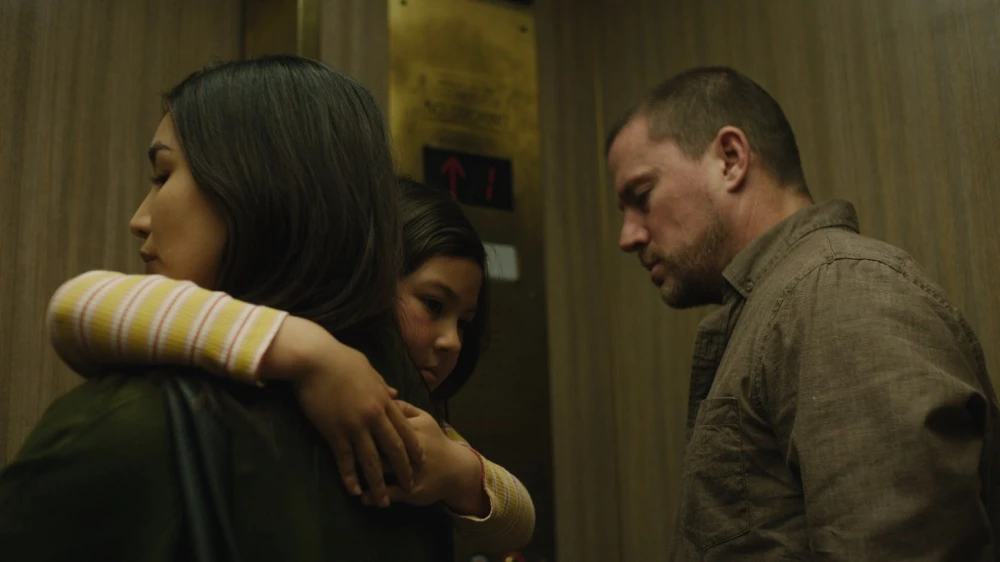
Nevertheless, the performances are consistently impressive. Reeves is particularly remarkable, delivering a portrayal that feels instinctive rather than performed. She captures the contradictions of a child struggling with feelings she cannot identify, moving between vulnerability, frustration and unsettling aggression without ever losing the character’s underlying innocence. It is a demanding role, and she handles it with considerable maturity.
Tatum is equally compelling, perhaps delivering one of the most interesting performances of his career. Damien is not an uncaring or irresponsible father; he is a man who genuinely believes he can solve the problems facing his family. His difficulty is that the situation demands an emotional sensitivity and understanding that he does not necessarily possess. Tatum communicates this conflict beautifully. Beneath Damien’s confidence is a growing sense of panic, as he gradually realises that loving his daughter and wanting to protect her are not necessarily enough.
There is something particularly affecting about watching an actor so often associated with confidence, charm and physical strength portray a man whose usual instincts repeatedly fail him. Damien wants to be the person who fixes everything, but Josephine’s experience is not something he can simply fight against or make disappear. His journey towards recognising that limitation gives the character much of the film’s emotional weight. A particularly intense confrontation between father and daughter demonstrates just how deeply his own fear and frustration have begun to affect him.
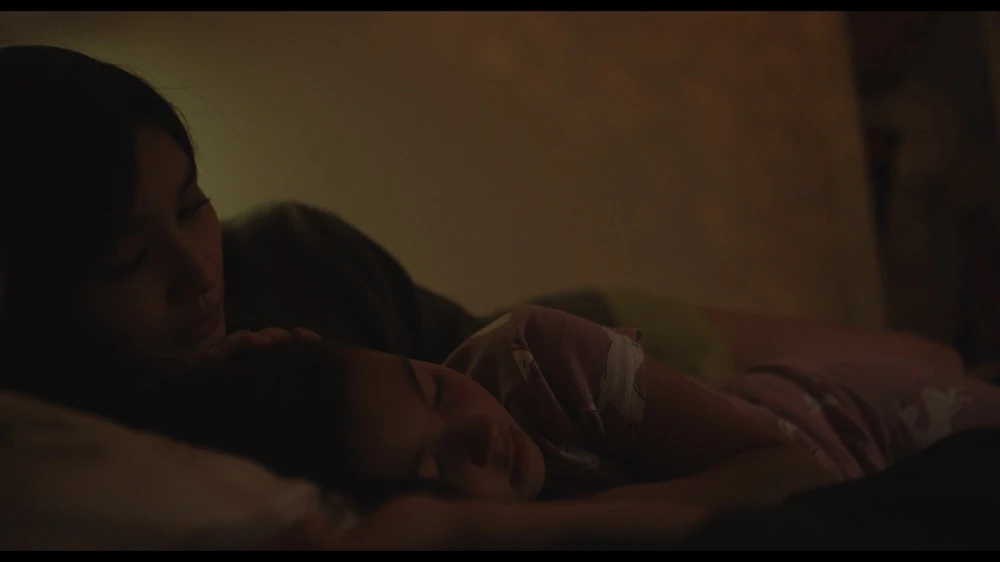
Ultimately, Josephine is a difficult but enormously affecting film. It asks uncomfortable questions about childhood vulnerability, the responsibilities of parents and the inadequacy of reassurance when a child is dealing with something genuinely incomprehensible. While its pacing occasionally falters, the strength of its central performances and the sensitivity of its subject matter make it an experience that is difficult to dismiss.
De Araújo has created a film that understands trauma is not confined to the moment it occurs. Its consequences continue to surface in unexpected ways, affecting relationships, behaviour and the very foundations of family life. Reeves gives us a young girl whose struggle is heartbreaking to watch, while Tatum provides the film with a deeply human portrayal of a father confronting the limits of his own abilities.
Josephine is not an easy watch, nor does it attempt to offer the audience a comfortable resolution. Instead, it leaves behind a lingering sense of unease, forcing us to consider the lasting impact of experiences that cannot simply be forgotten. Long after the credits roll, its emotional weight remains.
Overall: 8/10

Movie Reviewer