Cast: Nicholas Galitzine, Camila Mendes, Alison Brie, James Purefoy, Morena Baccarin, Jóhannes Haukur Jóhannesson Charlotte Riley, Kristen Wiig, with Jared Leto and Idris Elba
Genre: Action, Adventure, Fantasy, Sci-Fi
Director: Travis Knight
In Irish Cinemas: 3rd June 2026
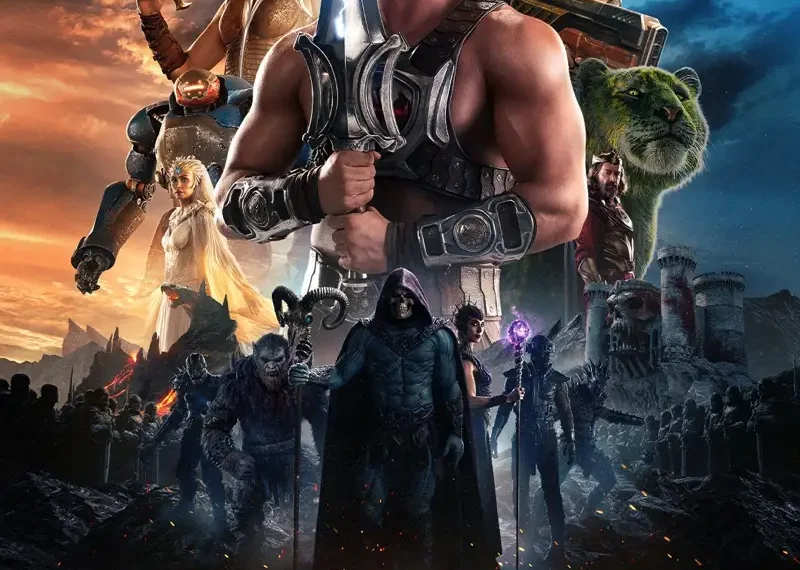
Trying to approach a film called Masters of the Universe with complete seriousness is probably a mistake from the outset. After all, this is a franchise that began as a toy line, inspired a cartoon, and revolves around a hero who proudly answers to the name “He-Man.” Anyone convinced the mythology deserves solemn reverence should try explaining characters like Ram Man or Fisto to a fellow adult who has never encountered the property before. The absurdity becomes apparent very quickly. Fortunately, director Travis Knight seems fully aware of that reality and embraces the inherent silliness rather than fighting against it.
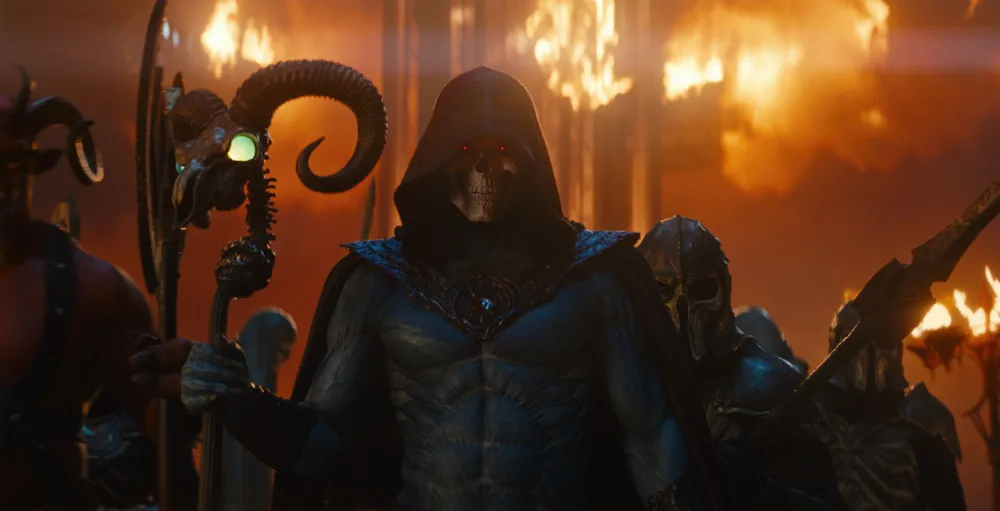
The film opens with a lengthy setup that fills audiences in on the backstory. Young Prince Adam (Nicholas Galitzine) hails from Eternia, a mystical kingdom defended by its rulers and the powerful Sorceress (Monica Baccarin) against threats such as the sinister Skeletor (Jared Leto). When Skeletor launches a devastating assault, Adam’s father, the King (James Purefoy), and the loyal Man-At-Arms (Idris Elba) are unable to stop him. In a desperate move, Adam is sent through a portal to Earth, separated from both his home and the enchanted sword that represents his path back to it.
Years pass. Adam grows into an ordinary young man trapped in an unremarkable corporate existence, unaware that destiny still has plans for him. When the long-lost sword unexpectedly resurfaces, so do the forces hunting it. Skeletor’s followers descend almost immediately, turning Adam’s life upside down.
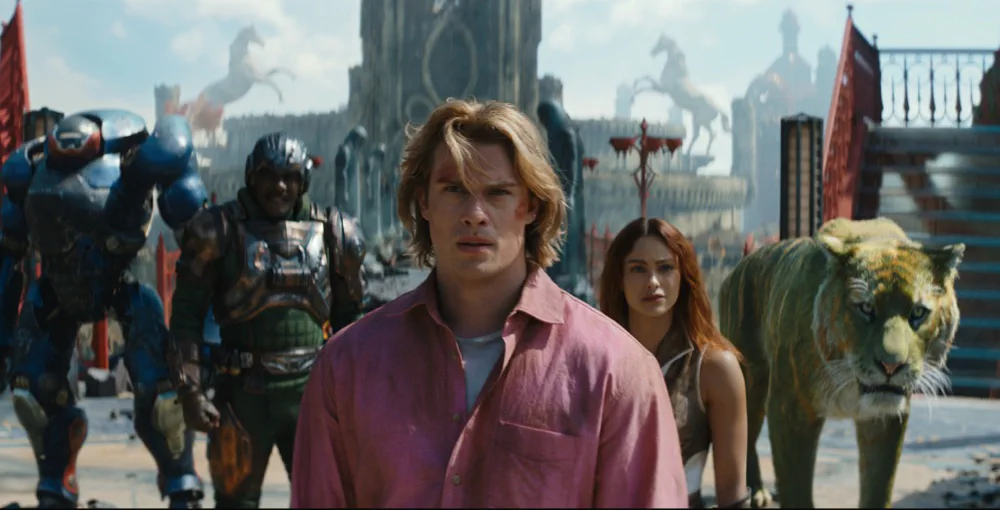
Joined by Teela (Camila Mendes), a trusted companion from his past, Adam embarks on a frantic journey to safeguard the weapon and return to Eternia. The plot largely functions as an extended pursuit, with Skeletor relentlessly chasing the sword while tightening his grip on power. The heroes race from one danger to the next, always staying just ahead of their enemies.
One of the film’s strongest comedic choices is portraying Adam as an awkward, frequently overwhelmed protagonist rather than an instantly capable champion. Galitzine clearly enjoys poking fun at the character’s shortcomings, balancing self-deprecating humour with the role’s physical demands. The downside is that Adam often feels reactive rather than proactive. He spends much of the movie responding to crises rather than actively working to reclaim his kingdom or liberate Eternia. As a result, sections of the narrative occasionally drift, lacking the momentum that a stronger sense of purpose might have provided.
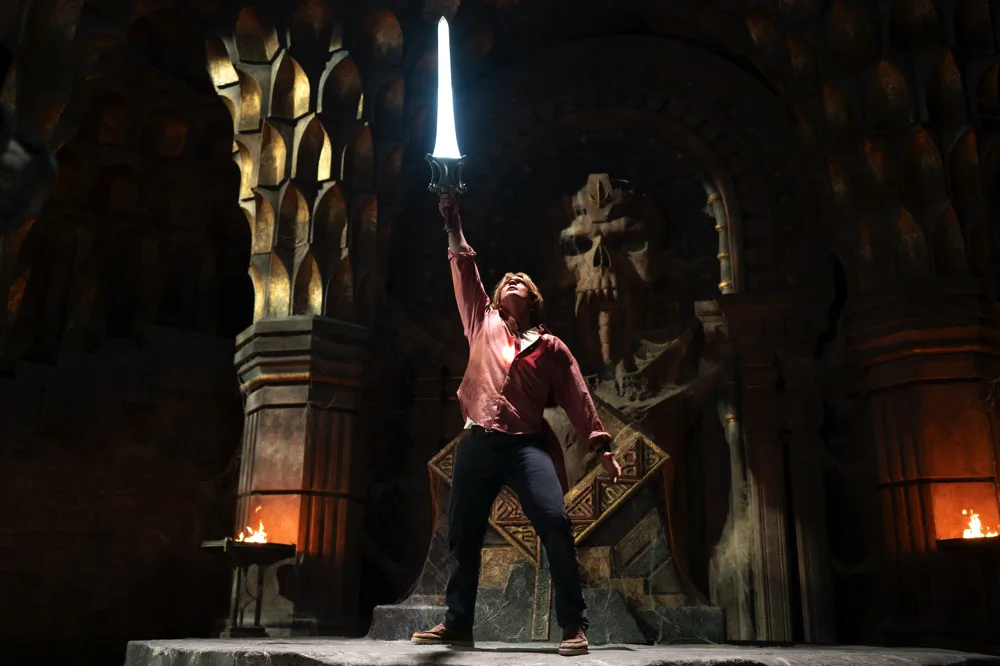
Still, when the movie aims for spectacle and entertainment, it generally succeeds. Knight understands that this material is best served with enthusiasm rather than gravitas. Younger viewers will likely be drawn to the vivid visuals, exaggerated personalities, and uncomplicated adventure. At the same time, older audiences may appreciate the nostalgic throwback to afternoons spent inventing stories with action figures. Questions about the internal logic of characters like Mekaneck—whose anatomy raises all kinds of impossible biological concerns—are wisely ignored in favour of pure fun.
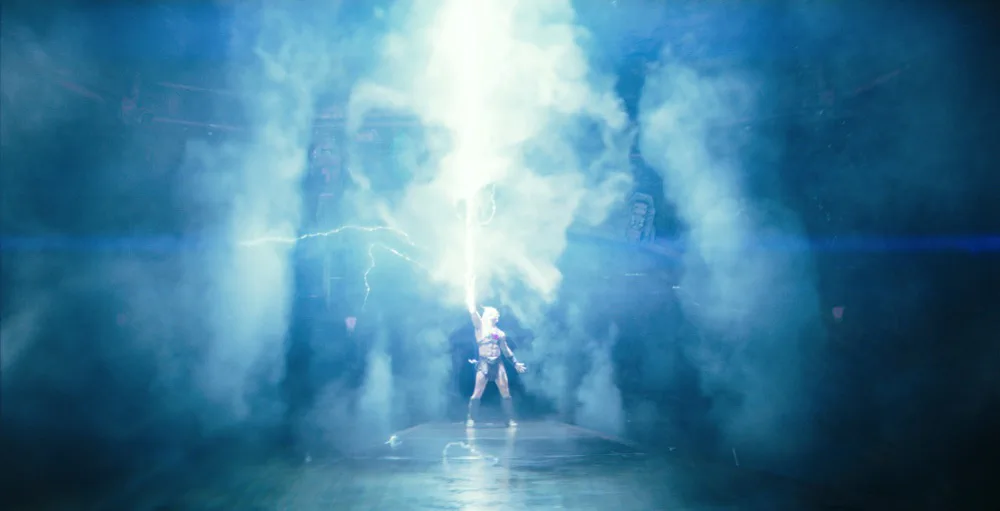
Most importantly, the film avoids the trap of trying to reinvent its source material as something dark, gritty, or self-important. It’s a colourful fantasy that accepts its own eccentricity, and that confidence makes it far more enjoyable than the misguided 1987 adaptation. In an era where familiar properties are often forced into unnecessarily serious territory, Masters of the Universe feels refreshingly comfortable being exactly what it is: strange, goofy, and entertaining.
Overall: 6.5/10

Movie Reviewer