

Reviewed on 1st March 2026 at the Dublin International Film Festival
Cast: Ryo Yoshizawa, Ryusei Yokohama, Soya Kurokawa, Keitatsu Koshiyama, Mitsuki Takahata, Nana Mori, Shinobu Terajima, Min Tanaka, Ken Watanabe
Genre: Drama
Director: Lee Sang-il
In Irish Cinemas: 8th May 2026
Lee Sang-il crafts an expansive, emotionally charged drama that unfolds across half a century, tracing the intertwined lives of two young men bound by devotion, rivalry, and the demanding traditions of classical performance. At its core lies the rarefied world of kabuki, where the most revered specialists are the onnagata—male actors who dedicate themselves to embodying female roles with exacting precision. This centuries-old practice, born from the 17th-century prohibition of women on the Japanese stage, lends the story both historical weight and thematic tension. Notably, within this intensely male-dominated environment, women exist largely at the margins, their presence overshadowed by the art form’s consuming demands.
The narrative opens with striking theatricality, evoking the heightened drama of kabuki itself. In 1960s Nagasaki, a powerful yakuza boss hosts an extravagant gathering designed to display status and cultural refinement. As part of the entertainment, his teenage son Kikuo performs in the onnagata style, revealing a precocious talent that captivates a distinguished kabuki actor, Hanjiro. The evening descends into violence when a rival gang launches a brutal हमला, leaving the boy orphaned. In the aftermath, Hanjiro takes Kikuo under his wing, bringing him into his troupe to train alongside his biological son, Shunsuke.
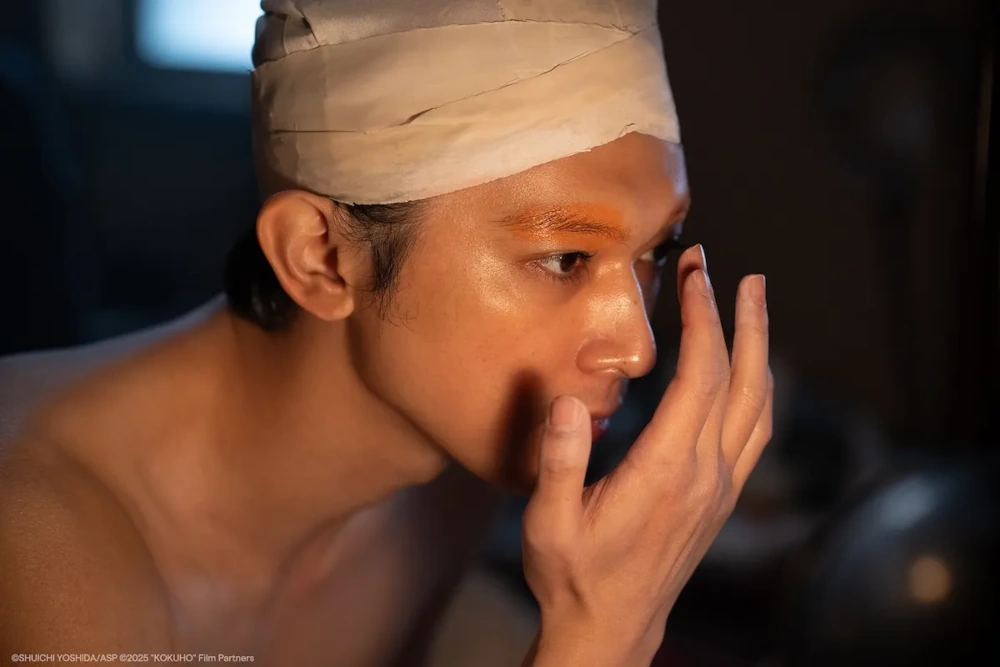
What follows is a sweeping chronicle of artistic ambition and personal fracture. Kikuo and Shunsuke rise together, achieving acclaim and forging a bond that resembles brotherhood. Yet this connection proves fragile. When Hanjiro elevates Kikuo above his own son—naming him heir to the troupe—the decision ignites resentment and drives Shunsuke away. The fallout reverberates through their lives: loyalties shift, relationships splinter, and ambition begins to eclipse empathy. Kikuo, increasingly consumed by the pursuit of greatness, grows colder and more calculating, sacrificing personal ties and moral grounding in the process—meanwhile, Shunsuke retreats, nursing both grievance and determination, waiting for the moment to reassert himself.
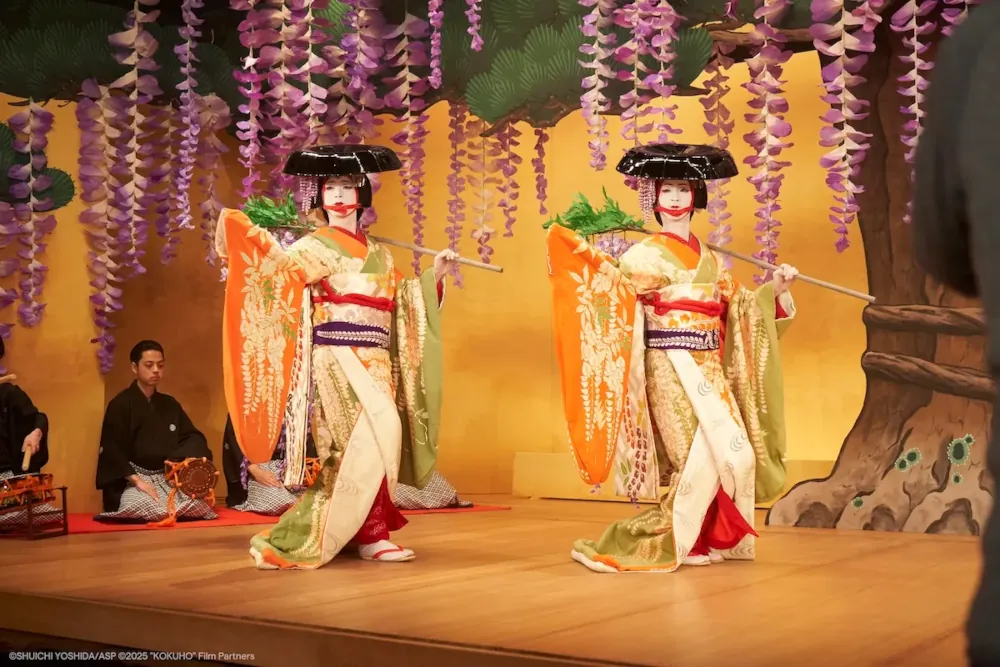
Interwoven throughout are richly staged kabuki sequences, each echoing and amplifying the emotional currents of the main story. Among them, Sagi Musume (“The Heron Maiden”) stands out—a tale of a creature who transforms into a woman for love, only to dance herself to death. This motif mirrors the actors’ own transformations, suggesting a deeper meditation on identity, illusion, and the cost of artistic transcendence. The onnagata do not merely imitate femininity; they pursue an idealised vision of grace and beauty that demands total surrender.
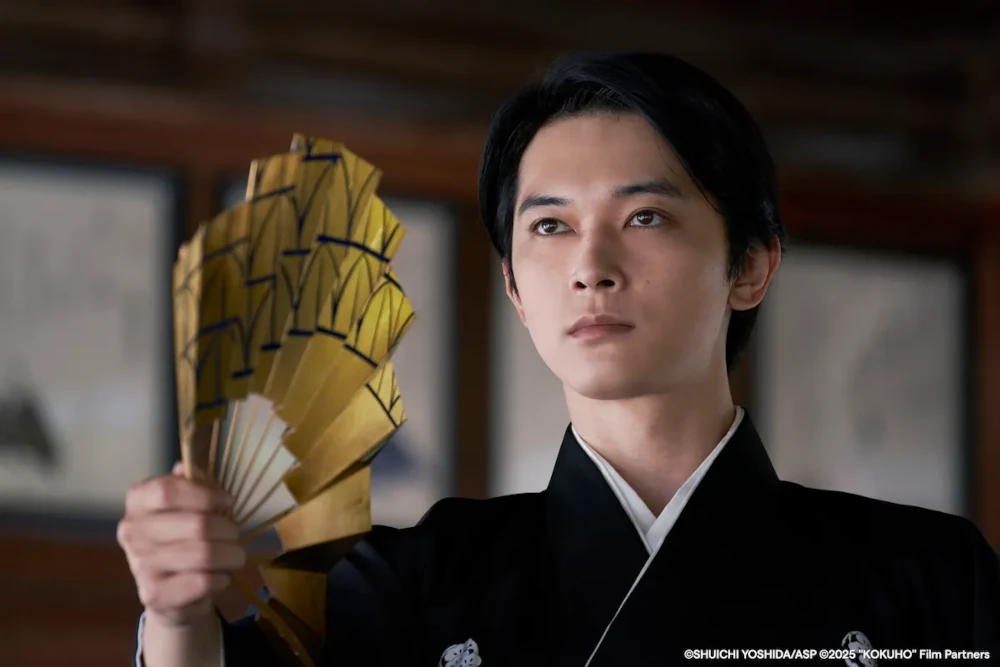
While the film invites multiple interpretations, including readings that touch on gender fluidity and suppressed desire, such perspectives only partially capture its scope. The more dominant thread is an exploration of discipline pushed to extremes—the notion that true mastery requires obliteration of the self. Pain, sacrifice, and longing are not incidental but essential, transmuted into something luminous on stage. In this world, art is not simply performed; it is lived, endured, and, at times, paid for with everything.
Overall: 8/10

Movie Reviewer