
Developer: SIGONO INC.
Platforms: PC (Reviewed), Switch, Switch 2
Genre: Adventure
Publisher: Shueisha Games
OPUS: Prism Peak is an atmospheric narrative adventure. The game is developed by SIGONO INC. and published by Shueisha Games. This review was done for PC, but the game is also available for Nintendo Switch and Switch 2.
For the best experience, I highly recommend playing with headphones and a controller. The game offers voice acting in three different languages, which is a great touch. That said, playing with a keyboard and mouse felt a bit finicky, especially when controlling Eugene’s movement. It felt a little too sensitive at times, and the camera movement seemed slightly off-centre (though this may have been an intentional visual choice which grows on you the more you play).
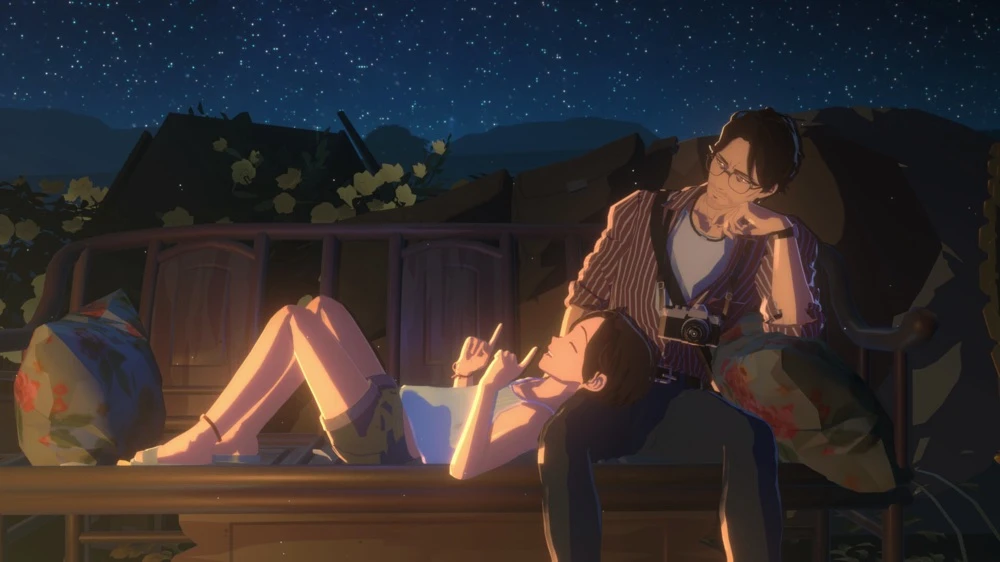
The game opens with a beautiful and emotional prologue. You play as Eugene, starting at age five, watching him grow year by year. Each year, you share small, meaningful moments with your grandfather, who teaches you how to use a camera. These early moments are incredibly sweet and heartwarming. You get glimpses of Eugene’s childhood, his parents fought often, so he spent most of his time with his grandpa. It really grounds the emotional core of the story.
Eugene grows up wanting to become a photographer, just like his grandfather. But when the game truly begins, he is now forty, his grandfather has passed, and he’s lost hope in that dream. The opening is emotionally strong, especially with Eugene narrating his life while you choose how he felt about certain moments. That interactivity adds a personal layer to the storytelling. Right from the prologue, I was completely roped in. Then, a weird occurrence happens to Eugene, introducing a mystery that immediately makes you want to know more. As the game progresses, the narrative becomes even more engaging. There is so much to read, collect and learn. Eugene keeps a journal where you can fill in your own thoughts about special moments, which makes it feel like you are shaping his emotional journey. You also uncover memories and visions, adding depth to the story and Eugene’s past.
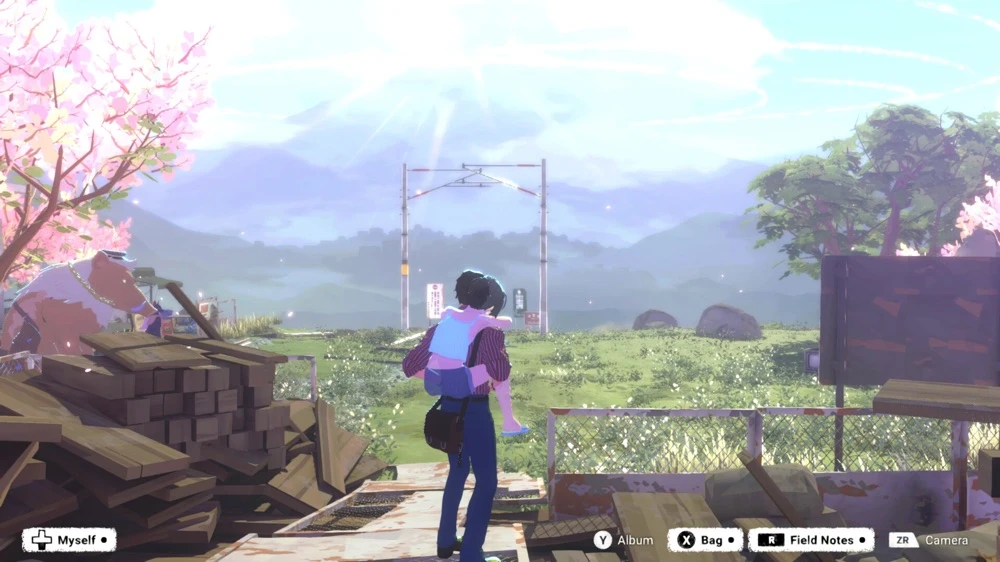
The connection between Eugene and the Dusklands is especially beautiful. The Dusklands is a mystical world he is pulled into after a sudden car crash. It feels unfamiliar, yet deeply tied to his past. His journey, alongside a young girl and the spirits, is one of discovery, healing and reflection with many encounters that feel incredibly heartfelt. As a looming red-and-black shade begins chasing them from the shadows, photography becomes both a tool and a metaphor for capturing fleeting moments and uncovering deeper truths. I genuinely have not teared up in a game like this in a long time. The themes of self-discovery, memory and emotional growth are handled so beautifully. This game really captures the essence of life.
The visuals in this game are absolutely breathtaking. The animation is incredibly smooth and expressive, with a realistic feel blended into an anime-inspired style. Eugene’s tired eyes and timid expressions to Ren’s childlike expression are portrayed so well. You can really feel his emotional state through subtle details. The environments are just as stunning. The lighting, the wind, the falling leaves, it all feels alive. The visuals reminded me of the movie called ‘Your Name’; here, they feel even more immersive and intimate. The human and spirit designs are just as applaudable. The spirits are animal beings that differ from one another and stand out in their own way. There are also moments where interactions shift into black-and-white anime-style scenes, which work perfectly and elevate the emotional tone. Overall, it feels like you are playing through a slice-of-life anime with mystical undertones. You can really see how much effort the developers put into the visuals, and it goes hand-in-hand with the photography gameplay.
The music in this game is lively, subtle and beautifully composed. Different areas and moments have their own musical identity; entering a vast valley brings whimsical grand music, while more intense moments like chase sequences shift the tone instantly. The dynamic music system works incredibly well and enhances immersion. The sound design is also very atmospheric, with small background effects that make the world feel alive.
The voice acting is spot on. Each character has a distinct voice that fits their design perfectly. I played in English, and it did not fall short at all. The performances carried strong emotional weight, and even the child’s voice had that slight anime-like tone, which I thought worked really well. The cut-scenes are incredible, and with the excellent voice acting, I felt like I was watching episodes of an anime. I would definitely find myself playing the game again in a different language to see what effect it has on the game, which I’m sure is just as good.
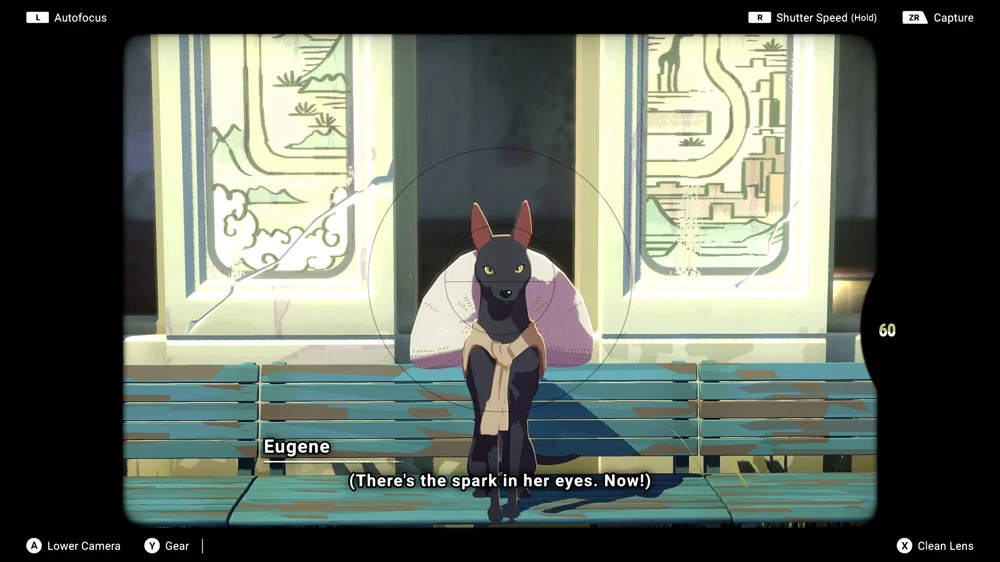
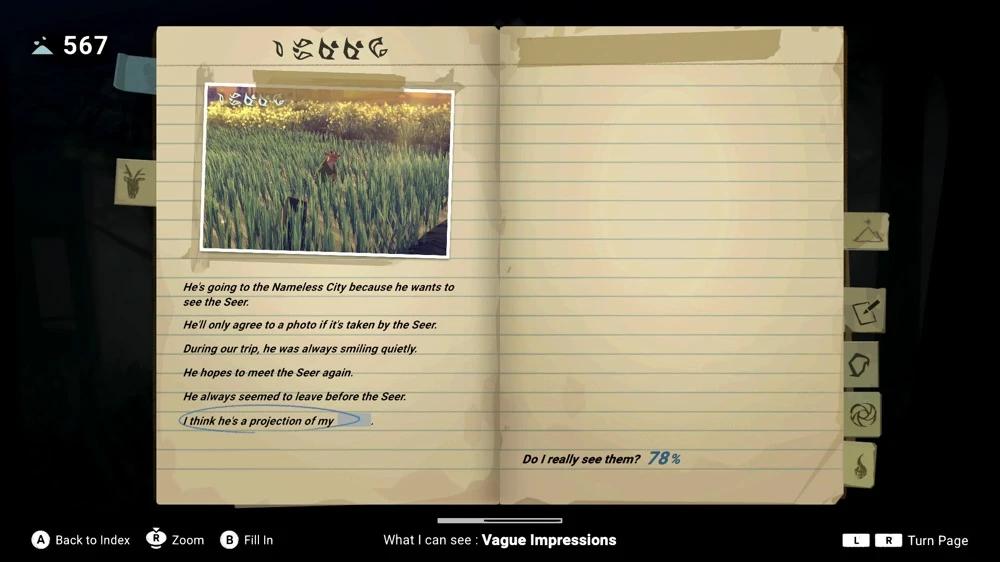
At its core, the gameplay revolves around photography, and it is done brilliantly. You receive your camera in an unexpected way, which fits the game’s charm since a lot of unusual things happen throughout the story. Taking photos is not just a mechanic; it’s the heart of the experience: you take pictures of objects with strange symbols and decode them. These photos contribute to a field notes journal, almost like building a book, and the game gives subtle hints (like thought bubbles) for important photo opportunities, which I really appreciated.
Every photo you take has a purpose. They can be used to interact with the world, unlock new elements and progress the story. The camera mechanics themselves feel surprisingly realistic. You physically move to frame your shot instead of just zooming, you can adjust shutter speed, there’s even a small animation for cleaning the lens when it becomes dirty and refocusing when things get blurry feels satisfying. It never feels clunky; in fact, it’s one of the strongest parts of the gameplay.
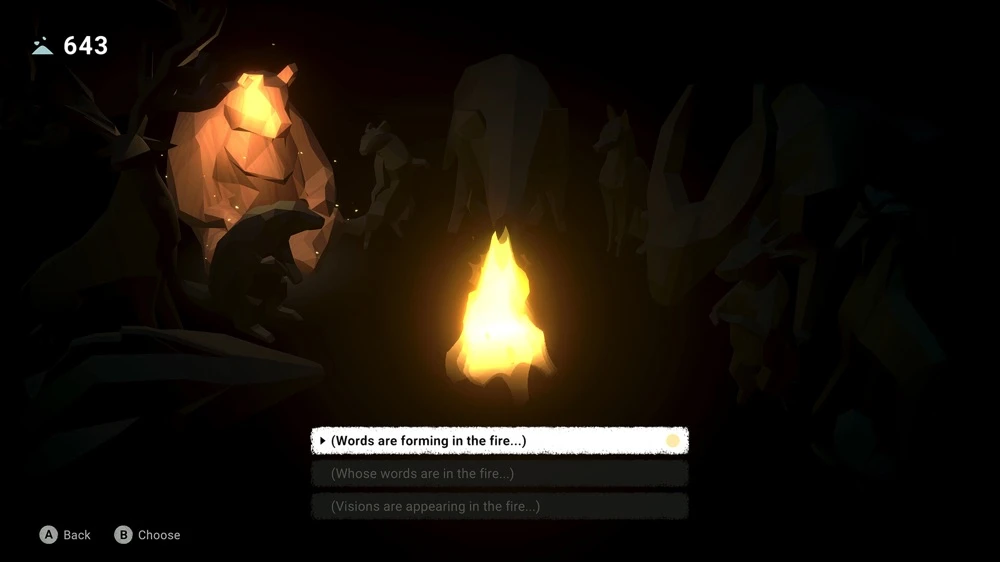
You can interact with a flame that acts as another way to unlock field notes to learn more about spirits and Dusklands. From the flame, you can offer seeds through object interaction in exchange for new camera equipment (lens filters, cleaning kit), unlock cosmetics and engage with a deeper narrative than expected. There is a surprising level of depth here that I completely fell in love with.
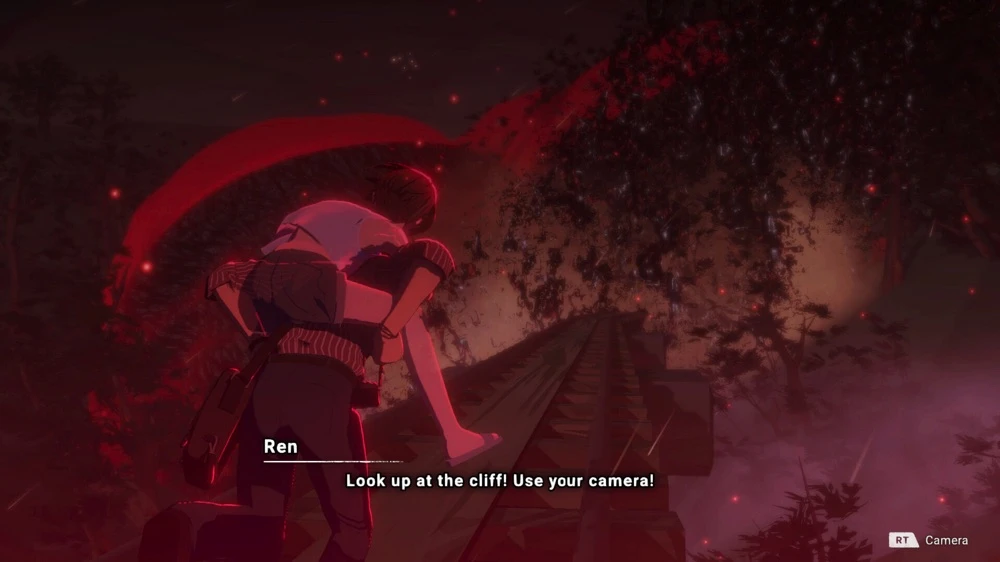
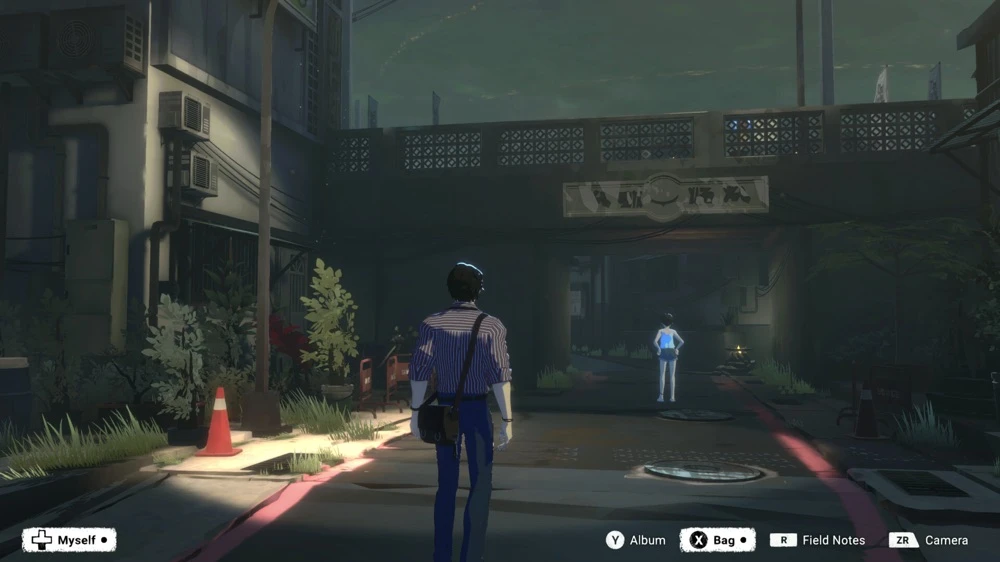
Exploration in this game is incredibly rewarding. You can take your time looking at posters, murals, totems, and small environmental details. Everything you photograph adds to your understanding of the Dusklands. The world feels emotional, almost like it’s drenched in memory. There is a strong connection that you gradually unfold as you explore. Missing an important photo can feel frustrating, but it also makes observation feel more meaningful and sacred. It encourages you to slow down and truly take everything in.
The gameplay loop remains consistent throughout, but it works because it ties directly into Eugene’s memories and the overarching narrative. My first playthrough took around 9 hours, and I can definitely see myself replaying it to collect missed items, discover missed memories and improve my observations about the spirits I met on the way. After finishing the game, you unlock items that help with a second playthrough, which is a nice incentive. There is also a behind-the-scenes section where you learn more about the developer’s intentions as well as unlock voice notes, which add meaningful context to the experience.
There are so many moments in this game that stood out to me. One sequence near the end felt like a full anime opening, it was thrilling, wholesome and comforting all at once. It’s easily one of my favourite moments in the entire game.
It has been a long time since I have played a narrative game that hooked me from the very beginning like this. Every interaction, every line of dialogue, every photo, it all feels meaningful. The game does not just function well; it resonates. Capturing moments, helping spirits remember themselves and uncovering how they connect to Eugene all come together beautifully (I may have used beautiful several times in this review, but there is no better way to describe this). Personally, I fell in love with this game. The developers did an incredible job crafting a powerful, emotional experience where story and gameplay blend seamlessly. OPUS: Prism Peak is more than just a game; it’s something you feel.
“You must see for yourself…”
Overall: 10/10

This is S & S. We are world game explorers. We play games. We have played over 10,000+ games! We travel, we write reviews AND we play more games!!!!