

Reviewed on 1st March at the 2026 Dublin International Film Festival
Cast: Bill Skarsgård, Darce Montgomery, Al Pacino, Colman Domingo
Genre: Crime, Drama, History
Director: Gus Van Sant
In Irish Cinemas: Now
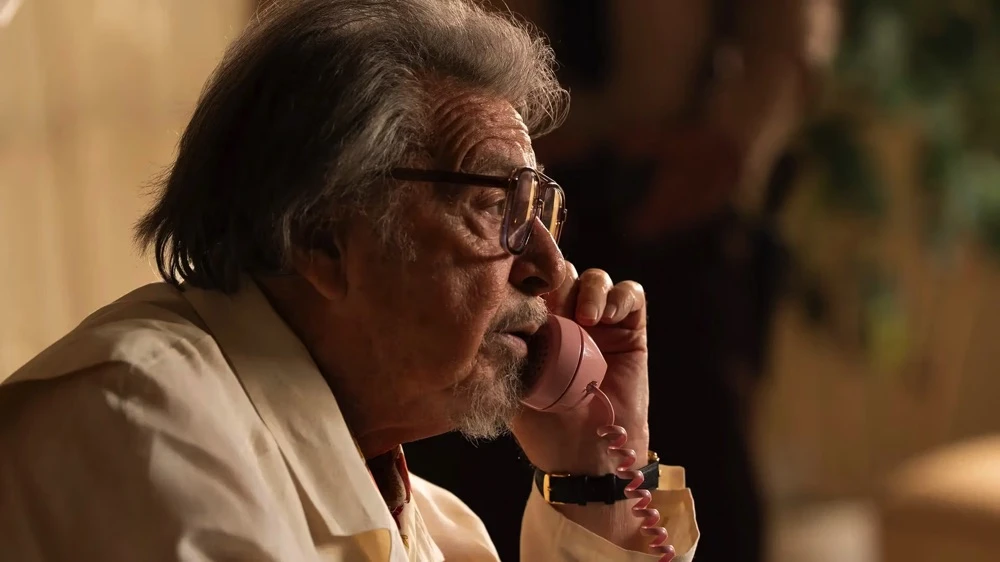
Gus Van Sant returns to fact-based drama with Dead Man’s Wire, a tense hostage thriller that inevitably invites comparison to Dog Day Afternoon. Where Sidney Lumet’s classic captured the chaotic desperation of a man pushed to the brink, Van Sant’s film circles similar territory but through a colder, more media-conscious lens. There’s even a touch of poetic symmetry in seeing Al Pacino once the frantic centre of Lumet’s film now appear from the opposite side of the crisis.
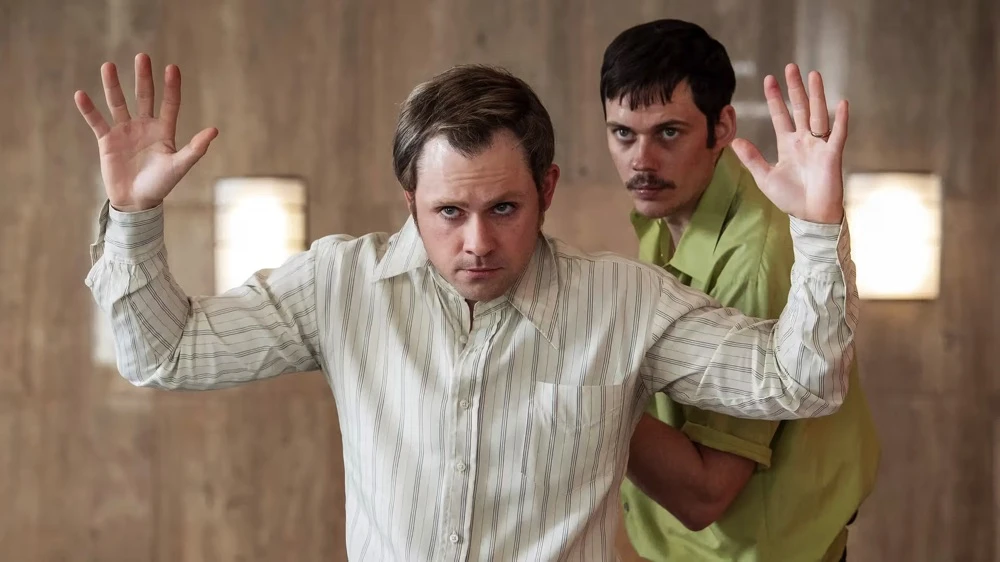
At the heart of the story is Tony Kiritsis, portrayed by Bill Skarsgård, an actor who has built a career on inhabiting unsettling figures. Here, he leans into volatility once again, playing a man convinced of his own moral crusade. In 1977 Indianapolis, Kiritsis storms into a mortgage office and rigs a deadly “dead man’s wire” to broker Richard Hall (Dacre Montgomery), creating a situation where any interference could turn fatal. What unfolds is less a straightforward siege and more an uneasy mix of absurdity, rage, and spectacle.
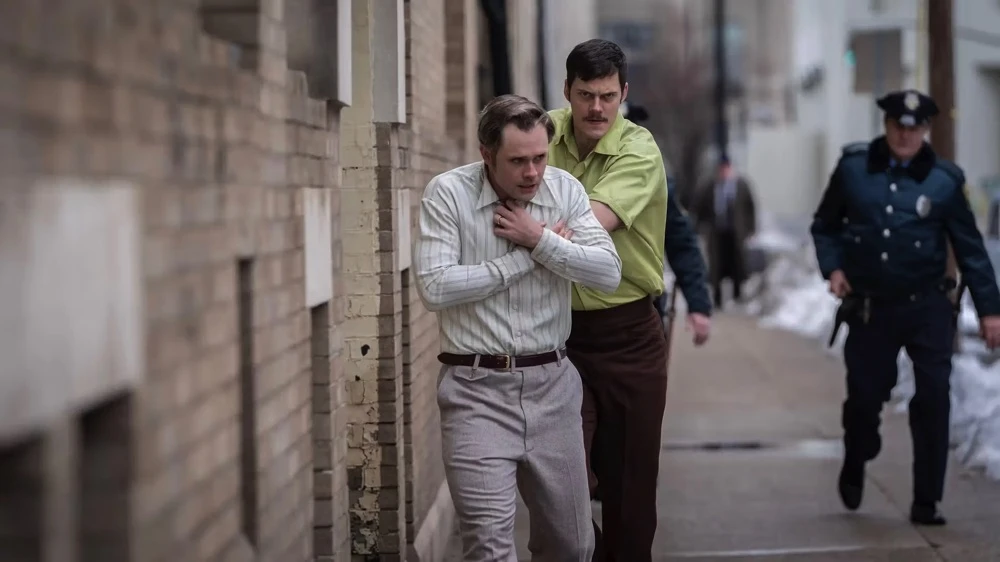
Van Sant, whose past work includes the political biopic Milk and the haunting school-shooting drama Elephant, approaches the material with restraint. The film prioritises immediacy over introspection, building tension through claustrophobic exchanges and the ever-present threat of violence. Yet, for all its surface intensity, the emotional core feels slightly underdeveloped. Kiritsis is framed as a man raging against perceived injustice, but the film rarely digs beneath that fury to reveal anything more layered or contradictory.
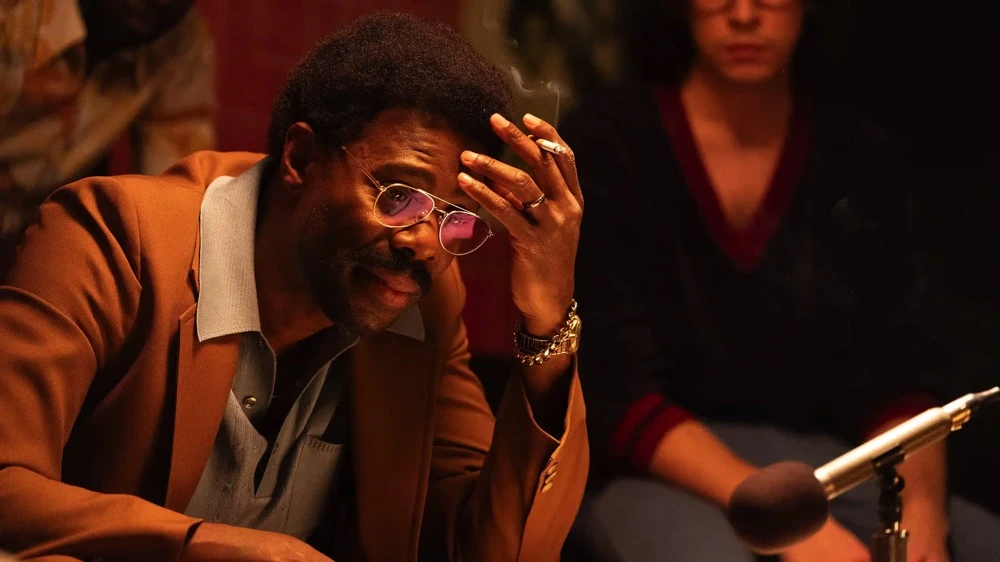
Where Dead Man’s Wire finds a sharper edge is in its depiction of the media circus. Reporters and broadcasters begin to shape the narrative in real time, turning a volatile hostage situation into public theatre. Characters like TV journalist Linda Page (Myha’la) and radio host Fred Temple (Colman Domingo) highlight how coverage begins to influence both perception and outcome, though the film’s commentary on this remains fairly direct rather than deeply probing.
Performance-wise, the ensemble does much of the heavy lifting. Montgomery brings a quiet vulnerability to Hall, grounding the film in something human amid the chaos. His scenes with Pacino carry a subdued emotional weight, particularly in moments of strained familial tension. Meanwhile, Cary Elwes fades effectively into the background as a weary investigator, and Skarsgård delivers exactly the kind of manic unpredictability the role demands, though perhaps without surprising us.
Adapted in part from the documentary Dead Man’s Line, the film occasionally feels constrained by its fidelity to real events. The inclusion of archival footage over the closing credits reinforces the sense that reality itself may be the more compelling version of this story. Even so, as a stripped-down thriller, it succeeds in maintaining tension, if not always depth, from start to finish.
Overall: 7/10

Movie Reviewer