
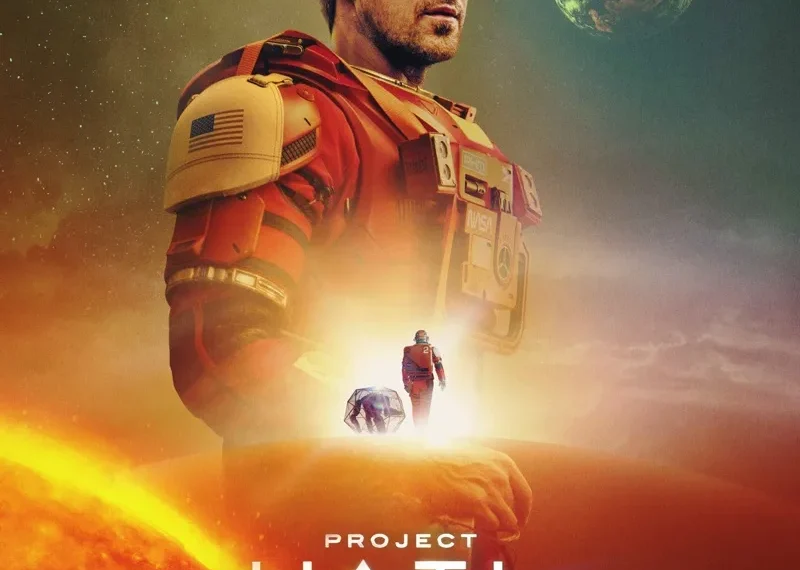
Cast: Ryan Gosling, Sandra Hüller, Lionel Boyce, Ken Leung, Milana Vayntrub
Genre: Drama, Romance
Directors: Christopher Miller, Phil Lord
Based on the novel by Andy Weir
See it first on 14 & 15 March, and St. Patrick’s Day
In Irish Cinemas: 19th March 2026
There’s something almost disarmingly charming about Project Hail Mary, a film that wears its influences proudly while still feeling energetic and inviting. It’s the kind of glossy, big-budget spectacle that’s engineered with enormous craft and care, and anchored by the effortlessly appealing presence of Ryan Gosling. Yet beneath the surface admiration, there’s a faintly uneasy question hovering over it all: why does so much contemporary filmmaking effort go into recreating the texture of cinema from half a century ago?
A great deal of the film’s technical ingenuity is devoted to conjuring the spirit of late-1970s science fiction. Watching it, you could almost believe it had been unearthed from a pristine reel in 1979 rather than assembled with cutting-edge technology in the mid-2020s. That reverence for the past gives the film a warm glow of familiarity, but it also raises a nagging thought about where blockbuster filmmaking is heading. If modern productions keep recreating the aesthetics of analogue cinema as a kind of museum exhibit, does that quietly suggest the style itself belongs strictly to the past rather than something that can evolve alongside contemporary filmmaking?
Those larger worries can wait for another day, though, because on its own terms this is a hugely entertaining piece of cinema. At heart, Project Hail Mary is an unabashedly optimistic space adventure, one that pairs Gosling with an extraterrestrial companion in a surprisingly sweet, often very funny partnership. Together, the two must overcome every conceivable barrier, biological, linguistic and cultural, to stop a cosmic phenomenon that’s draining energy from stars and threatening both their worlds. It’s a premise that feels like the distillation of classic sci-fi storytelling: grand stakes, big ideas and an earnest belief that cooperation might save the day.
The film’s DNA is clearly spliced from the genre’s most beloved works. You can feel echoes of Steven Spielberg’s sense of wonder and the cosmic grandeur associated with Stanley Kubrick, but it never tips over into mere imitation. Instead, it borrows just enough of that spirit to feel comfortably recognisable without becoming stale.
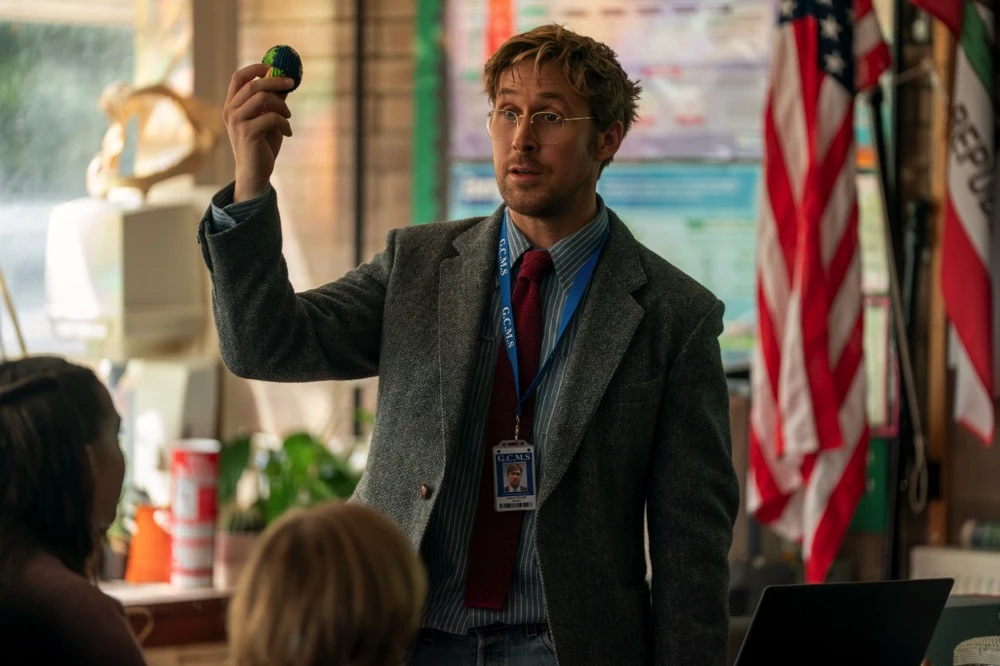
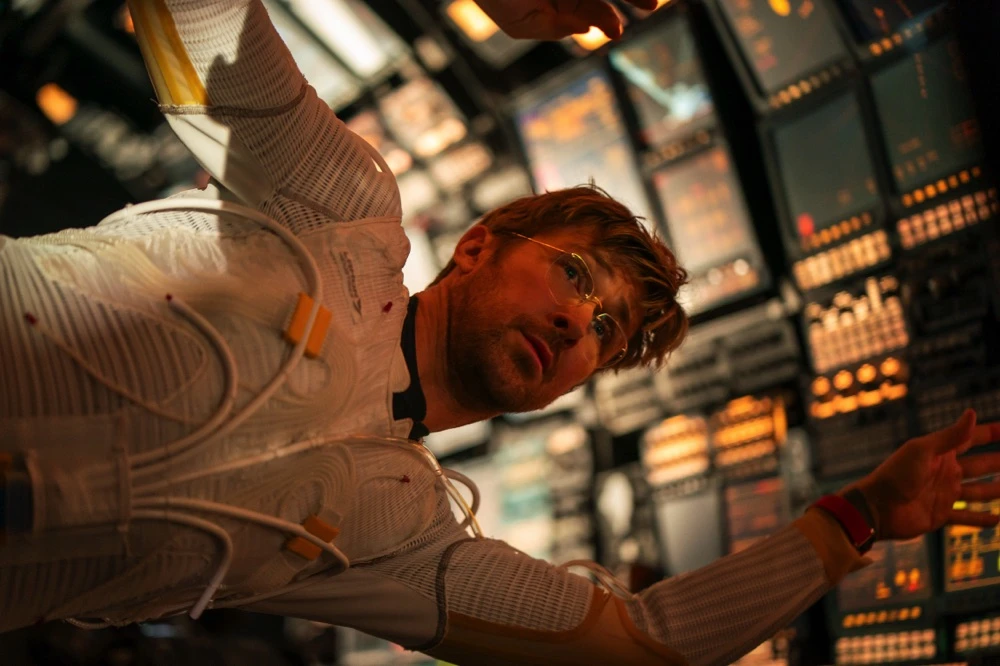
Visually, it’s packed with memorable details designed to lodge in the imagination. Costume designers David Crossman and Glyn Dillon outfit Gosling’s reluctant astronaut in a bright yellow raincoat-like suit that’s so distinctive it feels destined for Halloween replication, very much in the same tradition as Marty McFly’s instantly recognisable orange vest from Back to the Future. Even the film’s scientific exposition is delivered with a playful clarity. The physics is complex enough to feel convincing, yet explained in ways that give audiences the satisfying illusion of understanding astrophysics, much like Sam Neill’s famous wormhole demonstration in Event Horizon.
Behind the camera, the creative team is stacked with a blockbuster pedigree. Directing duo Phil Lord and Christopher Miller, best known for their inventive work on Spider-Man: Into the Spider-Verse, steer the film with an easygoing sense of humour and a strong sense of momentum. The screenplay comes from Drew Goddard, who previously adapted The Martian into the hugely successful film. Once again, drawing from a novel by Andy Weir, the story carries the same brand of upbeat, problem-solving optimism: a belief that scientists working together, across borders, ideologies, and, in this case, galaxies, can overcome existential threats.
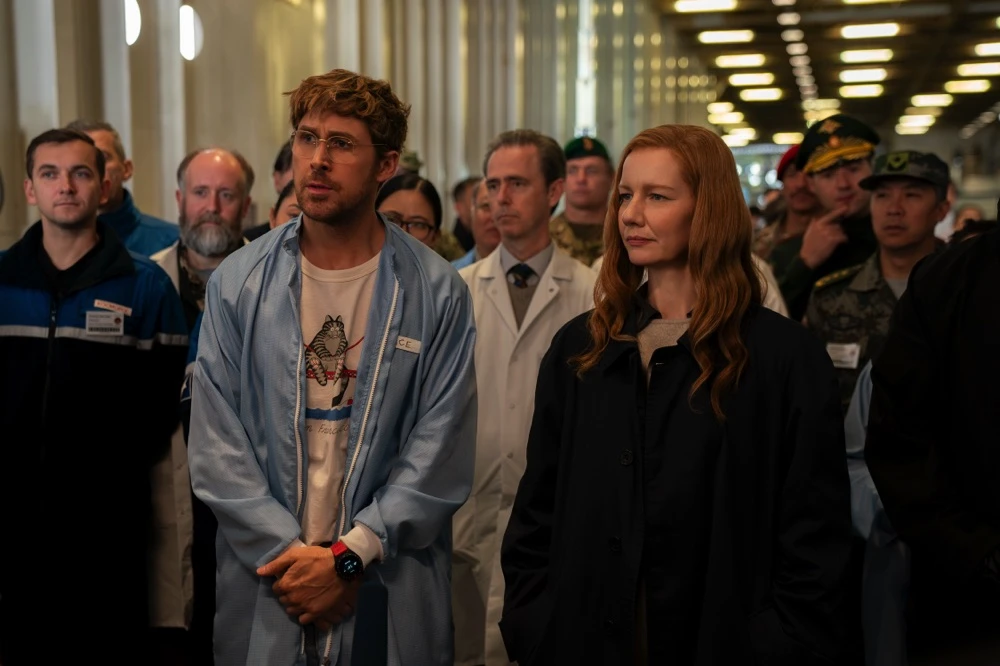
While much of humanity’s coordinated effort to avert disaster unfolds off-screen, the film checks back in with Earth through a quietly commanding performance by Sandra Hüller, who plays a key figure orchestrating the global response. Hüller, coming off acclaimed turns in Anatomy of a Fall and The Zone of Interest, lends a calm authority to the scenes back home. Still, the bulk of the film remains locked inside a lonely spacecraft with Gosling’s Ryland Grace, a seemingly unremarkable man who wakes from stasis with no memory, drifting light-years from Earth and trying to piece together why he’s there.
What ultimately defines the film, however, is its tone. For all the high-stakes science and looming catastrophe, Project Hail Mary plays out largely as a surprisingly tender buddy comedy. Gosling’s astronaut forms an unlikely friendship with an alien counterpart who, in many ways, feels like the Gosling of their own civilisation, equally brilliant, slightly awkward, and oddly endearing. Their relationship becomes the emotional engine of the film.
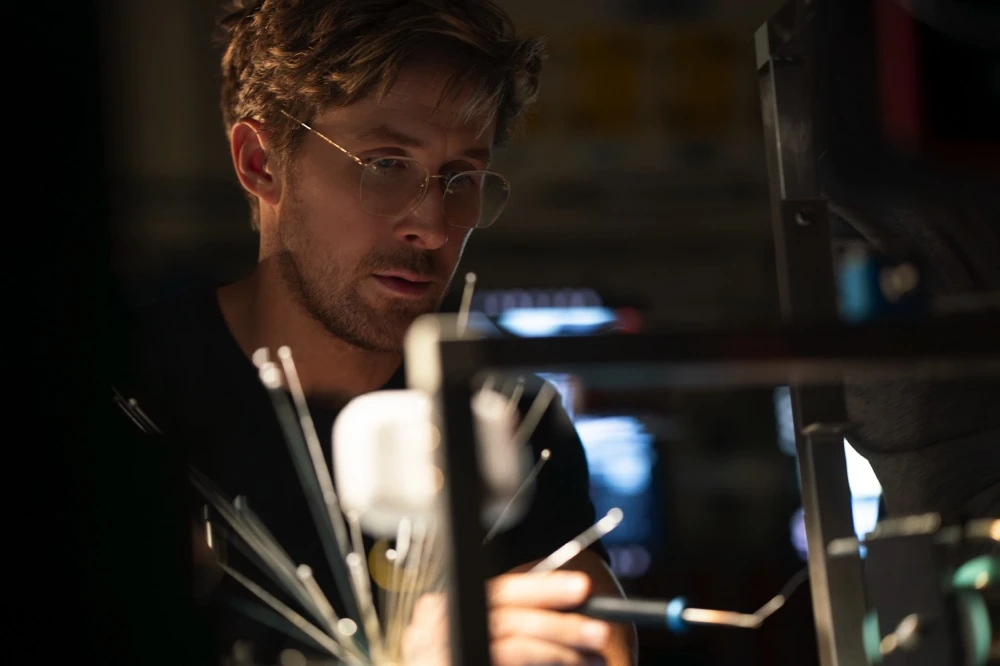
Gosling, who has spent much of his career balancing cool charisma with sly self-parody, is perfectly cast for this kind of role. His performance taps into the same comic vulnerability audiences saw in his turn as Ken in Barbie. It takes an actor with that level of screen presence to convincingly play someone so hapless without losing the audience’s affection.
From a purely visual standpoint, the film is immaculate. Shot by acclaimed cinematographer Greig Fraser, whose credits include Dune and The Batman, the imagery is striking regardless of which premium format audiences choose. Whether in IMAX, 70mm, or some hybrid of the two, the film blends large-scale practical sets with sophisticated visual effects in a way that still prioritises lighting and atmosphere. Fraser remains one of the few blockbuster cinematographers who can make enormous digital environments feel tactile and luminous.
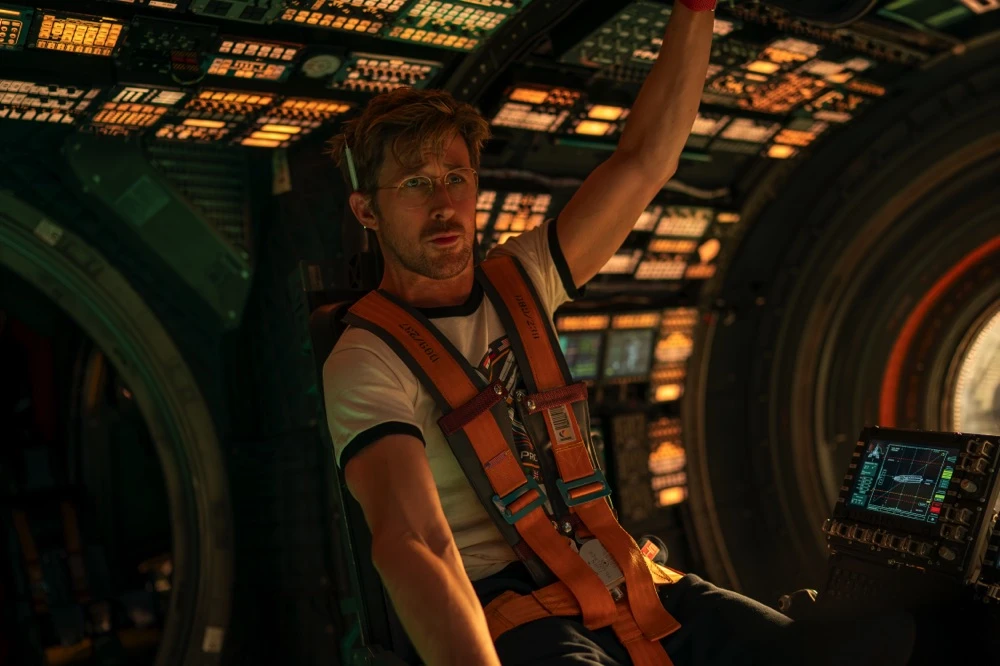
And the nostalgic flourishes are everywhere if you look for them. Grace’s spacesuit carries the same bold red hue worn by Dave Bowman in 2001: A Space Odyssey, while one moment sees him humming the musical tones famously used by extraterrestrials to communicate in Close Encounters of the Third Kind. These references aren’t subtle; they’re affectionate nods to the era that clearly inspired the film’s creative team.
All of which feeds into a broader moment for cinema itself. The industry is currently navigating uncertain terrain, shifting audiences, changing technology, and a streaming landscape that has reshaped viewing habits. In that context, Project Hail Mary almost feels like a reminder of the communal joy blockbuster cinema can still offer. It’s a film that looks backwards in style but forwards in spirit, reminding audiences why the magic of the big screen captured their imagination in the first place.
Sometimes, the most effective way for cinema to rediscover its footing is to revisit the wonder that defined it decades ago, then carry that feeling somewhere new.
Overall: 8/10

Movie Reviewer