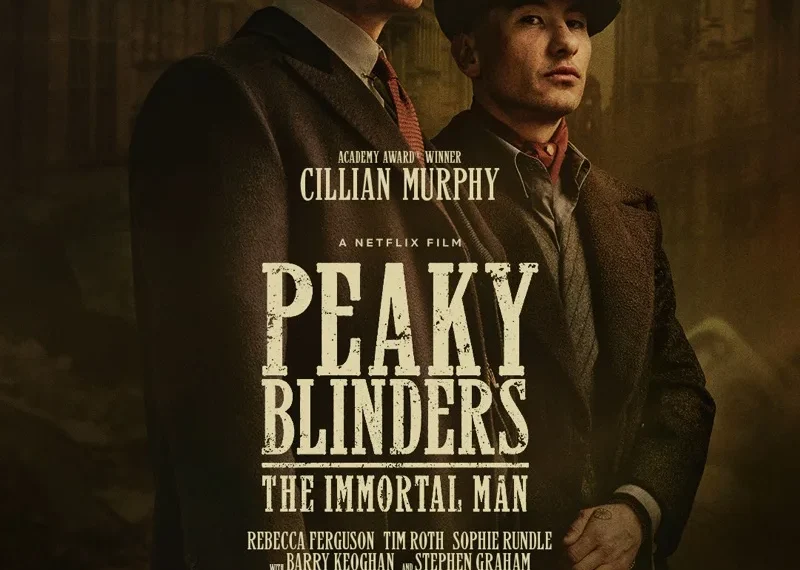
Cast: Cillian Murphy, Rebecca Ferguson, Tim Roth, Sophie Rundle, Ned Dennehy, Packy Lee, Ian Peck, Jay Lycurgo, Barry Keoghan, Stephen Graham
Genre: Crime, Drama, History
Director: Tom Harper
In Irish Cinemas: 6th March 2026
Streaming on Netflix: 20th March 2026
Set years after the curtain fell on the television saga, Peaky Blinders: The Immortal Man revisits its infamous gangster long after the smoke has cleared from Birmingham’s backstreets. The film imagines Cillian Murphy’s Tommy Shelby as a man who has effectively exiled himself from the world he once dominated. Haunted by the wreckage of his past and weighed down by guilt, he exists in a kind of self-imposed limbo physically removed from the criminal empire he built, yet unable to outrun the ghosts that follow him.
Fortunately, director Tom Harper avoids allowing the film to collapse under the weight of the series’ mythology. Although several familiar faces return with Murphy once again embodying the calculating Shelby patriarch, the story is constructed in a way that doesn’t demand encyclopaedic knowledge of the television run. Instead, the film pushes the franchise’s long-running themes of loyalty, family bonds and treachery toward a darker, almost mythic conclusion. At its core, the drama morphs into a fraught father-and-son confrontation with clear tragic undertones.
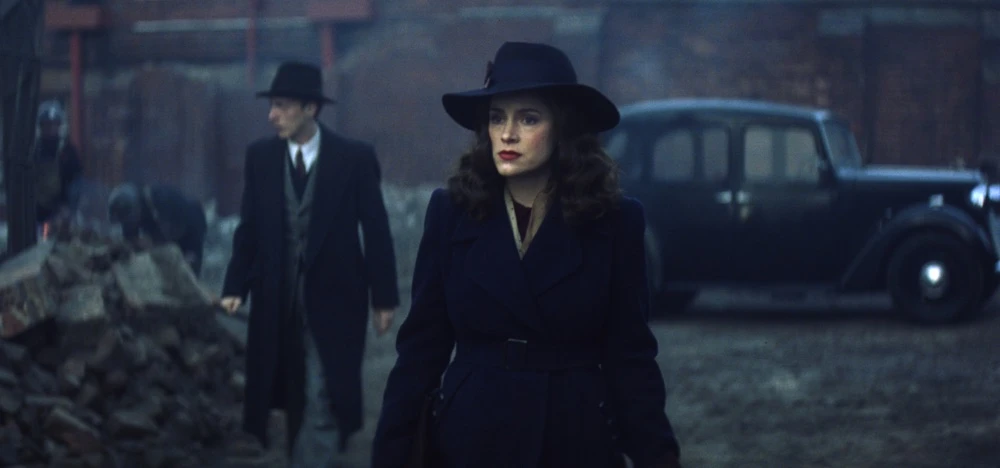
The narrative unfolds in 1940, as the Second World War tightens its grip on Britain. Birmingham is no longer merely the backdrop for gangland rivalries; the conflict now reaches the city directly. When a German bomb levels a small arms factory, the explosion claims dozens of lives, among them a previously unseen Shelby relative, Agnes (Ruby Ashbourne Serkis). The tragedy draws Tommy’s sister Ada, played again by Sophie Rundle, to the crumbling country house where Tommy now lives in isolation.
The once-fearsome crime boss has retreated into a bleak routine. His days are spent drifting through an opium haze while hammering away at a typewriter, attempting to chronicle his life story. Though the world is once again at war, Tommy refuses to engage with it. The trauma of the First World War, the mud, the trenches, the slaughter of Flanders, still grips him too tightly. As he bluntly tells Ada, the real battle raging is the one inside his own mind.
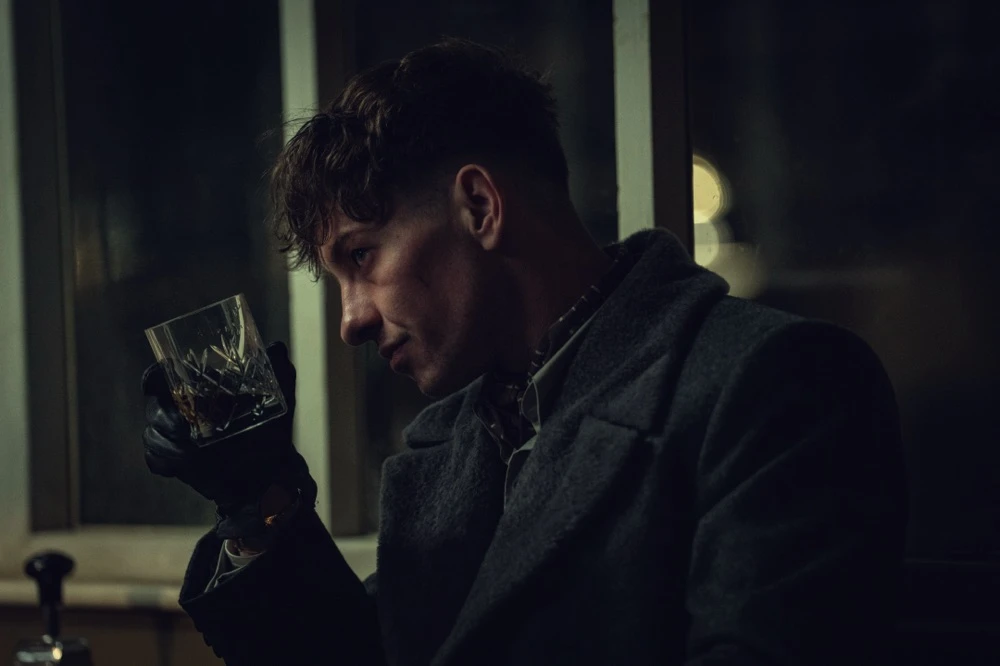
Ada, however, hasn’t travelled simply to share bad news about the bombing. With Tommy gone from the streets, the criminal underworld he once controlled has reorganised itself and not in a way that brings her any comfort. In his absence, the Peaky Blinders have regrouped under the leadership of Duke Shelby, Tommy’s volatile illegitimate son, played with unnerving intensity by Barry Keoghan. If Tommy once ruled with cold precision, Duke operates with something far more reckless. His methods hark back to the gang’s early days of brutal opportunism, and the violence he unleashes is rapidly becoming an embarrassment for Ada, who now sits as a Member of Parliament trying to project respectability in the city.
To Ada’s mind, Duke’s trajectory is painfully obvious: if he continues down this path, he will eventually end up either executed by the state or torn apart by an angry public. But persuading Tommy to intervene proves impossible. He remains paralysed by grief, mourning the loss of his young daughter and tormented by the apparent suicide of his brother Arthur. The man who once pulled every string in Birmingham now seems content to let the world move on without him.
Meanwhile, Duke is attracting the attention of dangerous allies. A shadowy political operator named Beckett, portrayed by Tim Roth, begins courting the young gangster. As the treasurer of the British Union of Fascists, Beckett is secretly working alongside Nazi agents on a scheme that amounts to economic warfare. Their plan involves flooding Britain with £350 million in counterfeit banknotes, a move designed to destabilise the national economy from within. Duke, seduced by the promise of power and profit, agrees to participate in the operation in exchange for a substantial share of the spoils.
The deal, however, comes with a grim condition. Beckett demands that Duke eliminate Ada, whose investigation into suspicious financial movements threatens to expose the conspiracy. The order places the young Shelby squarely on a collision course with his own family.
Inevitably, the narrative begins inching toward Tommy’s reluctant return. The idea that only he can rein in his son becomes increasingly unavoidable. Yet the catalyst for his comeback arrives from an unexpected source, Kaulo, a Romany woman played by Rebecca Ferguson. Possessing an aura of mysticism and claiming a psychic sensitivity, Kaulo is also the twin sister of Duke’s late mother. Where Ada’s pleas failed, Kaulo’s intervention finally stirs Tommy into action.
When he eventually re-enters the world he abandoned, the moment lands with a peculiar poignancy. Years of absence have eroded his legend. In the Garrison Tavern, once the beating heart of his empire, many of the younger patrons no longer recognise the name Tommy Shelby at all. It’s a small but telling detail that underscores how far the man has drifted from his own myth.
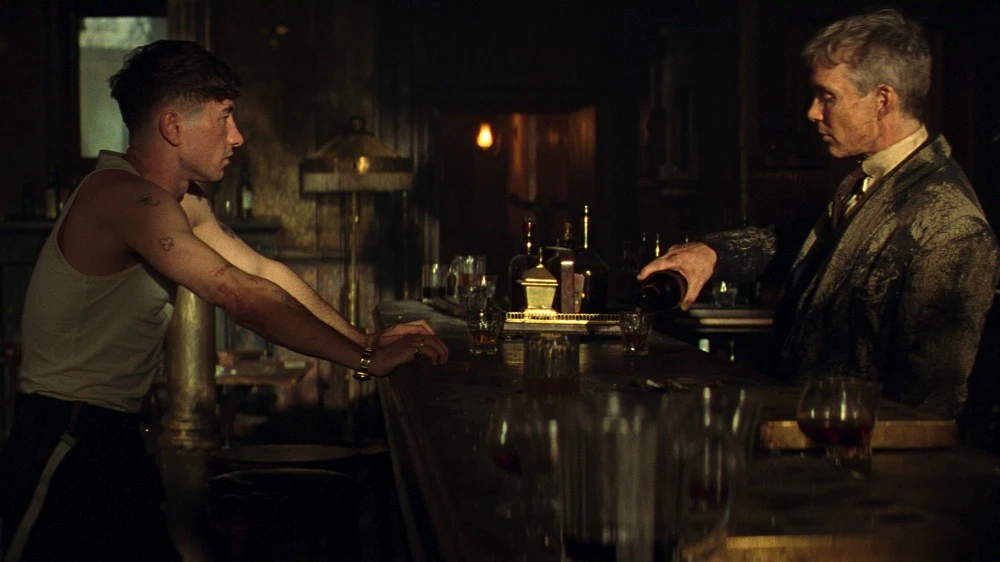
The inevitable reunion between father and son is anything but sentimental. Their first encounter erupts into a vicious fight, one that sees Tommy’s immaculate tailoring reduced to ruin in a mud-splattered brawl worthy of a frontier western. Eventually, the two agree to a fragile truce, though the tension between them never truly dissipates.
Running alongside this uneasy reconciliation is a ticking-clock plot to derail Beckett’s economic sabotage. With events converging on a midnight deadline, the film builds toward a climactic confrontation that pits family loyalty against ambition and ideology.
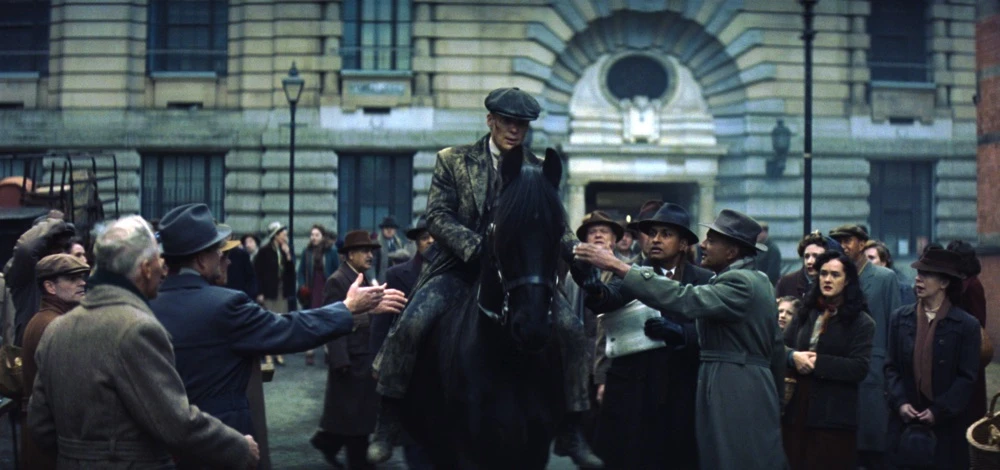
For viewers who followed the television series created by Steven Knight, the film retains many of the stylistic flourishes that made the show distinctive, including the return of Red Right Hand by Nick Cave and the Bad Seeds, used here with a subtle nod rather than full fanfare. Yet newcomers are unlikely to feel lost. The script smartly provides enough context for the drama to function as a self-contained crime epic.
The wartime backdrop lends the story a slightly old-fashioned flavour, reminiscent of the adventure comics that filled British newsstands in the mid-20th century. At the same time, the grimy industrial landscapes occasionally echo the visual language of the spaghetti westerns popularised by Sergio Leone, particularly in the film’s final showdown.
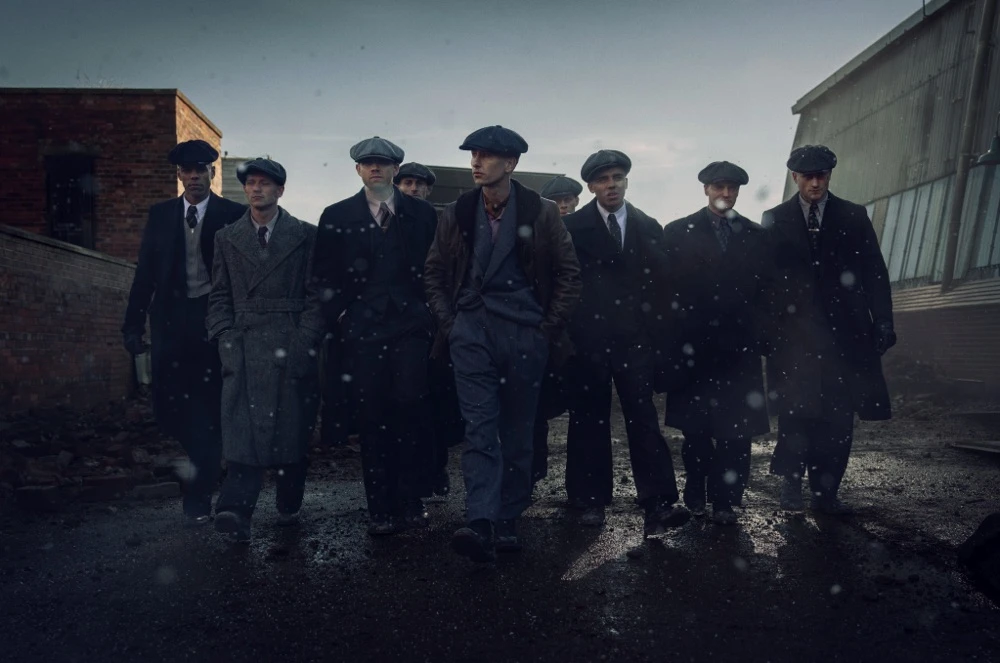
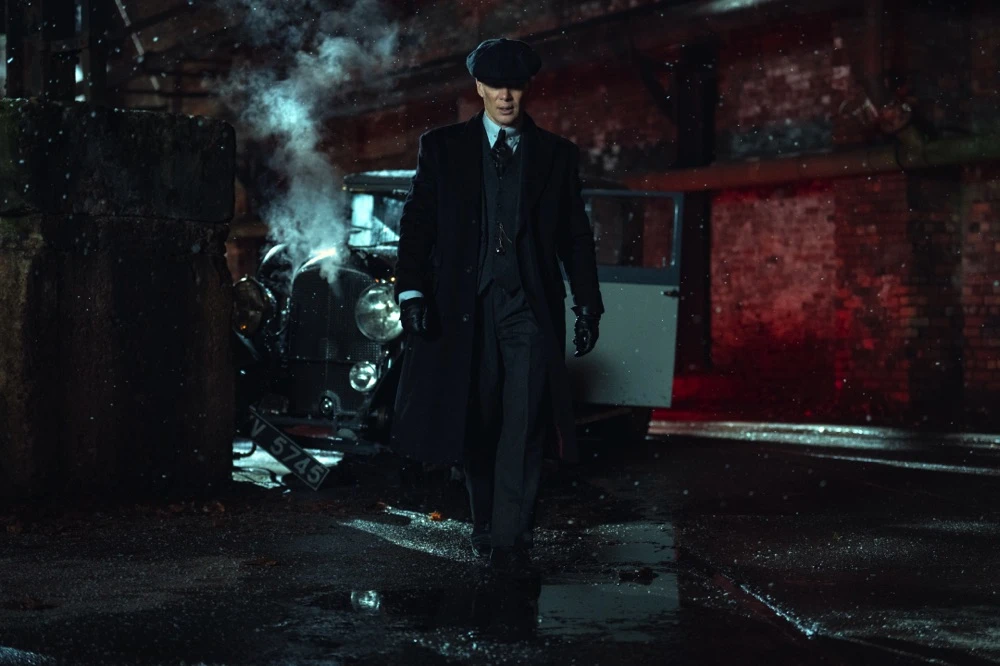
Ultimately, though, the film rests squarely on Murphy’s shoulders, and he carries it with ease. Even after more than a decade inhabiting the character, he finds new emotional shades within Tommy Shelby. The framing device of the memoir he’s writing isn’t especially groundbreaking, and some moments, such as Tommy typing away while drifting along on a canal barge, flirt with unintentional comedy. But once the story finds its rhythm, The Immortal Man settles into an engaging, pulpy, character-driven drama.
It may not reinvent the Peaky Blinders mythos, but it understands exactly what made the original compelling. And with Murphy still wearing the flat cap, it remains difficult to imagine anyone else carrying on the Shelby legacy.
Overall: 7.5/10

Movie Reviewer