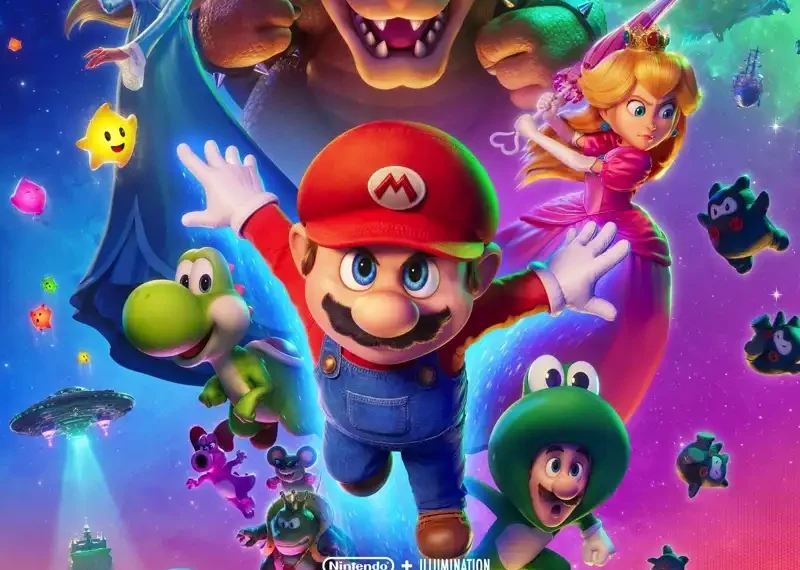
Cast: Chris Pratt, Anya Taylor-Joy, Charlie Day, Jack Black, Keegan-Michael Key, Benny Safdie, Donald Glover, Issa Rae, Luis Guzmán, Kevin Michael Richardson, Brie Larson
Genre: Adventure, Animation, Comedy, Family, Fantasy
Directors: Aaron Horvath & Michael Jelenic
In Irish Cinemas: 1st April 2026
The Super Mario Galaxy Movie spirals into chaos with a level of disarray rarely seen in blockbuster franchises, evoking the same kind of baffling excess that once defined Transformers: Revenge of the Fallen. Where its predecessor at least maintained a faint structural backbone, something resembling a story that could be followed and understood with minimal effort, this instalment discards coherence altogether. Any narrative foundation that once existed is metaphorically detonated, haphazardly reassembled with flimsy ideas, drenched in spectacle, and then flung into the cosmos without regard for logic or continuity. The result is less a story and more a sensory overload that struggles to justify itself from one moment to the next.
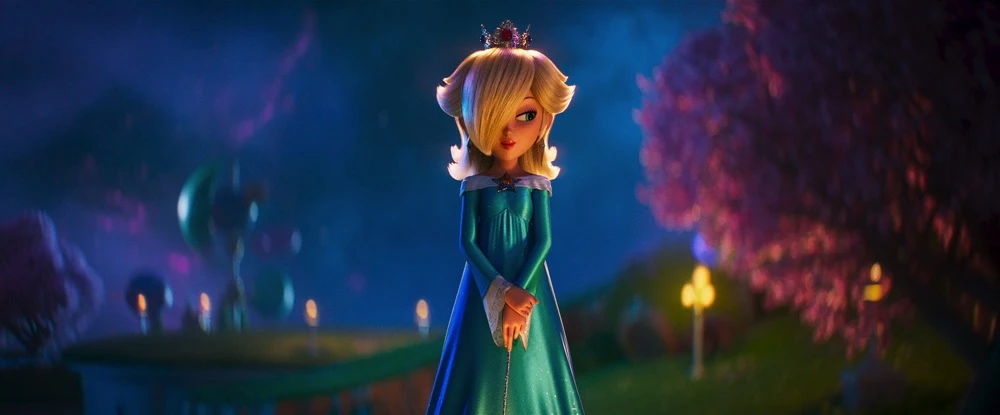
The film opens in a distant corner of the universe, introducing Princess Rosalina as a nurturing guardian to a cluster of star-like beings. This tranquil existence is swiftly interrupted by the arrival of a mechanical threat orchestrated by Bowser Jr., who abducts Rosalina to harness her abilities for a destructive cosmic weapon. It’s a premise that hints at grandeur but quickly becomes lost in the film’s relentless pacing and scattered focus.
Attention then shifts to Mario and Luigi, who are entangled in a side conflict involving the Tostarenans and a troublesome situation caused by Yoshi. This sequence highlights one of the film’s most glaring shortcomings: a complete absence of emotional investment in its characters. Yoshi, a figure with immense potential for charm and wonder, is reduced to a fleeting gag. Rather than being treated with the same care and sense of awe afforded to iconic creature characters in other franchises, Yoshi appears briefly, generates a mild reaction, and is promptly sidelined as if the story has no interest in exploring that potential.
Meanwhile, the Mushroom Kingdom initially appears stable until Princess Peach learns of Rosalina’s capture. Determined to help, she sets off with Toad on a rescue mission, leaving Mario and Luigi behind to defend their home. This split narrative only adds to the film’s fragmentation, as multiple threads unfold without meaningful connection or progression.
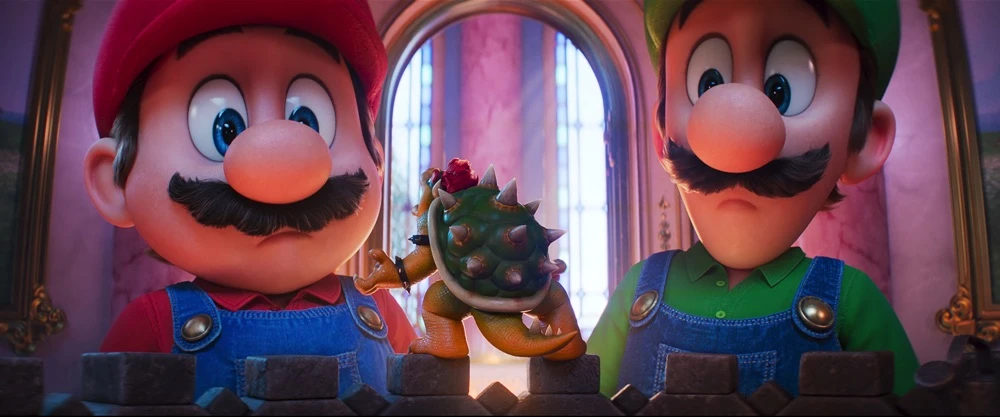
Amid the chaos, Bowser emerges as the only character with a semblance of a defined arc. Reimagined as a subdued and introspective version of his former self, he spends his time engaged in quiet, almost domestic activities like cooking and painting. While this shift in personality introduces an intriguing contrast, it clashes sharply with Bowser Jr.’s ambitions to restore his father’s former dominance. This internal conflict briefly suggests depth, but the film’s erratic storytelling quickly overshadows it. When Bowser Jr. launches an attack on the Mushroom Kingdom, the narrative completely unravels, veering wildly from one disconnected event to another.
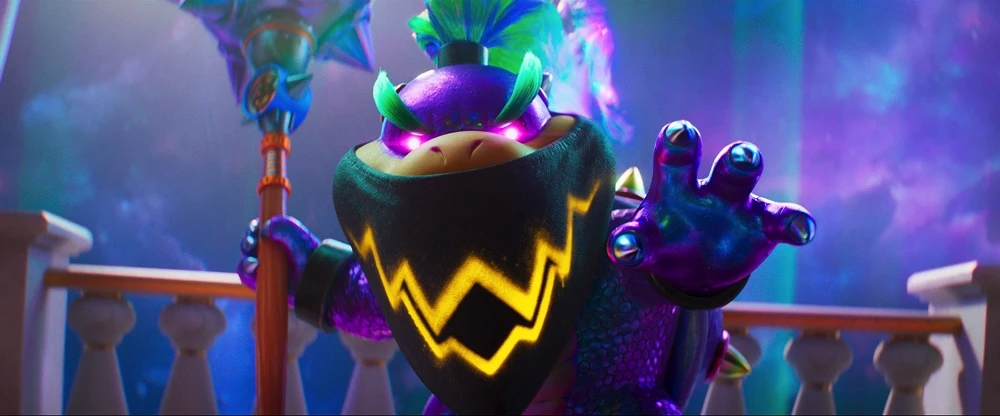
The screenplay unfolds as a barrage of loosely strung-together scenarios that lack cause-and-effect logic. Characters are chased by dinosaurs, transformed into infants by an inexplicable device, and sent on tangential pursuits involving minor antagonists and bizarre set pieces. Entire sequences feel interchangeable, as though their order holds no significance. Rearranging these events would scarcely alter the overall experience, underscoring the absence of narrative cohesion.
What proves most disappointing is not just the confusion, but the loss of wonder. The earlier film captured moments of genuine discovery, instances where the characters’ encounters with new environments felt magical and immersive. That sense of awe is almost absent here. Instead, the film bombards the audience with references, characters, and visual callbacks, prioritising recognition over storytelling. New elements are introduced rapidly and discarded just as quickly, often serving little purpose beyond fleeting fan service.
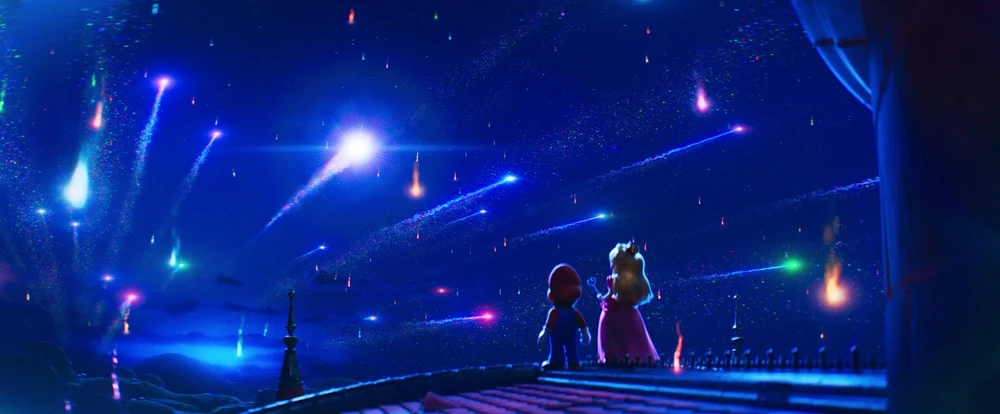
Despite these issues, the animation remains a clear strength. The visual team demonstrates remarkable skill in bringing vibrant, imaginative worlds to life. Each scene is rich with colour and detail, often resembling artwork worthy of display. The film even experiments stylistically, incorporating sequences that pay homage to different animation techniques, including retro-inspired visuals and anime influences. These moments showcase creativity and ambition, offering glimpses of what the film could have been with stronger narrative support.
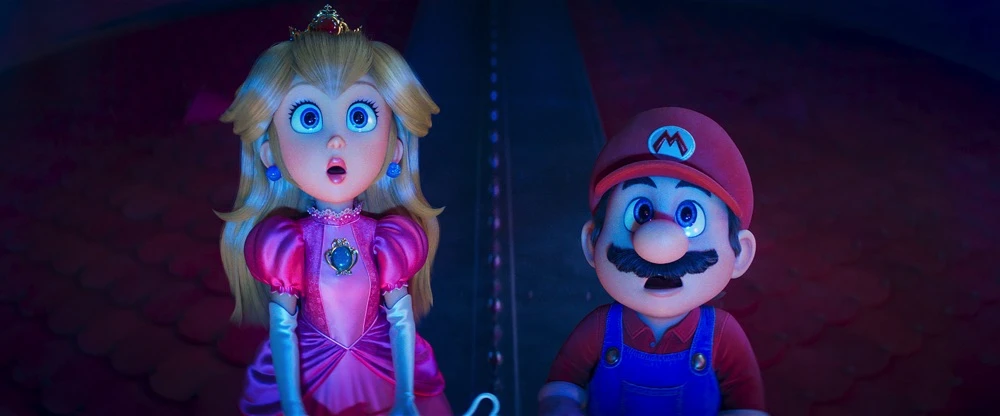
However, the visual spectacle ultimately cannot compensate for the hollow storytelling. While certain sequences dazzle with their scale and energy, such as elaborate chases and intricately animated action set pieces, they lack emotional weight or narrative purpose. The experience becomes akin to admiring a beautifully crafted object that, upon closer inspection, reveals itself to be empty at its core.
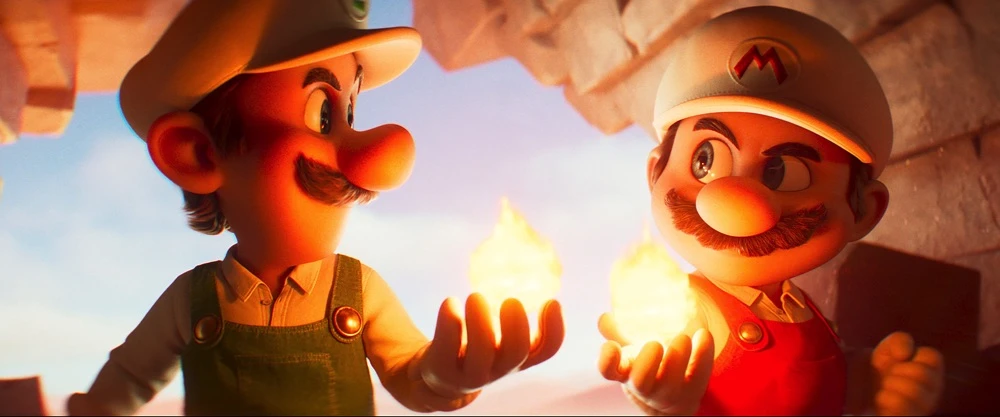
The film delivers bright, fast-paced entertainment that may hold the attention of younger audiences and satisfy a surface-level craving for nostalgia. Yet beneath its glossy exterior lies a disjointed and unfocused narrative that underestimates its audience. Instead of building upon the foundation of its predecessor, it abandons coherence in favour of excess, resulting in a sequel that feels less like a continuation and more like an uncontrolled explosion of ideas.
Overall: 5.5/10

Movie Reviewer