Reviewed on 24th January at the 2025 Sundance Film Festival – Premieres 92 Mins
Cast: Suzette Baker, Weston Brown, Becky Calzada, Carolyn Foote, Martha Hickson, Amanda Jones, Adrienne Martin, Marie Masferrer, Julie Miller
Genre: Documentary, Crime, Drama, History
Director: Kim A. Snyder
In Irish Cinemas: 26th September 2025
A Defiant Documentary Chronicles the Battle Against Book Bans
At this year’s Sundance Film Festival, filmmaker Kim A. Snyder unveils The Librarians, a documentary that pulls back the curtain on America’s mounting censorship wars — and the unlikely front-line defenders who refuse to back down: librarians.
The film opens with a searing line from Ray Bradbury’s Fahrenheit 451: “It was a pleasure to see things burn. It was a special pleasure to see things eaten, to see things blackened and changed.” That dystopian reminder sets the tone for what follows: a sobering look at how lawmakers and political groups are working to purge school and public libraries, and the everyday workers standing in their way.
The first scene shows a woman seated in shadow, her back to a window that is bathed in sunlight. She could be mistaken for a cartel informant or government whistleblower. In reality, she’s a Texas school librarian — a profession that, in recent years, has become a dangerous post.
In 2021, Texas legislator Matt Krause circulated a list of 850 books he wanted schools to identify, many of which dealt with race or LGBTQ+ lives. Alongside that list came a chilling directive: schools should be wary of books that might make students feel “discomfort, guilt, anguish, or any other form of psychological distress because of their race or sex.” Weeks later, Governor Greg Abbott escalated matters, demanding “the immediate removal of pornographic material” from school libraries.
Against this backdrop, Snyder introduces librarians who’ve been harassed, threatened, and in some cases fired for refusing to comply. Suzette Baker, an Army veteran and head of the Llano County Library System, was dismissed after declining to pull works like Ibram X. Kendi’s How to Be an Antiracist and Ta-Nehisi Coates’ Between the World and Me. Her defiance comes laced with dry humour: “I have to show you to the children’s library, because that’s where our porn is.”
Other figures in the film carry different scars. Louisiana librarian Amanda Jones, who penned That Librarian: The Fight Against Book Banning in America, was publicly vilified online after speaking out at a school board meeting. Despite numerous professional awards, her advocacy has come at the cost of her privacy and safety. Through quiet moments with her parents, the documentary captures the emotional burden of standing up for readers’ rights.
The fight, however, is not confined to Texas or Louisiana. In New Jersey, librarian Martha Hickson traced censorship campaigns back to the conservative group Moms for Liberty, whose mission statement pledges to defend “parental rights at all levels of government.” Her reward for this research: being smeared as a pedophile. Labelling queer stories as “obscene” — and painting librarians as purveyors of pornography — remains one of the oldest tactics in the censor’s arsenal.
Archival clips, such as a scene from the 1956 anti-censorship film Storm Centre, enrich Snyder’s narrative, grounding today’s battles in a more extended history of book suppression. But the film also showcases the new generation of resistors, such as the students of Texas’ Granbury Banned Book Club, and community leaders like Florida pastor Rev. Jeffrey Dove, who condemns the erasure of Black history as “one of the most evil things a person can do.”
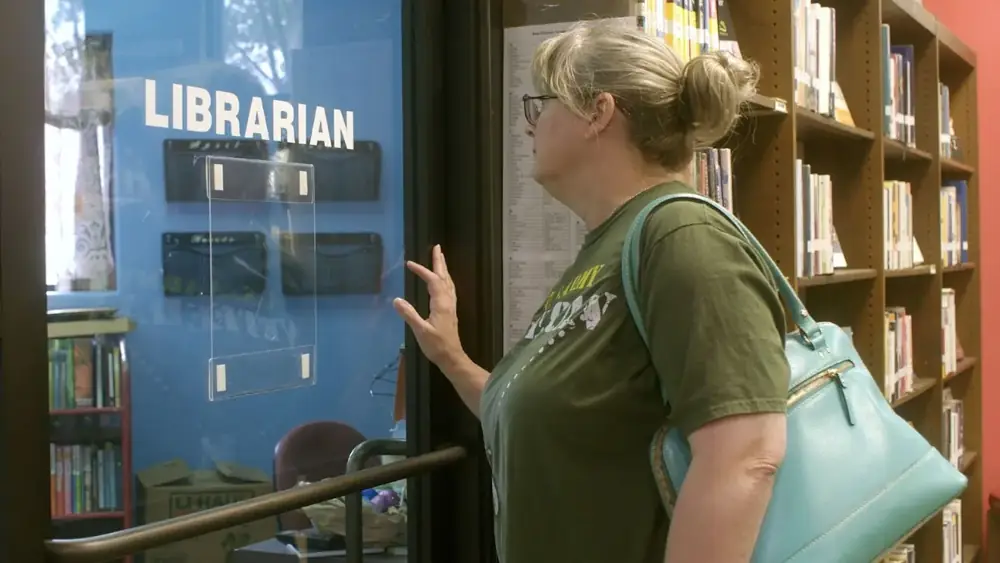
In a surprising twist, Snyder also profiles Courtney Gore, a Granbury school board member who once railed against libraries alongside conservative media figures — only to break ranks and face backlash from her former allies. Her reversal underscores the polarising and deeply personal nature of the conflict.
While the demographics of librarianship remain overwhelmingly white and female, the film emphasises that defending diverse literature is not just about identity, but also about safeguarding curiosity, knowledge, and freedom of thought.
As Texas librarian Audrey Wilson-Youngblood reflects: “Our story is still being written. But now it’s everyone’s story.”
With The Librarians, Snyder crafts a tense, human-centred account of what is at stake when powerful institutions attempt to dictate what people can and cannot read. The film insists that this fight isn’t just about books — it’s about the survival of open inquiry itself.
Overall: 8/10

Movie Reviewer