
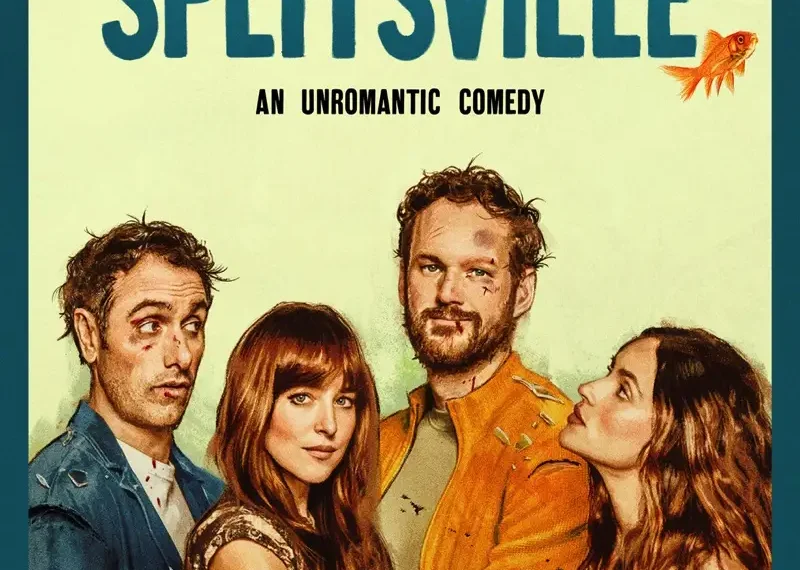
Cast: Dokota Johnson, Adria Arjona, Kyle Marvin, Michael Angelo Covino
Genre: Comedy
Director: Michael Angelo Covino
In Irish Cinemas: 27th March 2026
Monogamy doesn’t quite hold the cultural authority it once did, and cinema has started to poke at the cracks. Recent films have approached the subject from different angles, some surreal, some satirical, but Michael Angelo Covino’s latest comedy leans fully into the chaos of modern relationships. With a sharp, irreverent tone, it explores what happens when the desire for stability collides with the fear of missing out, following two New York couples who attempt to “modernise” their marriages with predictably messy results.
The story wastes no time establishing its off-kilter sensibility. A shocking car scene triggered by a reckless moment of intimacy sets the tone for the film’s blend of absurdity and consequence. Carey, a mild and well-meaning man, finds his life abruptly upended when his impulsive wife, Ashley, decides to leave him in the aftermath. Reeling, he retreats to the home of his longtime friend Paul, a high-strung, self-involved figure whose own marriage to Julie is already quietly fraying.
What begins as a refuge quickly spirals into something far more complicated. Paul and Julie’s casual embrace of an open relationship sets off a domino effect, drawing Carey and eventually Ashley into a tangled experiment with non-monogamy. Rather than liberation, however, what follows is a parade of awkward encounters, bruised egos, and escalating misunderstandings. The film mines these situations for comedy, but there’s an undercurrent of discomfort that keeps the laughter slightly uneasy.
Covino, co-writing with Kyle Marvin, builds much of the humour from contradiction. Characters preach emotional freedom while quietly succumbing to jealousy; they claim honesty while engaging in small, telling deceptions. One particularly inspired sequence, in which Carey enthusiastically welcomes his wife’s other partners into their shared home, becomes a comic farce of domestic overfamiliarity, complete with group activities that blur the boundaries even further. These moments are stitched together with breezy montages and a playful, retro-tinged score that gives the film a lightness at odds with its more cynical observations.

Stylistically, the film nods to an earlier era of American comedy, recalling the polished, adult relationship dramas of the late 1960s and ’70s. Shot on 35mm, it embraces a more deliberate visual language than most contemporary comedies, favouring longer takes and carefully composed frames. Covino also shows a flair for physical humour, staging scenes that escalate from verbal sparring into full-blown chaos, none more memorable than an extended, destructive brawl between Carey and Paul that plays like slapstick filtered through genuine resentment.

Beneath the surface, though, the film’s real focus isn’t romance so much as male insecurity. The friendship between Carey and Paul becomes increasingly strained as envy and competition seep in, exposing deeper anxieties about masculinity, success, and self-worth. While the women in the story, Ashley and Julie, are compelling presences, they’re often positioned as reactors to the men’s spiralling behaviour, leaving their perspectives somewhat underdeveloped.

As the narrative barrels toward its conclusion, culminating in a chaotic, emotionally volatile party, it begins to lose some of its sharpness, circling the same conflicts without fully resolving them. Even so, its central insight lands effectively: attempting to outsmart emotional vulnerability with “rules” or arrangements is a losing game. The promise of freedom quickly gives way to the same old insecurities, only amplified.
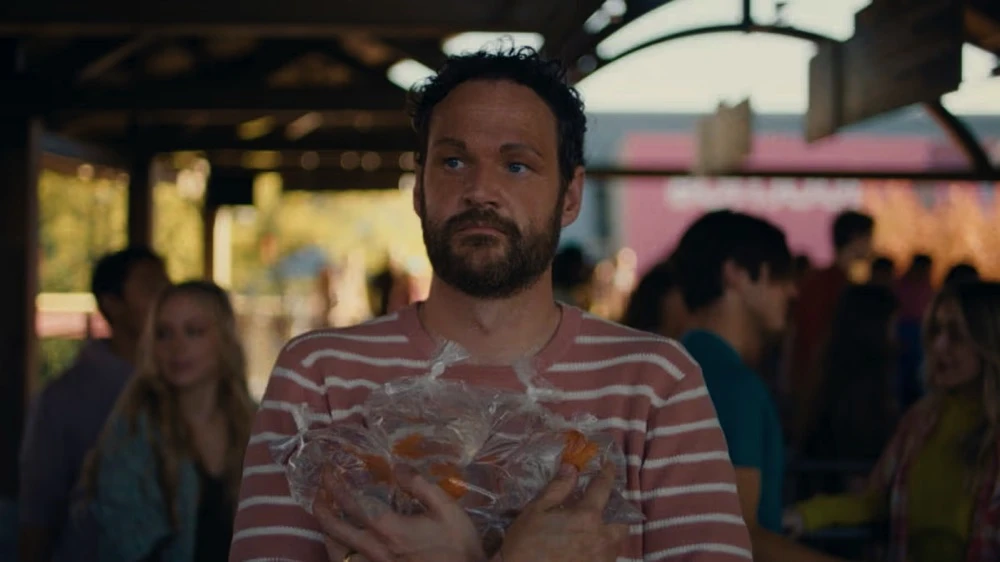
In the end, the film succeeds not as a romantic comedy, but as something more ambivalent, an exploration of love stripped of illusion. It suggests that no amount of reinvention can eliminate the basic human impulses toward jealousy, longing, and connection. If there’s humour here, it’s of the slightly bitter variety, rooted in the recognition that relationships remain stubbornly complicated, no matter how progressive the framework.
Overall: 6.5/10

Movie Reviewer