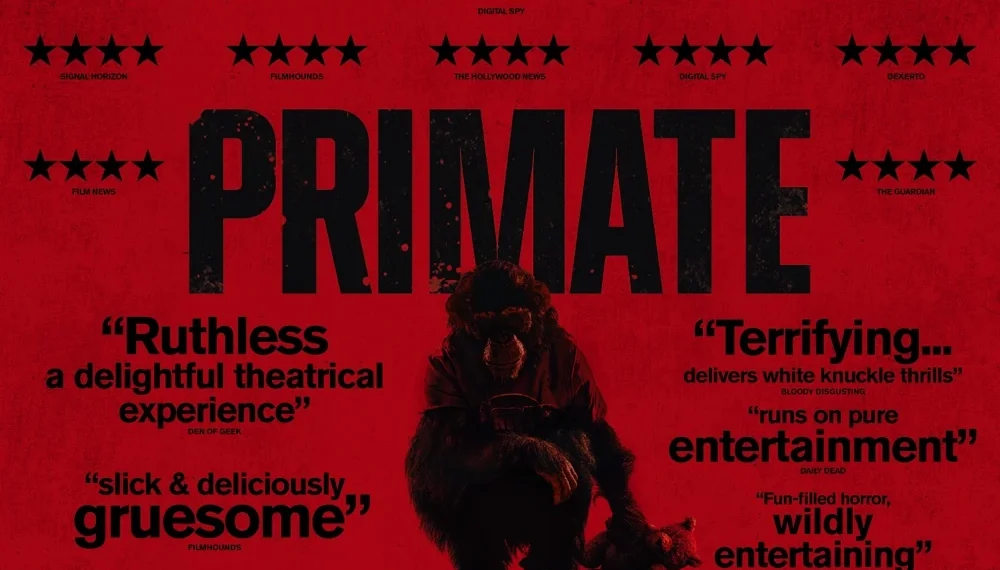
Cast: Johnny Sequoyah, Jessica Alexander, Troy Kotsur, Victoria Wyant, Gia Hunter, Benjamin Cheng, Charlie Mann, Tienne Simon
Genre: Horror
Director: Johannes Roberts
In Irish Cinemas: 30th January 2026
Equal parts ruthlessly economical and gleefully absurd, Primate spins a nasty little nightmare out of a once-adored chimpanzee who snaps and turns a peaceful household into a slaughterhouse. Director Johannes Roberts (47 Meters Down) squeezes maximum tension from a tightly boxed-in scenario, trapping a group of young travellers inside an isolated home with a relentless, fur-covered menace. Logic frequently takes a backseat, and the characters are thin sketches at best, but for viewers willing to go along for the ride, the film delivers a disposable yet entertaining jolt of creature-feature mayhem.
Set to debut in Ireland on January 30, Paramount’s modestly budgeted horror outing is never going to steal thunder from mega-releases like Avatar: Fire And Ash. Still, strong reactions from genre showcases such as Fantastic Fest and Beyond Fest may be enough to spark interest among horror loyalists. While Primate lacks bankable headliners, recognisable faces like Oscar winner Troy Kotsur (CODA) and Dexter: New Blood alum Johnny Sequoyah add a dash of prestige and visibility.
The story centres on Lucy (Sequoyah), a college student returning to her family’s Hawaiian home after exams with mixed emotions. Her mother has recently died, leaving unresolved grief and tension in her wake. Before her death, Lucy’s mother, a linguistics academic, had been conducting groundbreaking communication experiments with Ben, a chimpanzee who still resides with the family. Lucy’s younger sister Erin (Gia Hunter) and her father, Adam (Kotsur), a self-involved novelist who prioritises his work over parenting, continue to live with Ben. Hoping to mend strained relationships, Lucy brings along friends Kate (Victoria Wyant) and Hannah (Jessica Alexander), though emotional healing proves short-lived.
The film quickly swerves from family drama into full-blown survival horror when Ben is revealed to be infected with rabies, transforming from a gentle companion into a vicious, unpredictable killer. With Adam out of town for a literary appearance and the group cut off from their phones, Lucy and her friends retreat to the swimming pool, aware that Ben can’t swim, only to realise they’re running out of time. Erin has already been brutally injured, and without medical help, her survival is uncertain.
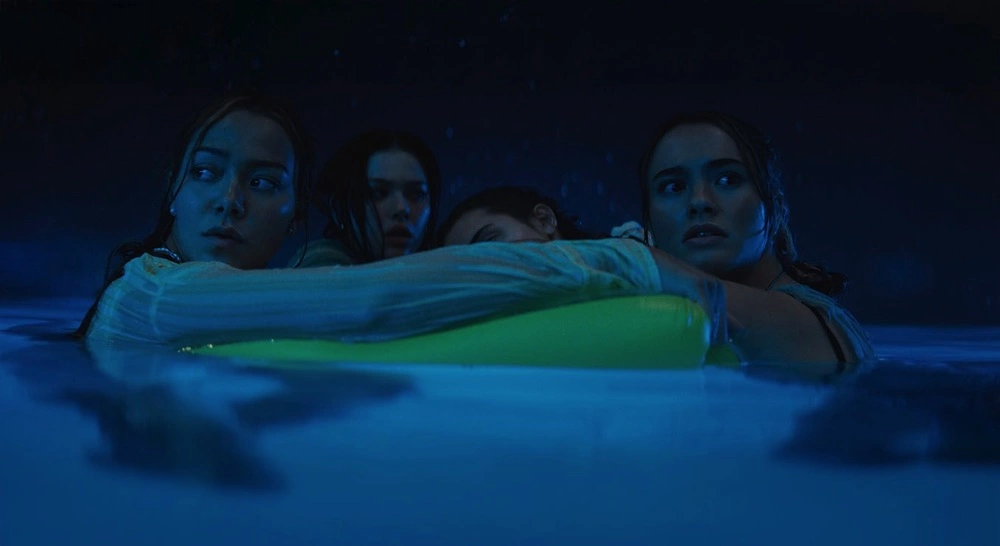
Leaning heavily on practical effects, animatronics, and a full-body chimp suit worn by movement performer Miguel Torres Umba, Primate embraces its stripped-down premise. The film unfolds as a cat-and-mouse standoff inside a lush but claustrophobic house. Roberts peppers the movie with nods to classic horror; The Shining looms large while composer Adrian Johnston openly channels John Carpenter’s iconic musical style. Despite the graphic violence, the tone often veers toward mischievous excess, encouraging viewers to chuckle at the characters’ spectacularly bad decisions and Ben’s almost smug cruelty.
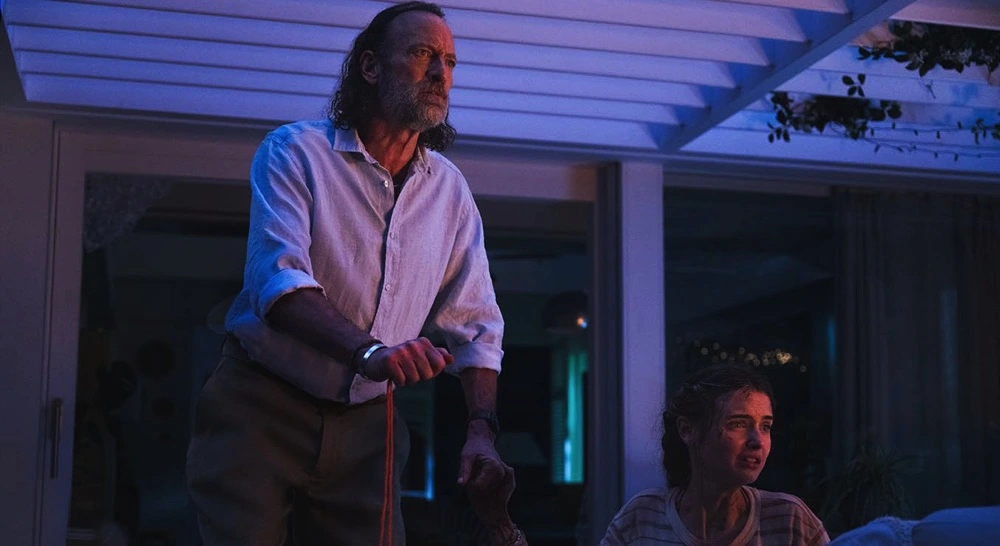
Roberts is at his most effective when he lets quiet do the heavy lifting. Because Adam is deaf and communicates via American Sign Language, the same method used with Ben, silence becomes a narrative weapon. Entire sequences play out with barely a sound as characters tiptoe through rooms, terrified of alerting the chimp. At times, the film adopts Adam’s perspective, muting the chaos unfolding elsewhere in the house. While Primate often favours blunt-force shocks, these hushed moments generate a surprising level of sophistication and sustained tension.
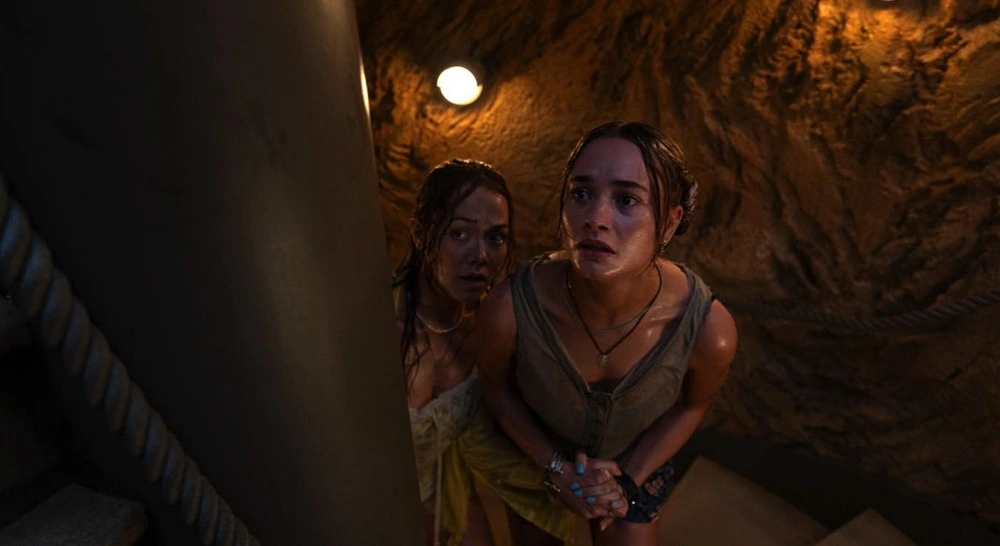
The cast does what it can with material that constantly bends over backwards to justify reckless behaviour. Roberts and co-writer Ernest Riera concoct increasingly implausible excuses to push the characters out of safety and back into danger. The emotional dynamics, Lucy’s grief, her friendship with Kate, and Adam’s flawed parenting remain underdeveloped and largely weightless. The film works best when it abandons any pretence of depth and simply unleashes Ben, even if the chimp’s behaviour shifts wildly from scene to scene. One moment, he’s a mindless animal; the next, he stalks his victims with slasher-villain precision, savouring the hunt like a furry Jason Voorhees.
The limited budget shows, particularly in the occasionally unconvincing chimp suit, though Ben’s snarling maw and jagged claws still pack a visceral punch. Roberts doesn’t shy away from the aftermath of the attacks, lingering on mangled faces and shattered skulls. Yet one of the movie’s creepiest elements is far less graphic: Ben’s crude digital speech device. Once used as a symbol of connection, it becomes deeply unsettling when the enraged chimp starts “talking” to those he’s about to kill, a small touch that proves more disturbing than all the gore combined.
Overall: 6.5/10

Movie Reviewer