
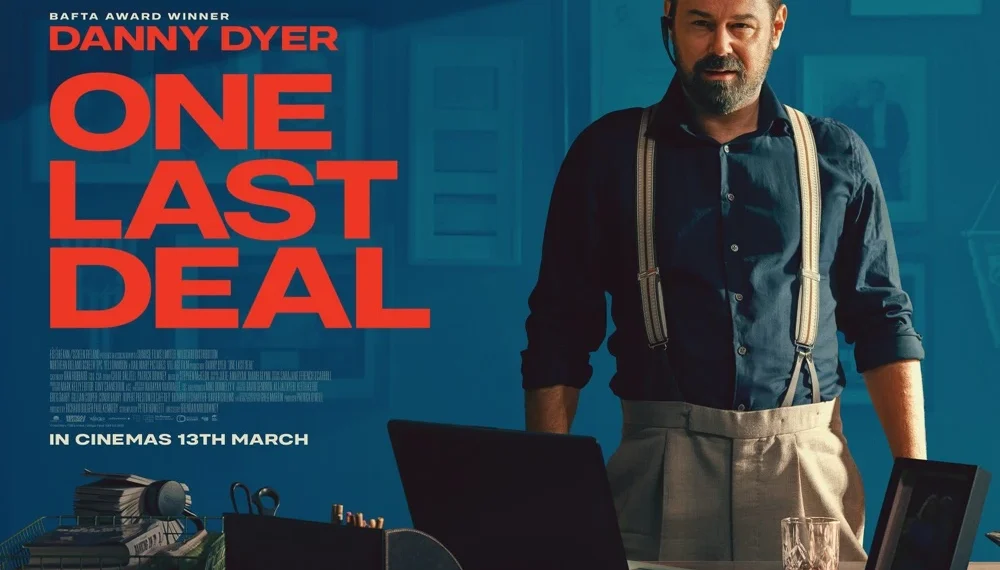
Cast:One Last Deal Review
Genre: Thriller
Director: Brendan Muldowney
In Irish Cinemas: 13th March 2026
Single-setting dramas are always a gamble. Strip away changing locations, supporting casts and visual spectacle, and what remains has to stand on the strength of performance, writing, and atmosphere. When the entire film effectively rests on the shoulders of one actor, the margin for error becomes even smaller. That’s the tightrope Irish filmmaker Brendan Muldowney walks with One Last Deal, an austere, single-room drama that unfolds almost entirely within the confines of a slick but soulless London office.
The film tracks a single turbulent day in the professional life of football agent Jimmy Banks, played by Danny Dyer. Banks is a man clinging desperately to the last threads of relevance in a business that has little patience for yesterday’s operators. With his reputation dented and his career hanging by a thread, he spends the day frantically trying to secure a major contract extension for his star client, a deal that might not only rescue his standing in the industry but also restore the personal dignity that has clearly been slipping away.
Because Jimmy never leaves his office, the outside world reaches him exclusively through the phone. The narrative unfolds through a relentless stream of calls: tense negotiations with club executives, pleading conversations with legal advisers, awkward exchanges with family, and frantic attempts to keep influential figures onside. Whether barking into a Bluetooth headset or whispering urgently into a questionable burner phone, Jimmy navigates this web of conversations with the brash charm and volcanic temper audiences have come to expect from Dyer. The performance leans heavily into the actor’s trademark swagger, equal parts bluster, profanity and cheeky charisma, but there’s also a clear attempt to hint at vulnerability beneath the bravado.
Composer Stephen McKeon provides a slick, jazz-tinged score that works hard to inject rhythm and urgency into the otherwise static setting. At key moments, it amplifies the rising pressure as Jimmy’s negotiations begin to spiral. Yet while the music does much of the heavy lifting, the visual side of the production struggles to keep pace. The office environment is meant to signal the polished world of elite football management, walls adorned with framed photos, certificates, and memorabilia that suggest a career built on connections and prestige. Unfortunately, the set dressing often looks unconvincing, as though assembled in a hurry rather than lived in for years. Instead of grounding the story in a believable professional world, the décor occasionally gives off the air of a hastily arranged student production.
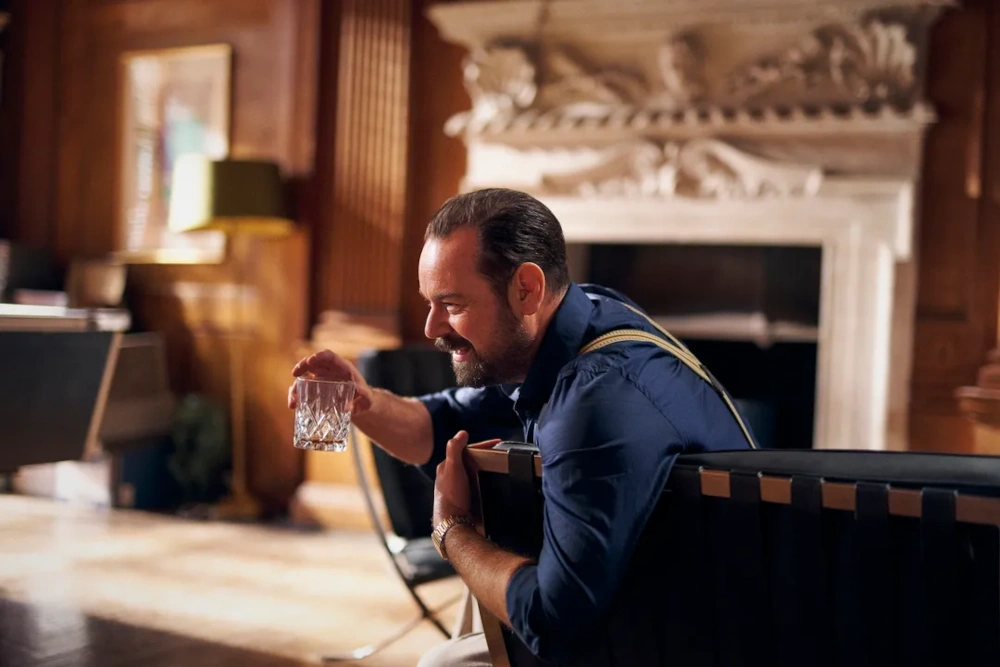
For Dyer, the role arrives during a period of reinvention. Once synonymous with the boisterous “lad culture” wave of British cinema in the late ’90s and early 2000s, the actor has spent recent years broadening his range with more layered work in projects like Rivals and Mr Bigstuff, the latter earning him recognition from BAFTA. Here, he once again demonstrates that he’s capable of carrying material that asks for more than just cockney bravado. Jimmy Banks is an entertaining presence, quick-witted, abrasive, and occasionally desperate, and Dyer brings enough magnetism to keep the audience invested even when the script begins to wobble.
Where the film falters most noticeably is in its handling of the story’s central controversy. A sexual assault allegation tied to Jimmy’s star client becomes the catalyst for the character’s supposed path toward redemption. Given the very real scandals that have surfaced within modern football, the subject matter is undeniably timely. However, the screenplay treats it less as a complex issue deserving careful exploration and more as a convenient narrative lever. The tonal clash between the film’s swaggering, profanity-laced dialogue and the gravity of the topic leaves the material feeling clumsily managed rather than meaningfully examined.
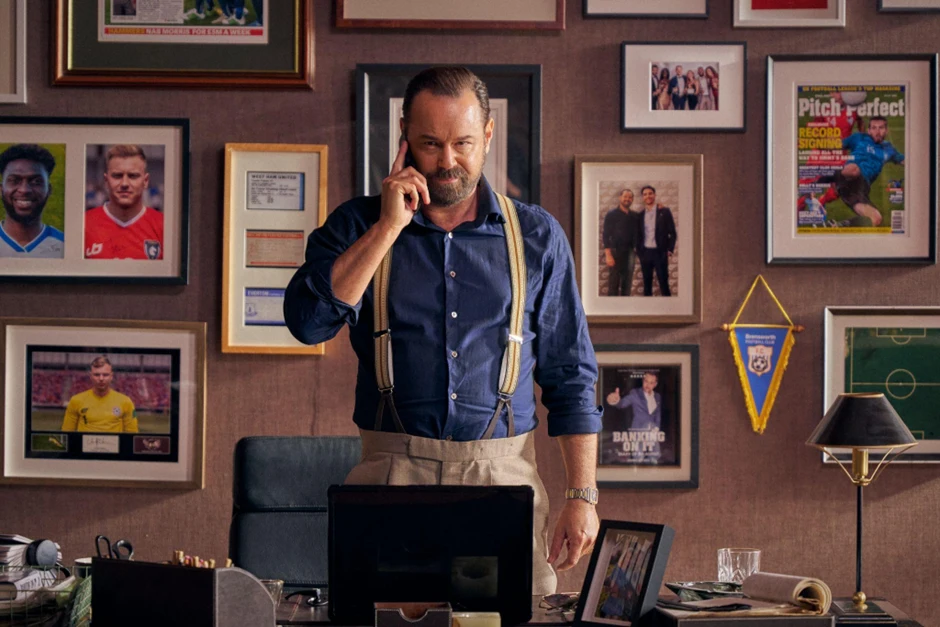
In the end, One Last Deal survives largely because of the man at its centre. Dyer proves he has the presence to command the screen alone for ninety minutes, injecting energy and personality into a concept that might otherwise feel claustrophobic. Yet despite his efforts, the surrounding elements—thin writing, uneven tone, and underwhelming production design never quite match the lead performance’s strength.
The result is a film that feels like a near miss: a compelling actor stranded inside a project that doesn’t quite live up to his capabilities. Dyer has long since shown he’s capable of far more than the stereotype of the loudmouth geezer. What he needs now are scripts and collaborators strong enough to meet him at that level.
Overall: 7/10

Movie Reviewer