
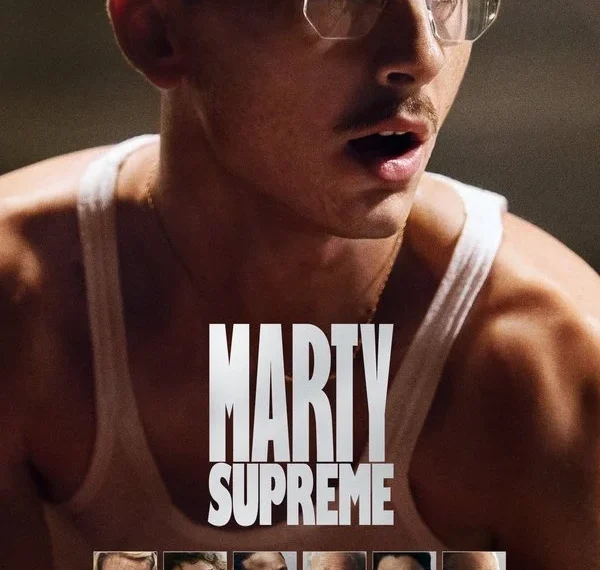
Cast: Timothée Chalamet, Gwyneth Paltrow, Odessa A’zion, Sandra Bernhard, Fran Drescher
Genre: Drama, Sport
Director: Josh Safdie
In Irish Cinemas: 26th December 2025
Once a year, a film arrives that recalibrates the senses and reminds audiences why cinema matters. In 2025, that film is Marty Supreme. With this frenetic, electrifying sports drama, Josh Safdie delivers a visceral cinematic experience that feels alive with chaos, urgency, and ambition. Anchored by what may be Timothée Chalamet’s finest performance to date, Marty Supreme announces itself as one of the defining films of the decade.
Josh Safdie, alongside his brother Benny, has long been synonymous with nerve-shredding thrillers and obsessive character studies. Films like Good Time and Uncut Gems cemented the Safdies’ reputation for kinetic storytelling and morally compromised protagonists. Now working separately, both brothers have embarked on solo projects under the A24 banner, each coincidentally centred on sports. While Benny Safdie’s The Smashing Machine is a straightforward biopic of MMA fighter Mark Kerr, Josh Safdie’s Marty Supreme takes a looser, more impressionistic approach.
Rather than adhering strictly to history, Marty Supreme is only loosely inspired by the life of table tennis legend Marty Reisman. What unfolds is not a reverent retelling but a stylised character study, prioritising myth, ego, and perception over factual precision.
The film follows Marty Mauser (Timothée Chalamet), a working-class New Yorker who fancies himself the greatest table tennis player alive. His confidence borders on delusion, and that unchecked arrogance poisons nearly every relationship around him. Marty is singularly focused on success, willing to exploit, discard, or belittle anyone who stands in his way of glory.
Inside Marty’s mind, life is grand and destiny-shaping; in reality, he is on the brink of managing his uncle’s shoe store, barely scraping by, and struggling to fund his international ambitions. This tension between fantasy and reality defines the film, grounding its swagger in quiet desperation.
Marty Supreme opens with a startling visual one that blossoms into a breathtaking transition and sets the thematic foundation for everything that follows. It introduces Marty’s ultimate obsession: being number one. When a crushing defeat against Japan threatens that dream, the setback only fuels his obsession further. Set against the backdrop of 1950s America, the film captures a relentless drive to dominate at any cost.
Although it operates within the framework of a sports biopic, Marty Supreme refuses to conform to convention. Safdie injects the film with the same volatile energy that defined Uncut Gems, allowing scenes to spiral unpredictably. That intensity pairs perfectly with Chalamet’s performance, which is both abrasive and strangely magnetic. Known for portraying complex figures in films like Dune and Bones and All, Chalamet here takes on a narcissistic, hot-headed protagonist who actively engineers his own downfall.
Marty Mauser is not designed to be likeable, yet Chalamet makes him impossible to dismiss. His performance is so infectious that audiences find themselves rooting for Marty despite his cruelty, hoping for both triumph and redemption, even when neither seems deserved.
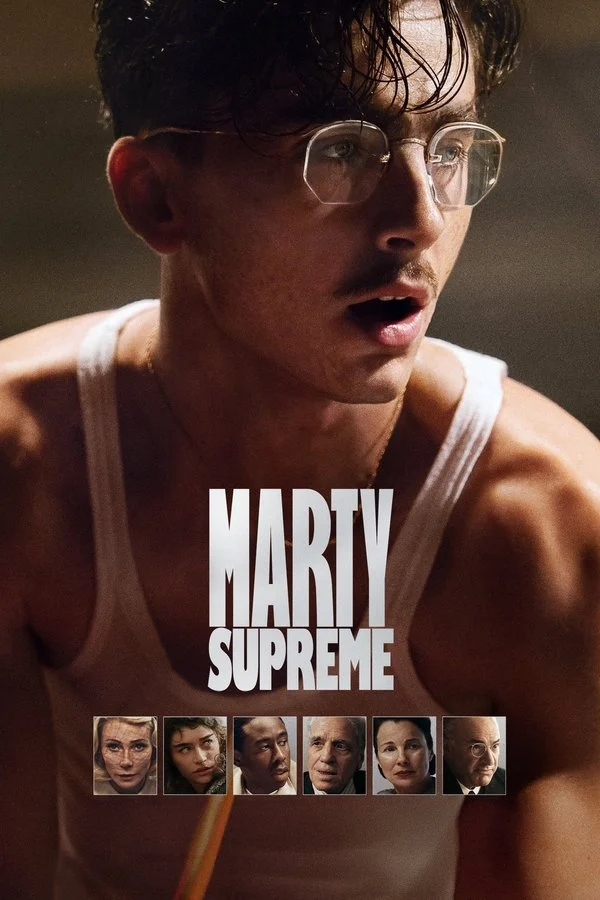
While Chalamet is undeniably the film’s gravitational centre, the supporting cast elevates the material further. Gwyneth Paltrow delivers one of her strongest performances in years as Kay Stone, a former movie star clinging to fading relevance. Her relationship with Marty is lopsided and emotionally revealing: immature on his end, revelatory on hers. Stone represents a past greatness that has slipped away; Marty embodies a future greatness he believes is inevitable. Their dynamic becomes one of the film’s most poignant contrasts.
Odessa A’zion shines as Rachel Mizler, Marty’s childhood friend and moral counterweight. Like the rest of the supporting characters, Rachel exists in opposition to Marty’s ego. These figures orbit him, offering chances for growth and self-reflection, yet never quite breaking through his armour until the film’s closing moments.
Perhaps the most unexpected standout is Tyler Okonma, making his feature film debut as Wally, a New York taxi driver and Marty’s closest semblance of a true friend. Okonma’s natural presence blends seamlessly into the film’s erratic tone. A key sequence between Wally and Marty crystallises just how unpredictable and emotionally sharp this film can be.
Despite its massive marketing campaign, global merchandise drops, Sphere spectacles, and viral collaborations, Marty Supreme remains, at its core, an indie film. That tension between spectacle and intimacy mirrors the film’s central character. The parallels between Marty Mauser’s hunger for immortality and Timothée Chalamet’s own meteoric ambition feel deliberate, even meta. Both chase greatness; both want their names etched into history.
By the time Marty Supreme closes the loop, it becomes clear that every element from its marketing blitz to its final frame has been meticulously orchestrated. This is a film destined for retrospectives, anniversary screenings, and critical reappraisal. Josh Safdie proves his singular vision stands strong without his brother, and Timothée Chalamet cements himself as one of the defining actors of his generation.
Marty Supreme is not just one of the best films of the year; it is one of the strongest films of the decade and a future classic in the making.
Overall: 8.5/10
Movie Reviewer