Reviewed on 26th January at the 2025 Sundance Film Festival
Cast: Rose Byrne, Ivy Wolk, Delaney Quinn, Mary Bronstein, A$ap Rocky
Genre: Drama, Thriller
Director: Mary Bronstein
In Irish Cinemas: 20th February 2026
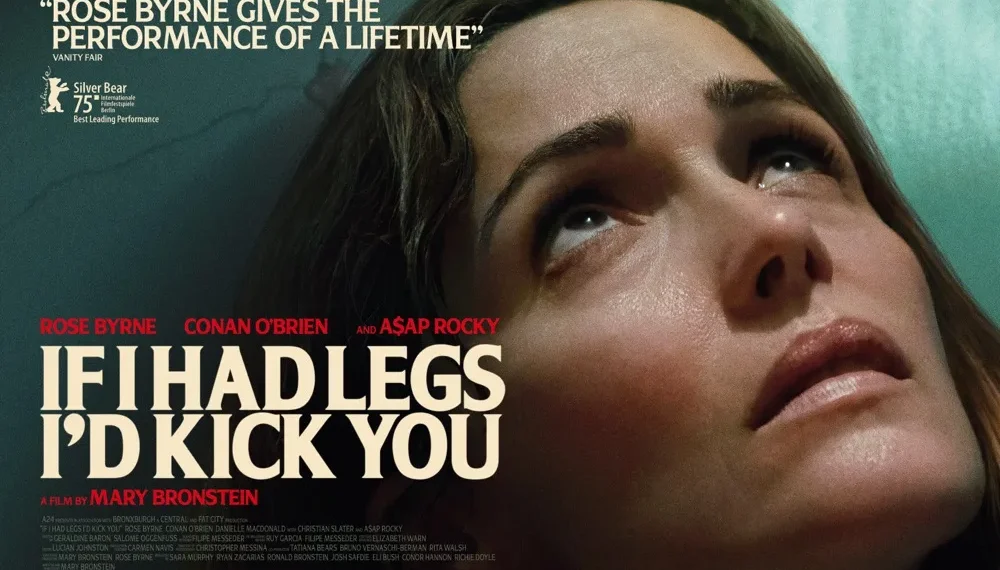
Cinema-going tends to split audiences down the middle: those craving a few hours’ escape, and those perversely drawn to watching someone else’s nerves fray for reassurance, release, or grim laughs. With a title as sourly comic as If I Had Legs I’d Kick You, Mary Bronstein’s second feature announces its allegiance early. This is not a holiday from reality but a plunge into it, headfirst and without a lifeline. Stress is the engine, and the destination is total psychological overload.
At the centre of the storm is Linda, played by Rose Byrne, with a ferocity that borders on frightening. Her partner is absent, her young daughter tethered to a relentlessly chirping medical device, and everyday life has begun to feel like an elaborate trap. Bronstein doesn’t observe this breakdown from a safe distance; the film locks itself inside Linda’s head. Rooms seem to shrink, ceilings threaten collapse, and the very ground feels unreliable. Anxiety is not subtext here; it is architecture.
Released under the A24 banner, the film shares DNA with the high-octane panic machines of Good Time and Uncut Gems, though this is a resolutely domestic and female-focused variation on that tradition. Think less reckless masculinity on the streets and more maternal implosion behind closed doors. Bronstein marshals every stylistic weapon available to conjure an apocalypse measured not in explosions, but in missed sleep, resentment, and suffocating responsibility. Byrne’s performance is feral, exposed, and utterly exhausting, a career-defining turn that demands admiration and endurance in equal measure.
Like Bronstein’s debut, Yeast, the camera clings uncomfortably close, often refusing to leave Byrne’s face as Linda juggles pressures that are never neatly itemised. The film resists backstory, preferring immersion. Motherhood registers as labour long before paid employment does, even though Linda works professionally as a counsellor, an irony that slowly tightens the vice. She possesses the language, training, and theory to diagnose distress, which only sharpens the sense of personal failure when those tools prove useless at home.
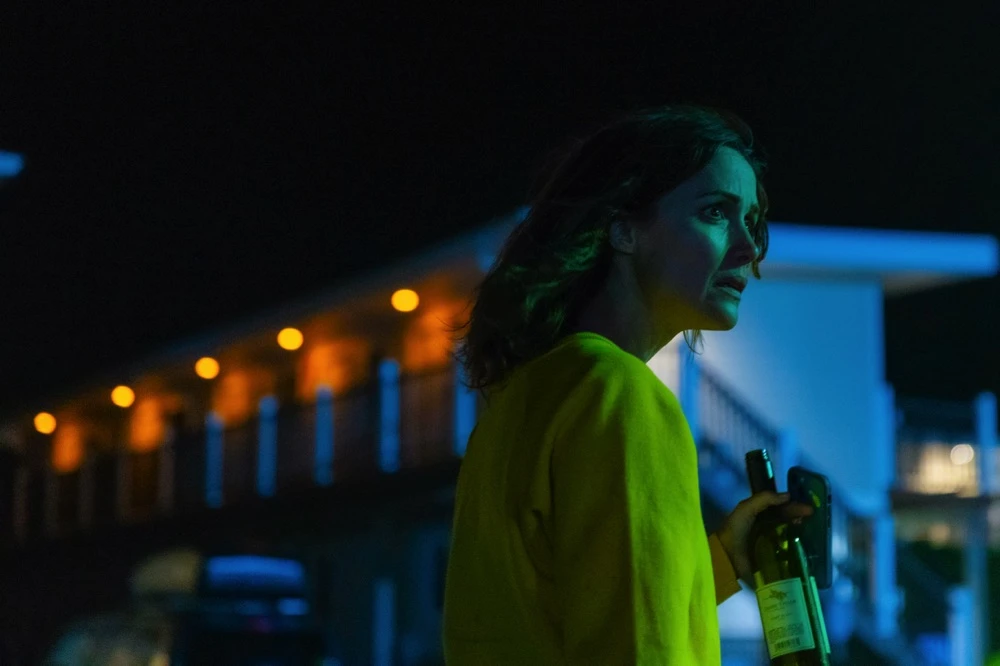
The daughter remains largely unseen for much of the running time, reduced to off-screen questions, distant noises, and demands echoing from other rooms. When her face is finally revealed, it lands less as a reveal than a reckoning. Until then, the child exists almost as an extension of Linda’s psyche, a physical manifestation of guilt, resentment, fear, and exhaustion, all tangled together. An absent husband, voiced with calm practicality by Christian Slater over phone calls, becomes another ghostly presence, stable but remote.
Questions about motherhood, choice, and obligation simmer throughout, aligning the film with recent women-led explorations of ambivalence around parenting. Linda grapples with the terrifying suspicion of being unsuited to the role, alongside darker, intrusive thoughts that flicker at the edges of consciousness. Media soundbites about maternal violence drift through the background, not as foreshadowing but as invasive noise, the kind that lodges in an already overstimulated mind and refuses to leave.
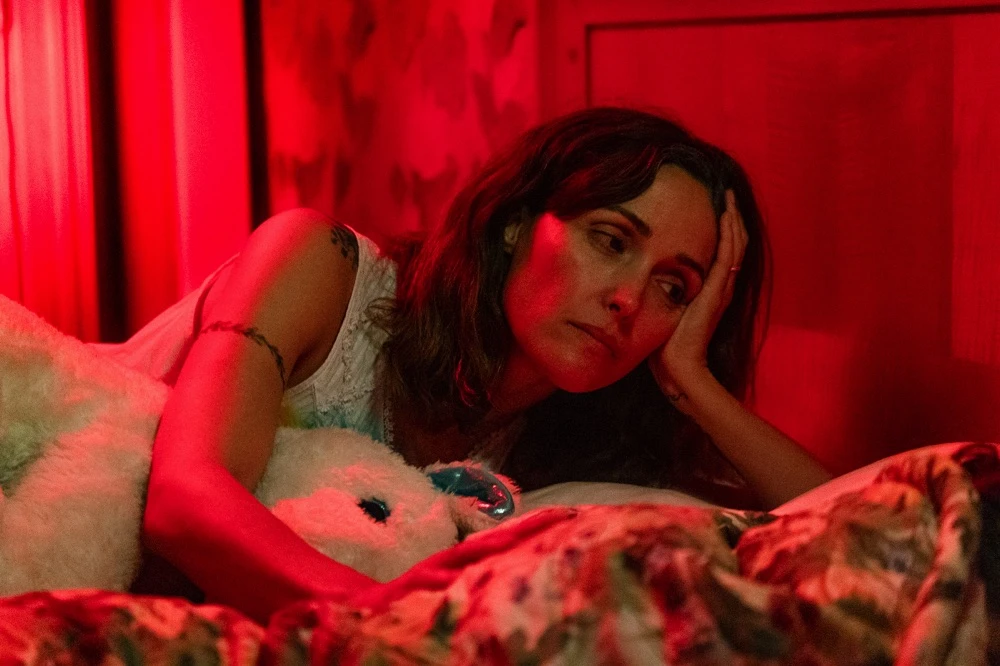
Therapy scenes provide no relief. Sessions with a colleague-therapist, played to queasy perfection by Conan O’Brien, crackle with hostility, projection, and ironic imbalance. The supposed healer looks increasingly unwell himself, as though proximity alone might be contagious. Linda’s professional knowledge becomes a double-edged sword, enabling constant second-guessing and resistance to help. Around her orbit, patients and strangers who are all, in their own ways, unmoored, overwhelmed mothers, emotionally stunted men, vacant young professionals, none of whom offer stability.
After a domestic disaster forces a hotel stay, the film flirts openly with the surreal. A hole torn through a ceiling becomes a cosmic absence, a literal void into which worries might drift and dissolve. Booze, weed, and sleep deprivation further blur the line between perception and reality. Even kindness arrives in strange forms, courtesy of a neighbouring guest played by A$AP Rocky, whose decency feels almost suspicious in a world this unbalanced.
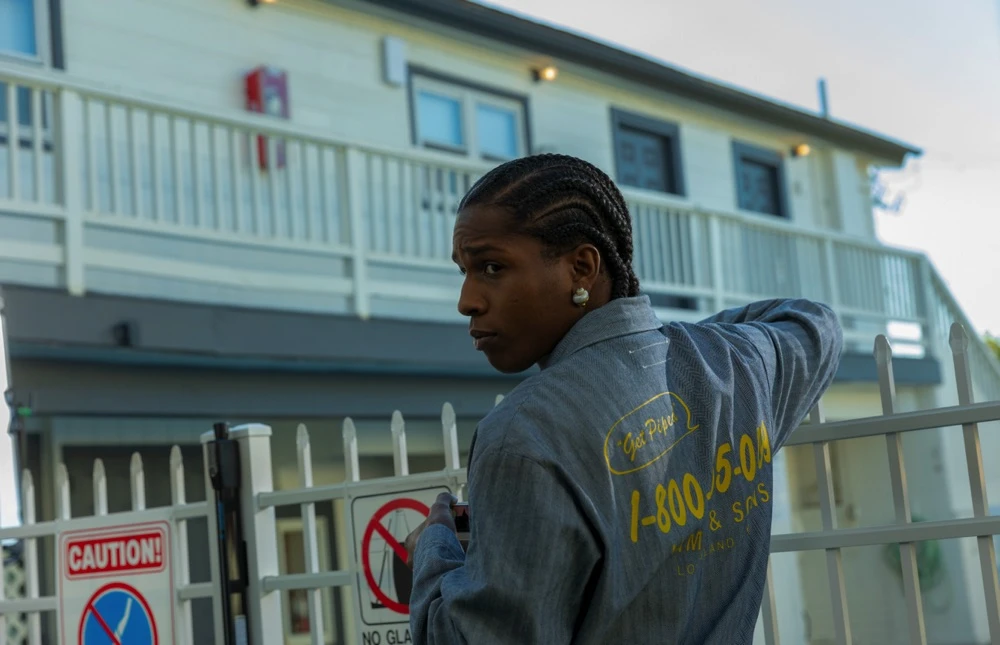
Bronstein commits fully to subjectivity, using abrasive sound design, suffocating framing, and jagged editing to simulate the sensation of being permanently on edge. The effect is divisive by design. Some viewers will howl with laughter at the sheer extremity, others will recoil from the sustained discomfort. Beneath the sensory assault lies a sharp critique of how society distributes emotional labour, how men are often assumed to be anchors without carrying equivalent weight, and how easily severe stress is mistaken for moral or personal failure.
What emerges most forcefully is a reassessment of Rose Byrne. Long pigeonholed into light comedy or decorative domestic roles, she is unleashed here as something far more volatile. Linda feels disturbingly real, sweating panic and contradiction, vibrating with barely contained dread. The performance practically rattles the cinema seats, though Bronstein punctures the intensity with flashes of bleak humour, including an inspired detour involving a deeply unsettling hamster.
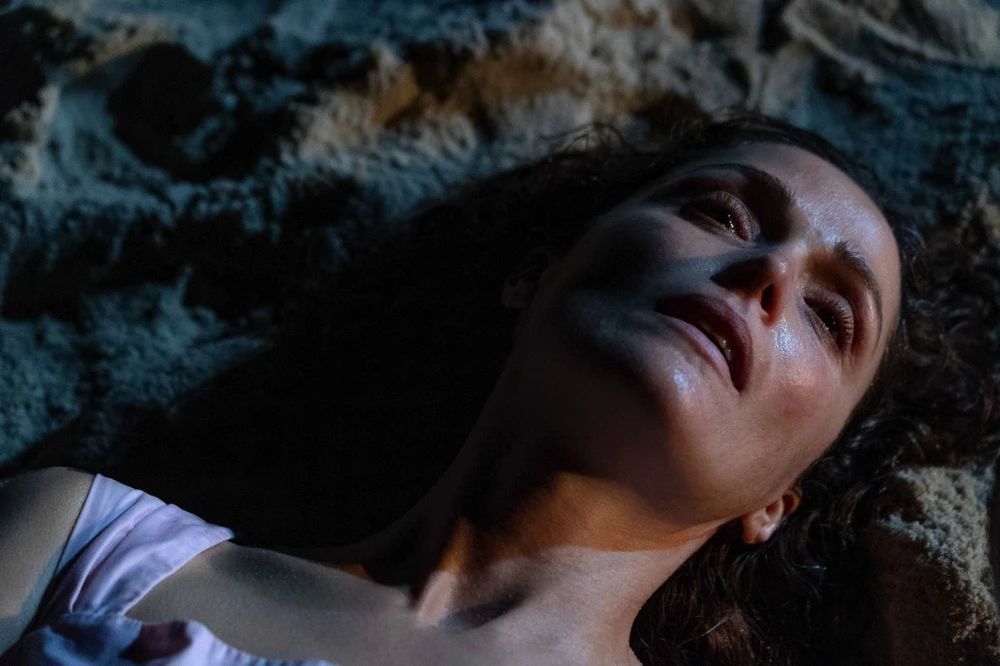
By the end, If I Had Legs I’d Kick You stands as an endurance test and a provocation. It demands total commitment from its lead and a certain masochistic curiosity from its audience. This is cinema as shared nervous breakdown, uncomfortable, darkly funny, and impossible to shake once it gets under the skin.
Overall: 8/10

Movie Reviewer