Cast: Elvis Presley
Genre: Documentary, Music
Director: Baz Luhrmann
In Irish Cinemas: 27th February 2026
Long before the internet turned cultural obsession into shareable punchlines, devotion found expression in spray paint. Through the 1980s and ’90s, the phrase “Elvis Lives” appeared on walls and alleyways across cities and small towns alike, a cryptic message that felt half-joke, half-prayer. Whether it nodded to conspiracy theories that Presley faked his death in 1977 or hinted at something more poetic, a belief that cultural energy never really vanishes, the phrase lingered because it carried emotional truth. The aftershock of Elvis Presley’s death didn’t arrive as a single public reckoning but as a quiet detonation within private hearts. His presence fractured and scattered, resurfacing in fragments that never fully settled, continually reshaping themselves with each passing decade.
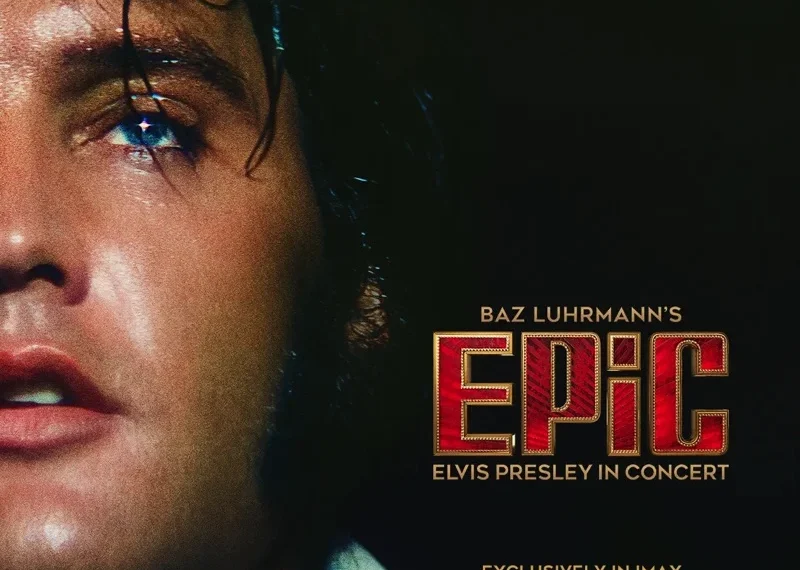
Yet even legends drift in and out of focus. Elvis never disappears entirely, but the collective memory can grow foggy, the myth thinning until someone sharpens it again. In recent years, Baz Luhrmann has taken on that role with unmistakable fervour. After the sensory overload of his 2022 biopic, he returns with a project that feels less like a documentary and more like a séance. EPiC, assembled from hours of previously unseen material uncovered during research, resurrects Presley not through narration but through presence. The discovery itself feels almost mythic: reels unearthed from a long-forgotten studio vault buried in an underground salt mine, paired with rare home-movie fragments from the Graceland archives. Painstaking restoration gives the footage a strange immediacy. Despite Luhrmann’s trademark maximalism, the result feels unexpectedly close, even intimate.
The film stitches together electrifying concert moments with quieter glimpses that strip away the distance between icon and man. Early footage captures a young Presley explaining his restless physicality with disarming honesty, movement not as strategy but instinct. Asked whether he ever apologised for scandalising audiences with his hips, the reply lands with wounded clarity: there was nothing to apologise for. That stubborn refusal cuts to the core of what made him dangerous in the 1950s. The shock wasn’t just the dancing; it was the unapologetic insistence on joy, sensuality and emotional freedom at a time when such openness rattled polite society.
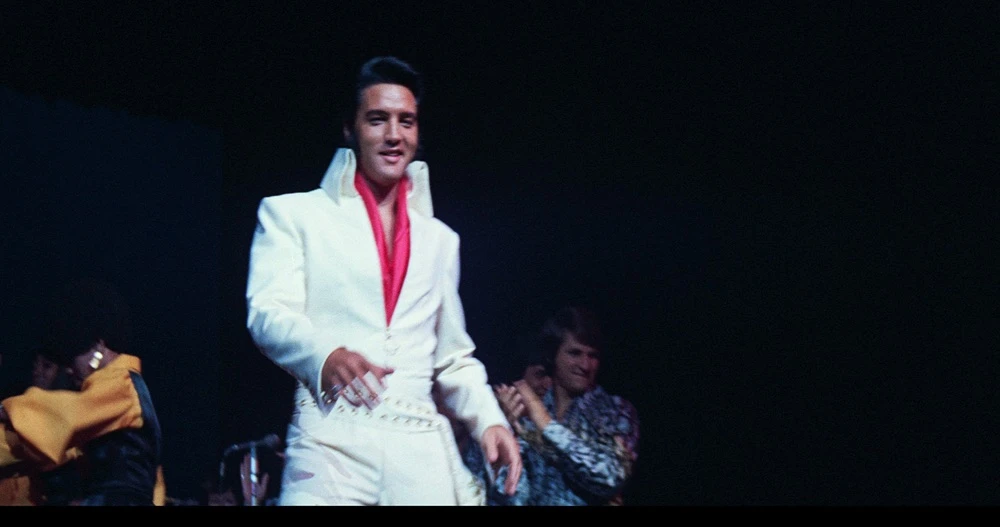
Luhrmann skims briskly across the early years, the formulaic Hollywood films, the Army stint in Germany, the personal losses that reshaped him before settling into richer terrain. Archival performances from the late ’50s glow with almost holy intensity. In shimmering jackets and flower leis, Presley radiates a beauty that borders on the spiritual, as though performance itself were a form of grace. The camera captures not just a pop star at his peak but a figure illuminated from within, the magnetism undeniable.
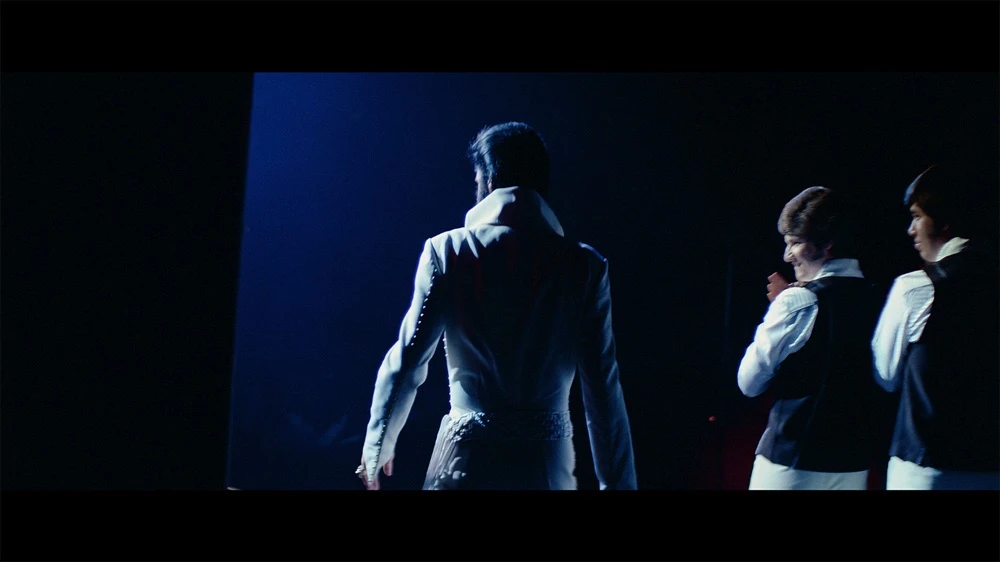
Backstage footage adds texture: rehearsals filled with laughter, flamboyant costumes laid out like sacred vestments, the singer both ringmaster and ringleader. Yet the heart of the film lies in the Las Vegas years. The residency era becomes a living tapestry of excess and brilliance, rhinestone jumpsuits, flared silhouettes, and ornate collars, theatrical yet deeply personal. Even as the aesthetic edges toward camp, the commitment remains absolute. Presley understood spectacle as an extension of feeling, not a disguise for it.
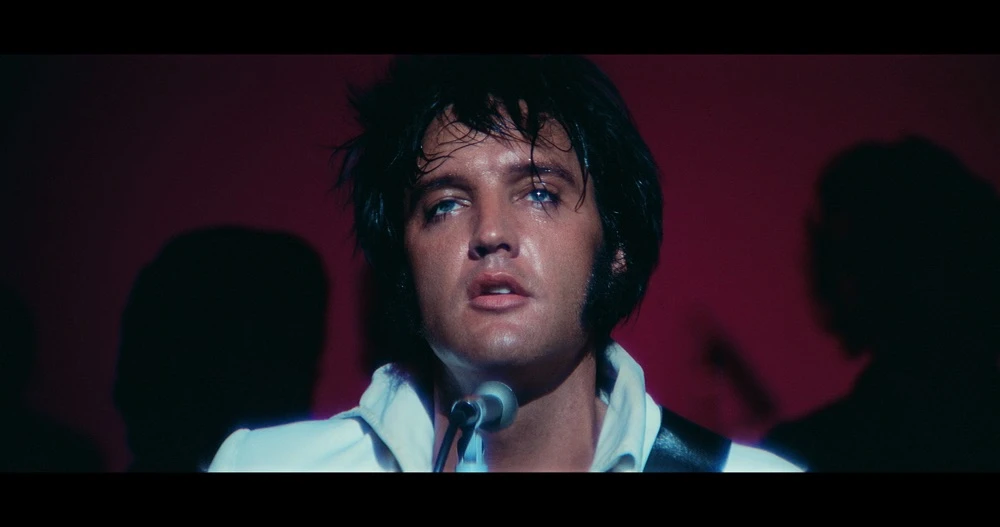
There are flickers of decline if one looks closely: a heaviness around the eyes, a costume fitting tighter than before, the occasional vacant stare. But these moments never dominate. More often, the figure on screen pulses with life. Movements remain fluid, vocals rich and commanding. Songs bleed into one another in inventive medleys, genres collapsing together as easily as decades. A performance of “Polk Salad Annie” becomes both playful and poignant, Presley spinning a story of poverty and resilience that echoes his own origins.
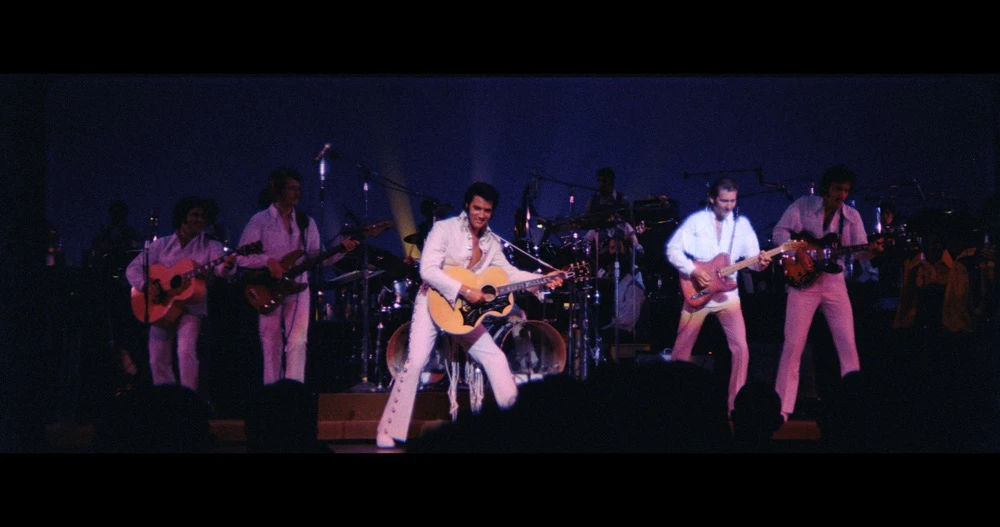
Luhrmann leans fully into symbolism, sometimes to a fault. At one point, a childhood photograph floats across the screen, layered over a roaring performance, a visual reminder of humble beginnings beneath the myth. The gesture flirts with sentimentality, yet it also captures the filmmaker’s central impulse: excess in pursuit of emotional truth. That willingness to overreach can frustrate, but it also gives the film its beating heart. Everything is dialled up, because anything less would feel dishonest when grappling with a figure this outsized.
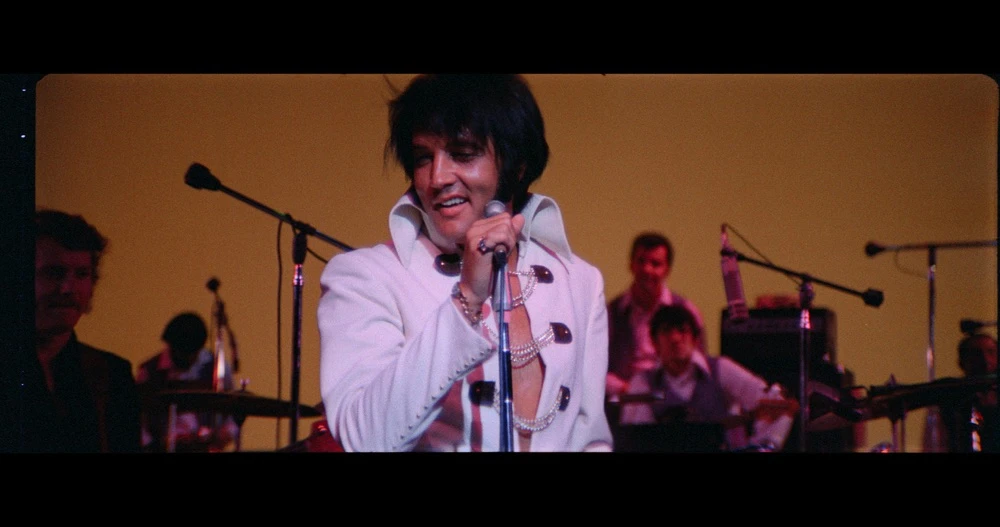
What emerges is less a historical document than an act of preservation. Presley appears not as a relic but as a living frequency, still vibrating through culture. The film suggests that legacy isn’t something frozen in amber, but something rebuilt each time the music plays, each time the image flickers back to life. In that sense, the old graffiti might have been less a joke than a quiet prophecy. Elvis never really left he keeps reappearing, reshaped by memory, waiting to be rediscovered all over again.
Overall: 8.5/10

Movie Reviewer