
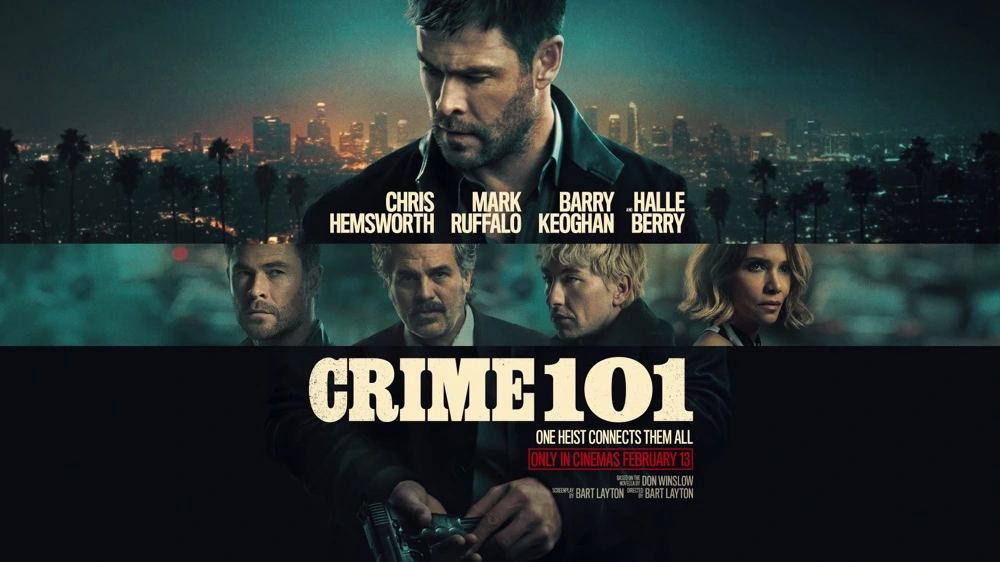
Cast: Chris Hemsworth, Mark Ruffalo, Halle Berry, Barry Keoghan, Monica Barbaro, Corey Hawkins, Jennifer Jason Leigh, Nick Nolte
Genre: Crime, Drama, Thriller
Director: Bart Layton
In Irish Cinemas: 13th February 2026
Crime 101 arrives cloaked as a sleek Los Angeles crime film, yet what unfolds is something far more introspective than the marketing might suggest. There are bursts of velocity, most notably a pair of chases slicing through the snarl of the 101 that feel almost improvised, as though each turn of the wheel is decided in a split second rather than mapped out by a stunt coordinator. Still, this is no standard-issue actioner. The engine driving it is psychological rather than mechanical.
At its centre stands Davis, played by Chris Hemsworth, a thief with a jeweller’s eye for precision. His robberies are surgical, carefully scoped and executed with near-clinical restraint. They qualify as heists, certainly, but the film resists the breezy swagger and clockwork cleverness associated with that genre. Adapted from a Don Winslow novella, the story braids together four damaged lives, creating a layered character drama that occasionally nods toward the cool austerity of Michael Mann’s “Thief” without ever fully inhabiting that territory. The mood is thick with unease; these are people navigating moral quicksand, clinging to their own codes in a city that has long since misplaced its soul.
The opening sequence sets the tone with bracing confidence. Davis intercepts a shipment of illicit diamonds in a manoeuvre that involves stalled cars, frayed tempers and a misfiring antique pistol that nearly alters the outcome. Hemsworth initially plays the scene with a movie-star calm that borders on insouciance, the camera lingering just long enough to suggest a future 007 audition tape. Yet that cool façade begins to fracture when Davis reports back to his employer, Money, embodied by Nick Nolte in full gravel-throated glory. Nolte’s performance carries the weight of years, a rasping authority that feels both dangerous and faintly tragic.
It is in these exchanges that the subtler contours of Hemsworth’s work emerge. Beneath the beard and steady gaze lies a tremor of disquiet. This Davis is not a man at ease with himself; his composure appears practised rather than innate. A flicker of apprehension passes across his eyes, hinting at a lifetime spent on unstable ground. The character’s foster-care upbringing hovers in the background, informing his obsession with order and control. Crime, for him, becomes less about greed than about imposing structure on a chaotic world.
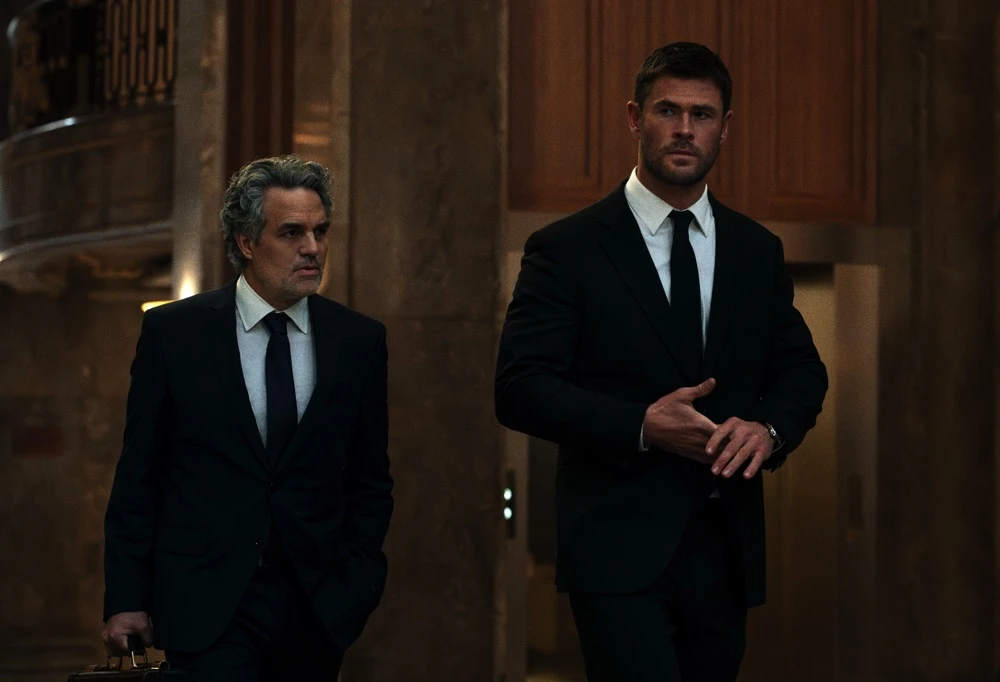
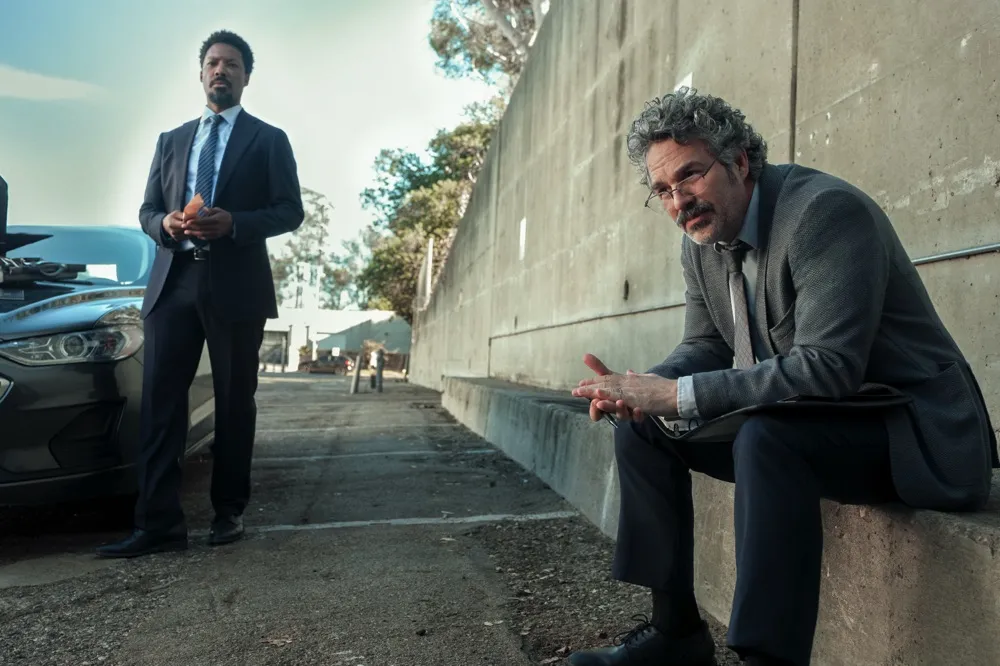
Tracking his pattern is LAPD detective Lou Lubesnick, portrayed by Mark Ruffalo with a weary decency. Lou recognises that the robberies along the 101 share a signature: meticulous planning, minimal violence, a strange adherence to rules. Catching the culprit proves another matter. The Los Angeles Police Department, as depicted here, resembles a corporate machine more than a civic institution. Success is measured in closed cases and tidy statistics, and ethical shortcuts are tolerated if they deliver results. Lou, rumpled and stubbornly principled, appears increasingly out of step with his colleagues. His integrity is treated as quaint, even self-defeating, a perception reinforced when his long-time partner, played by Jennifer Jason Leigh, walks away from their stalled relationship.
Halle Berry’s Sharon Coombs introduces yet another angle on compromised ambition. A polished insurance broker specialising in high-value policies, Sharon moves comfortably among the wealthy, sweetening her sales pitch with a calculated flirtation. After more than a decade with her firm, partnership remains perpetually out of reach, blocked by an entrenched old-boys’ network. Berry threads Sharon’s outward confidence with a simmering frustration that occasionally tips into despair. That emotional restlessness makes her susceptible to both Davis’s clandestine world, offering him access to potential targets, and Lou’s dogged moralism, encountered during yoga sessions that double as quiet battlegrounds of self-reinvention. The dual connection may strain plausibility, but Berry invests it with enough feeling to steady the conceit.
Barry Keoghan’s Ormon injects a volatile presence into the narrative. Tasked by Money with enforcing discipline and ensuring profits flow in the correct direction, Ormon is frequently glimpsed beneath a motorbike helmet, his eyes the only visible feature. Even so, Keoghan projects a twitchy menace, each movement edged with impatience. He represents the chaos Davis strives to avoid, a blunt instrument in a world that rewards subtlety.
Director Bart Layton allows the city to breathe. Los Angeles is captured not as a postcard of palm trees but as a sprawl of concrete corridors and forgotten corners. The running time stretches past the two-hour mark, affording space for quieter interludes: a tentative first date between Davis and Maya (Monica Barbaro), sparked by a minor car accident; Sharon navigating the serpentine politics of her office as a younger colleague circles her territory. These scenes deepen the emotional stakes, illustrating how personal dissatisfaction feeds criminal impulse.

The narrative tightens around a proposed jewellery-store job in Santa Barbara, one Davis deems unnecessarily hazardous. His refusal to compromise his method sets off a chain reaction, with Ormon stepping in and unleashing violence that shatters the illusion of control. Order, it seems, is always one miscalculation away from collapse.
By the time the story reaches its crescendo in a suite at the Beverly Wilshire Hotel, the film finally indulges its thriller instincts. Identities are swapped, allegiances tested; Davis poses as a driver, Lou adopts another man’s role, and a brief exchange about Steve McQueen adds a wry touch before bullets begin to fly. The sequence peels back the last layers of each character, exposing what lies beneath their carefully maintained codes.

Crime 101 may not deliver the relentless propulsion of a conventional crime blockbuster, and its measured pace could test the patience of audiences seeking quick thrills. Yet as a meditation on aspiration, integrity and the fragile architectures people build to survive, it proves quietly absorbing. In charting the inner lives of thieves, cops and corporate climbers alike, the film suggests that the real heist lies in the pursuit of dignity within a system designed to erode it.
Overall: 7.5/10

Movie Reviewer