Reviewed on 7th September 2025 at the 50th Toronto International Film Festival
Cast: Séamus McLean Ross, Samuel Bottomley, Lucy Halliday, Rebekah Murrell
Genre: Biography, Drama, History, Music
Director: James McAvoy
In Irish Cinemas: Now
This fact-based story about two aspiring rappers from Dundee who talk their way into a record deal through sheer invention feels sharply attuned to the pressures and prejudices embedded in the UK’s creative landscape.
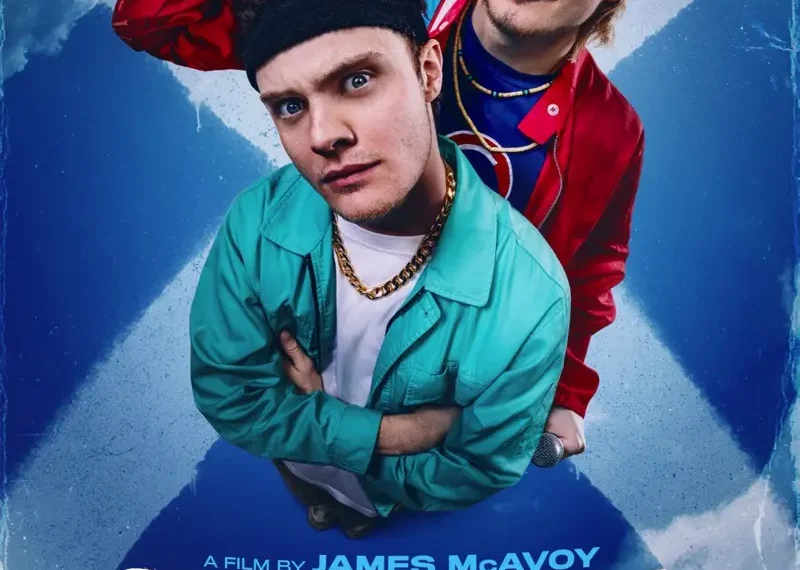
Across a long and varied career, James McAvoy has built a reputation on inhabiting extremes, moving from the aching vulnerability of Atonement to the volatile chaos of Filth, from the principled resolve of the X-Men universe to the unnerving brutality seen in Split and Speak No Evil. That instinct for reinvention carries into his first outing behind the camera, California Schemin’, a project rooted in the real exploits of Dundee duo Gavin Bain and Billy Boyd. Their elaborate scheme, adopting American personas to bypass entrenched class bias and a quiet hostility toward Scottish identity, becomes the foundation for a film that is less straightforward than its premise might suggest.
Rather than foregrounding celebrity, the perspective here feels grounded in lived experience, shaped by a sensibility closer to a working-class upbringing than a Hollywood vantage point. The narrative leans into the paradox of chasing authenticity through deliberate fabrication, and that contradiction gives the film an undercurrent of tension. What might otherwise play as a conventional rise-and-fall tale is sharpened by a script from Elaine Gracie and Archie Thomson that allows discomfort and ambiguity to simmer beneath its more accessible surface.
At the centre are Bain (Séamus McLean Ross) and Boyd (Samuel Bottomley), initially dismissed in London with a cutting remark likening them to a novelty act. Reinvented as the Californian duo “Silibil N’ Brains,” they quickly attract the attention of Neotone Records, overseen by Anthony Reid, portrayed by McAvoy, with a deliberately heightened, almost predatory intensity. What begins as a calculated stunt, intended to expose industry prejudice through a public reveal, becomes increasingly complicated as success, money, and recognition begin to exert their pull.
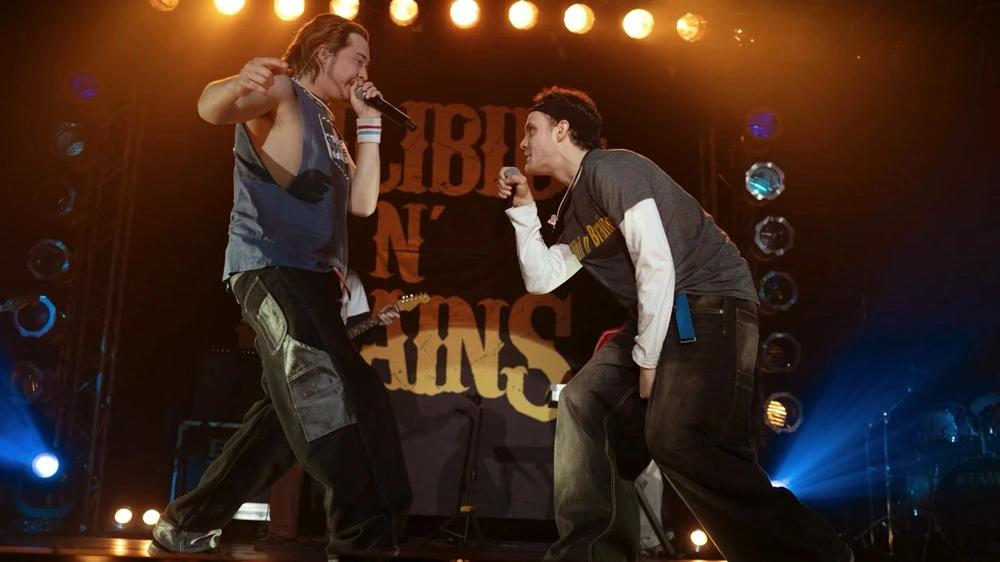
The early 2000s setting is evoked with a playful attention to detail, questionable fashion choices, grainy handheld footage, and cultural touchstones that root the story in a specific moment. Yet the visual style remains primarily focused on performance. The camera lingers on faces, gestures, and the chemistry between actors, privileging character over spectacle even during the film’s more kinetic musical sequences.
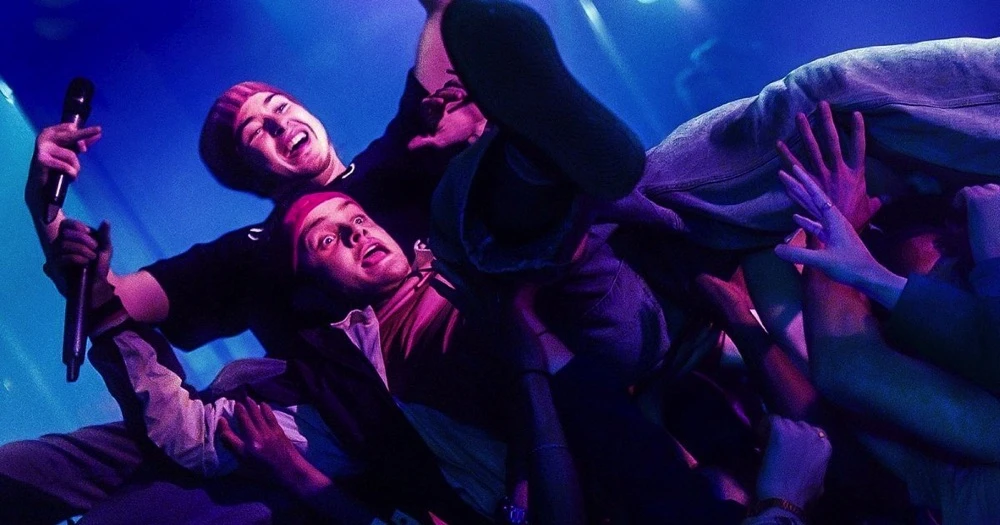
Both McLean Ross and Bottomley strike a careful balance between youthful optimism and creeping ambition. Their portrayals avoid easy sentimentality, allowing space for the less flattering consequences of their deception. The script resists simplifying their journey into a neat moral arc; instead, it acknowledges the personal cost of abandoning one’s identity, even temporarily, in pursuit of opportunity.
While the tone often carries a lightness, the film does not shy away from probing deeper questions. The industry depicted commodifies certain cultures while sidelining others, revealing contradictions in who is deemed marketable and why. A character like Tessa (Rebekah Murrell), working within a system that profits from Black artistry while marginalising Black voices internally, underscores these tensions. Meanwhile, the same gatekeepers who dismiss working-class Scottish performers display a fascination with an imported, stylised version of American identity.

As a result, the story resonates as more than a quirky con. It becomes a reflection on the uneasy relationship between identity and success within the UK’s cultural industries. The further Bain and Boyd drift from their origins, the more readily opportunities appear, an irony that lingers long after the narrative resolves.
Overall: 7.5/10

Movie Reviewer