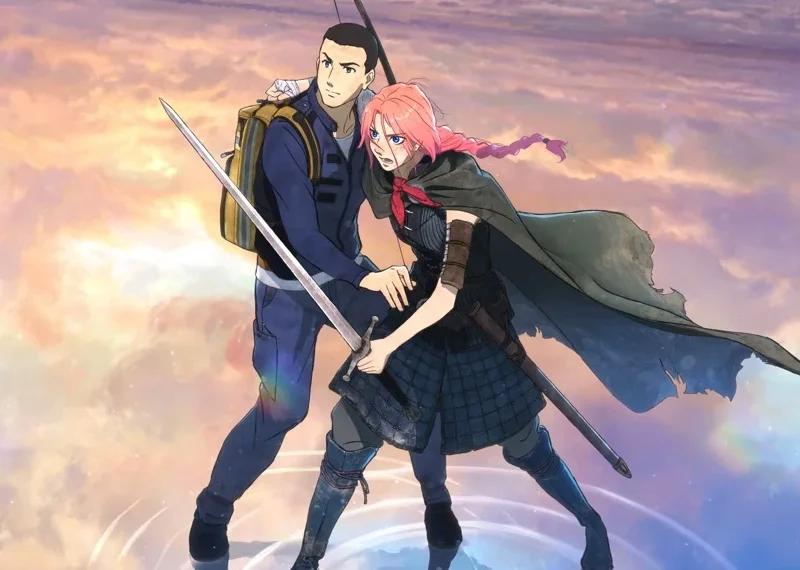
Cast: Mana Ashida, Masaki Okada, Kôji Yakusho, Masachika Ichimura, Yuki Saitô, Yutaka Matsushige, Kôtarô Yoshida, Munetaka Aoki
Genre: Action, Adventure, Animation, Fantasy, Romance, Sci-Fi
Director: Mamoru Hosoda
In Irish Cinemas: 13th March 2026
Mamoru Hosoda’s Scarlet takes loose inspiration from Hamlet. Still, she quickly carves out its own identity, transforming Shakespeare’s tale of betrayal into a sweeping animated meditation on grief, vengeance and the possibility of redemption beyond the grave. The Japanese director, best known for films such as Mirai and Belle, delivers a film that is visually sumptuous and emotionally heavy, pairing mythic spectacle with a surprisingly reflective heart.
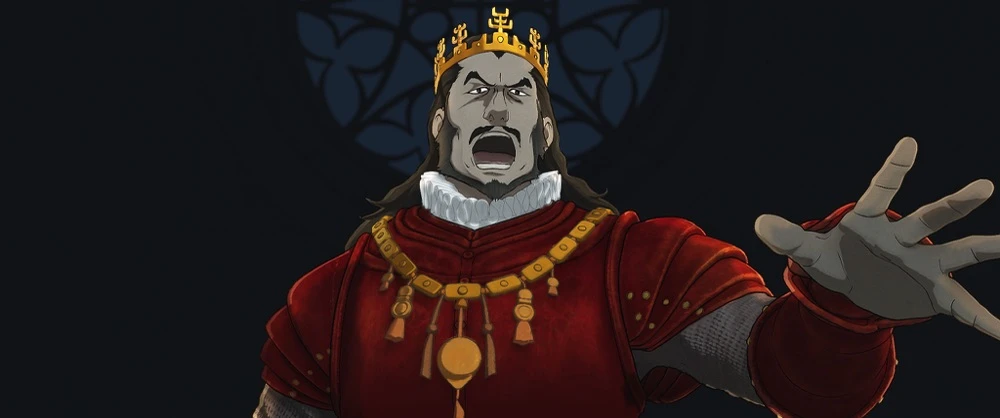
At its core, the film follows Scarlet, a young princess whose world collapses when her beloved father, King Amleth, is accused of treason and executed. Amleth had ruled with an unusual philosophy for a monarch of the era, believing compromise and diplomacy were stronger tools than war. His idealism proves fatal when his scheming brother Claudius manipulates the court into believing the king has betrayed his own realm. Scarlet, horrified by the injustice, swears revenge, but her plans are cut short when Claudius arranges her poisoning. Death, however, turns out not to be the end of her story.
Instead, Scarlet awakens in a strange realm known simply as the Otherworld, a liminal space where the dead wander in uneasy suspension. Convinced that her father must be somewhere in this eerie afterlife, she sets out to find him and perhaps to complete the vengeance she was denied in life. As it happens, Claudius has also found his way into this purgatorial landscape, turning Scarlet’s grief into a relentless hunt through a realm that seems to obey its own mysterious and often disturbing rules.
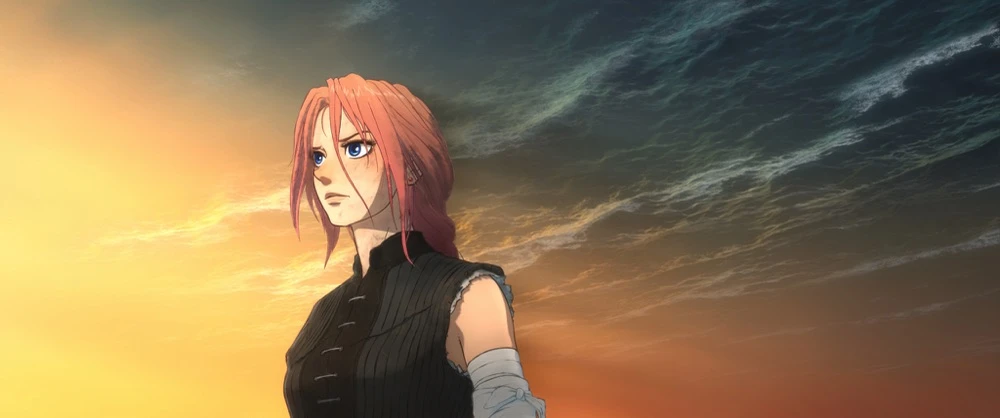
Hosoda borrows the Danish backdrop and the basic premise of Hamlet, even lifting fragments of dialogue from the original text. But beyond these nods, the story moves in a very different direction, rather than a conflicted prince paralysed by indecision, the film centres on a fierce young woman propelled by rage and loss. Scarlet is not tormented by doubt; she charges forward with single-minded determination, sword in hand and revenge fixed firmly in her sights.
Much of the film unfolds in the Otherworld, which proves to be as cruelly stratified as the living world Scarlet left behind. The wealthy dead appear to enjoy relative comfort while the rest wander through harsh, unpredictable landscapes. Hosoda uses this setting as a canvas for some truly arresting imagery: violent tempests tear through crimson skies, colossal dragons drift through the gloom, and entire deserts blaze beneath an unnatural sun. The afterlife here feels both wondrous and deeply unsettling, a place suspended somewhere between dream and nightmare.
Scarlet’s journey takes an unexpected turn when she encounters Hijiri, a young medic from the modern era who is baffled to find himself among the dead. Insisting there must be some error, he clings to the belief that he cannot possibly belong in this realm. Despite their differences, he gradually becomes Scarlet’s companion as she tracks down Claudius across the strange terrain of the Otherworld.
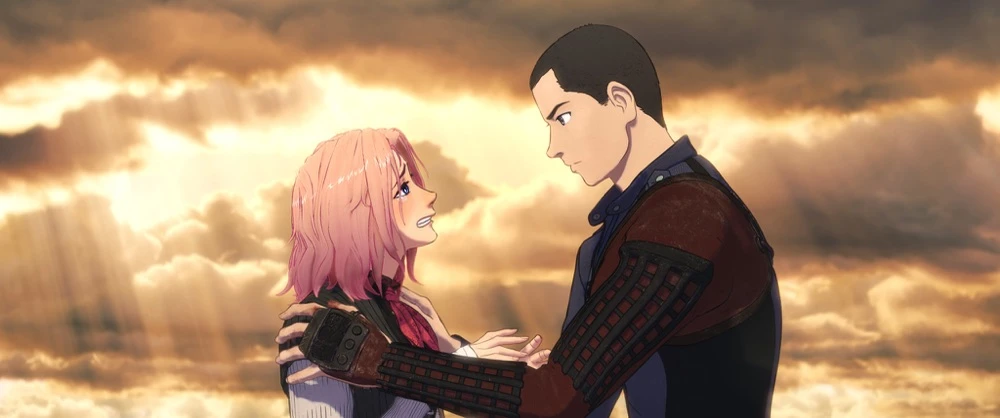
Their partnership becomes the film’s emotional anchor. Hijiri is the moral counterweight to Scarlet’s fury, echoing the pacifist ideals once championed by her father. Where she sees violence as justice, he argues that vengeance only deepens the cycle of suffering. The two spend much of the film sparring not just with enemies but also with each other’s beliefs, their debates forming the narrative’s philosophical backbone. Hosoda is not especially subtle about the film’s anti-violence message. Yet, he still delivers plenty of stirring action, including large-scale battles as Scarlet cuts through the forces still loyal to her uncle.
Visually, Scarlet is something of a mixed bag. The character animation can occasionally appear stiff, lacking the fluidity seen in some of Hosoda’s earlier work. But any shortcomings in the movement of the characters are more than compensated for by the director’s gift for world-building. The Otherworld constantly shifts in tone and appearance, at times resembling a scorched wasteland and at others an eerie, moonlike expanse. As Scarlet learns more about this place, the rules governing it become increasingly unsettling, particularly the revelation that death within the afterlife carries an even more terrifying consequence, reducing a soul to dust and condemning it to oblivion.
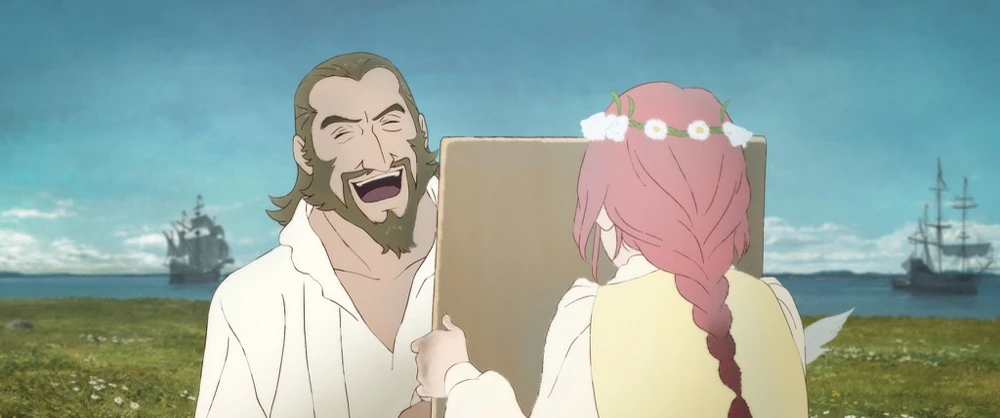
By the time the story builds toward its climactic confrontation between Scarlet and her murderous uncle, the film has drifted far from Shakespeare’s original structure. Yet the spirit of Hamlet lingers in its fascination with mortality, power and the corrosive nature of revenge. Hosoda channels these themes into a finale that is both emotionally raw and visually striking.
Stories of vengeance are hardly rare in cinema, and Scarlet ultimately arrives at a familiar realisation: violence rarely brings the closure we imagine. What sets the film apart is the way it frames that lesson within a haunting portrait of the afterlife, a realm filled with restless souls burdened by regret, including Claudius himself. Amid the gloom, Hosoda also finds space for tenderness, particularly in the unlikely friendship that develops between Scarlet and Hijiri. A joyous, unexpected dance sequence between the two offers a moment of warmth in an otherwise sombre journey.
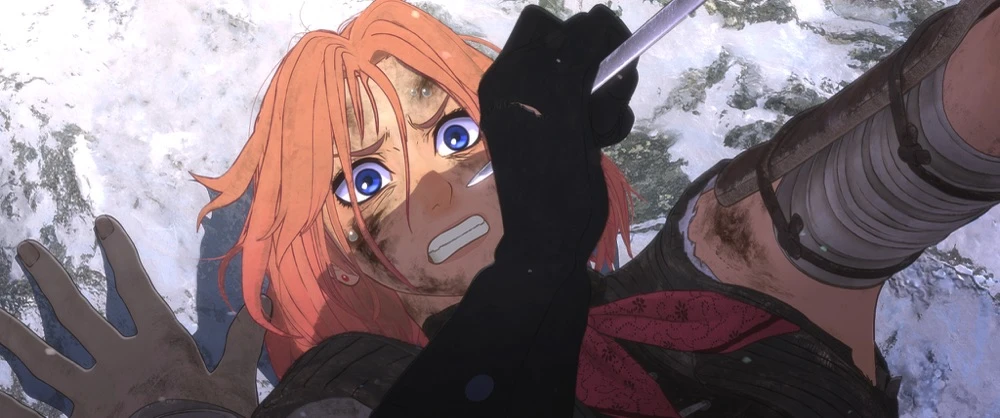
In the end, Scarlet may begin with the bones of a classic tragedy. Still, it evolves into something stranger and more contemplative, an animated epic in which fury, grief, and forgiveness collide in a realm beyond death.
Overall: 6.5/10

Movie Reviewer