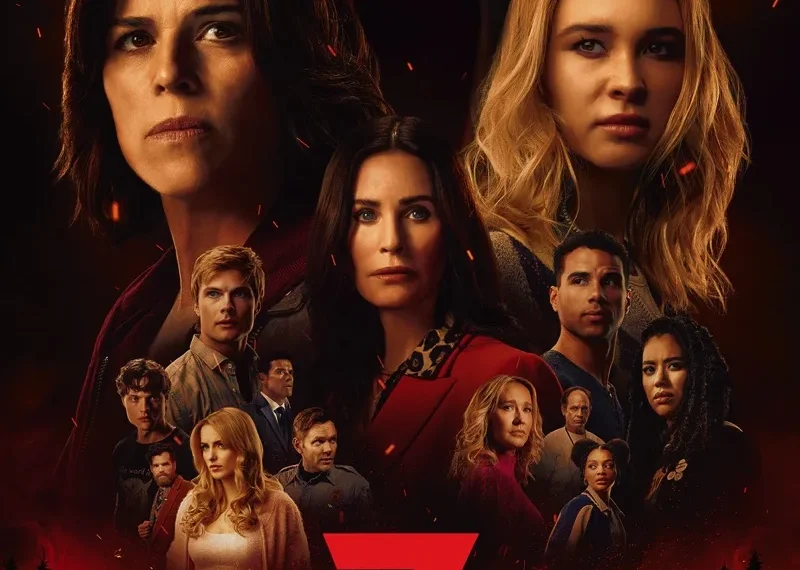
Cast: Neve Campbell, Isabel May, Courteney Cox
Genre: Horror, Mystery
Director: Kevin Williamson
In Irish Cinemas: 27th February 2026
Scream 7 opens by returning to hallowed ground: the Macher house, forever tied to the bloody finale of Wes Craven’s 1996 original. That suburban landmark, once the site of a party that descended into slaughter at the hands of Stu Macher and Billy Loomis, looms large in the franchise’s mythology. Yet even from the outset, certainty slips. Is this the real house, or a reconstruction from the Stab movies, those lurid, in-universe adaptations that have long blurred reality and fiction within the series? Either way, the property has been repackaged into a macabre tourist trap, a kind of horror heritage site dressed up for fans with more nostalgia than taste. The place is crammed with grisly memorabilia: chalk outlines where bodies once lay, plaques commemorating victims, posters from the Stab franchise, and even an animatronic Ghostface croaking lines on cue. The illusion of kitsch spectacle collapses quickly, of course, when a young couple renting the place discover that the mythology is about to become flesh once again.
That uncanny setting doubles as a pointed metaphor for what the Scream franchise has become. What began as a razor-sharp, self-aware revival of the slasher genre has steadily folded in on itself over decades. The early films thrived on playful commentary, poking fun at the likes of Halloween and Friday the 13th while slyly dismantling their conventions. But by the second instalment, the series had already turned its gaze inward, parodying its own growing legend through the Stab films. The result, over time, has been a franchise increasingly trapped in a hall of mirrors, fascinated with its own history and reluctant to shed beloved characters, even when narrative stakes demand it.
The absence of Wes Craven, who passed away in 2015, has been keenly felt in the years since. The recent “requel” era attempted to split the difference between old and new, introducing younger leads while wheeling back legacy figures like Sidney Prescott, Gale Weathers and Dewey Riley. Those entries leaned heavily on lineage, with new killers tied to the originals through increasingly tangled plot gymnastics. Off-screen drama complicated matters further: disputes and controversies led to key cast members departing, leaving the seventh film to abandon its newer protagonists quietly. Their absence hangs awkwardly in the background, barely acknowledged in a franchise that once prided itself on knowing self-commentary.
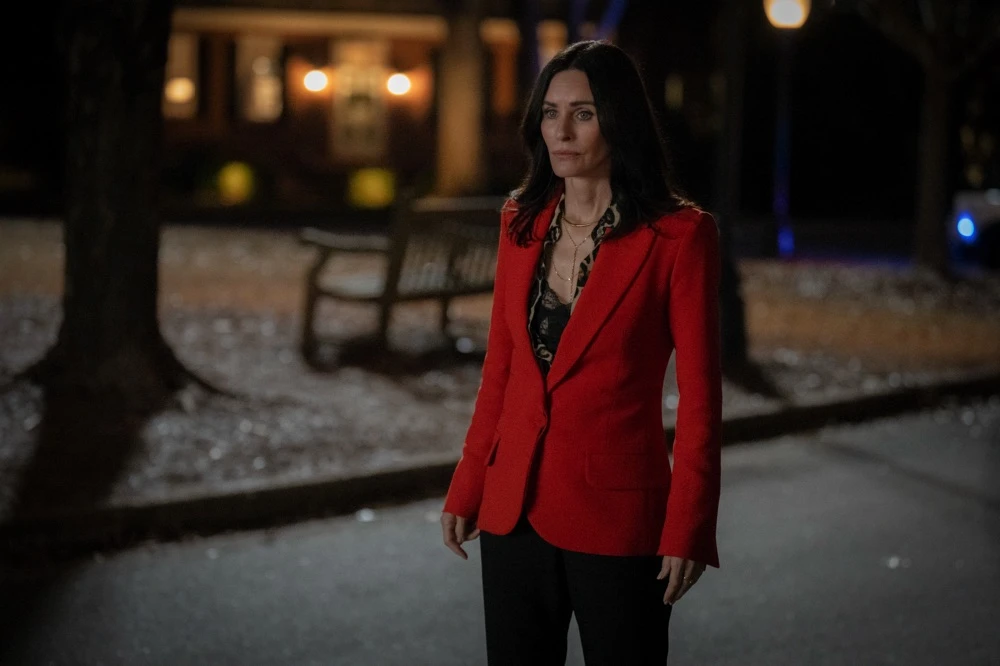
Kevin Williamson, the original screenwriter, steps behind the camera this time, steering the story back toward its emotional anchor: Sidney herself. Now older and attempting something resembling normality, she lives in small-town Indiana with her husband and teenage daughter, Tatum, a name that carries heavy echoes from the past. The film leans hard into generational symmetry. Tatum is now roughly the age Sidney was when the nightmare first began, and her mother’s instinct to shield her borders on suffocating. The emergence of yet another Ghostface, possibly multiple, possibly someone exploiting digital deception forces both women into the crosshairs. As suspicion spreads and bodies pile up, the story pivots into a mother–daughter survival tale, asking whether trauma can be inherited as readily as strength.
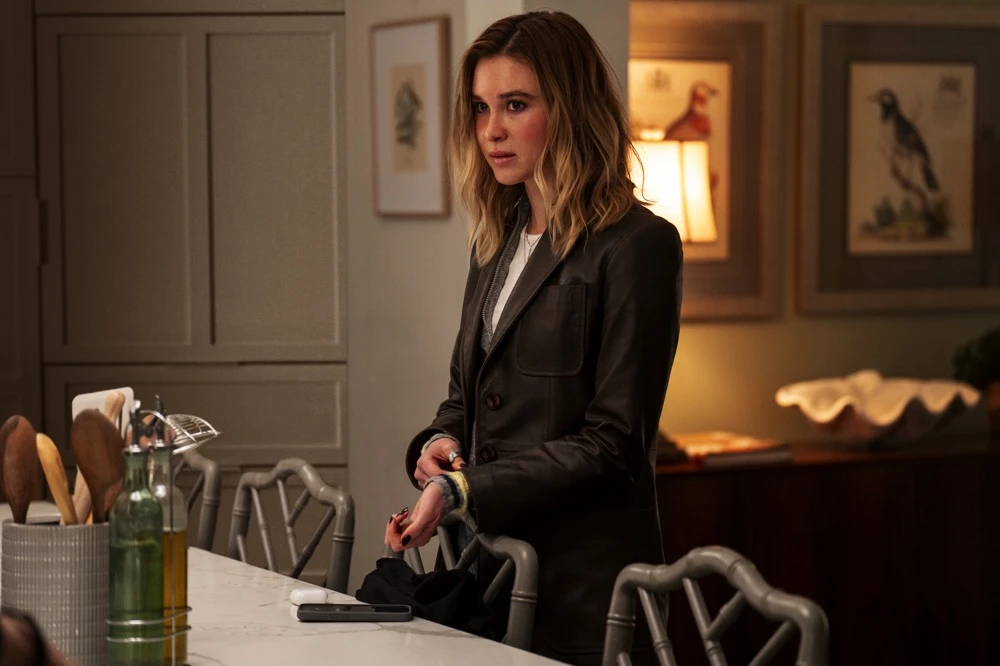
The familiar mechanics remain intact: stalking set pieces, guessing games, misdirection piled atop misdirection, and dialogue that constantly winks at genre tropes. Yet there’s a noticeable push toward closure. This instalment feels designed as a final reckoning for Sidney, a character defined by the push-and-pull between escape and confrontation. That tension gives the film its strongest moments, particularly in the dynamic between Sidney and her daughter. Isabel May proves a compelling successor figure, capturing both vulnerability and defiance as Tatum confronts the legacy looming over her family.
Where the film diverges most sharply from earlier entries is in its appetite for brutality. The violence lands with a nastier edge this time, veering closer to the grotesque than the franchise has traditionally dared. Limbs snap, blades linger, and the camera refuses to flinch, suggesting modern horror influences bleeding in. It’s a gamble that partly pays off, injecting urgency into a series that has occasionally grown too comfortable with its own formula.
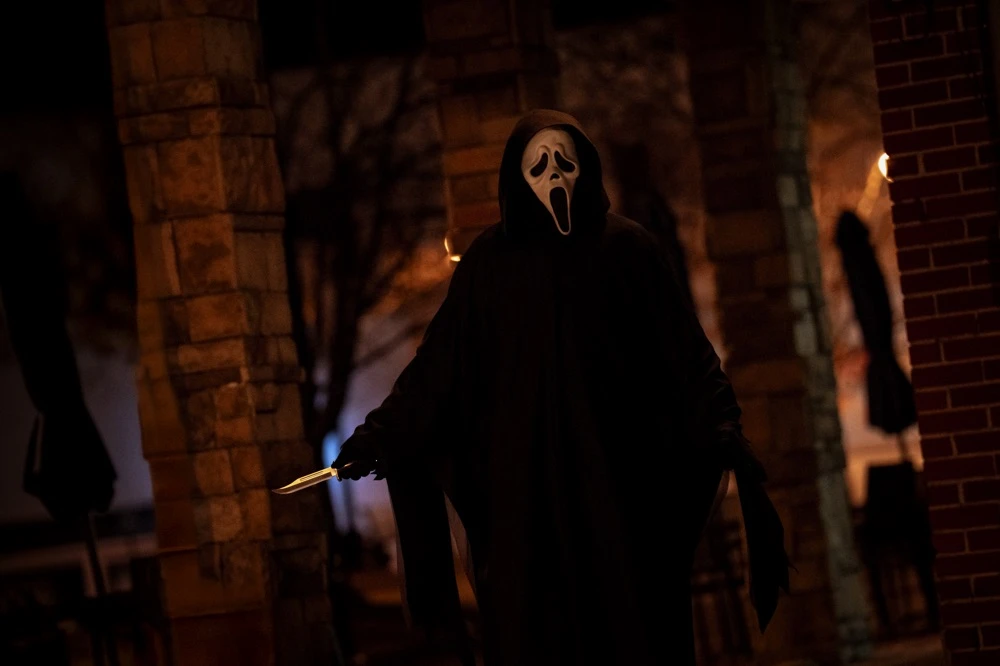
Despite its flaws, there’s an undeniable charm in the sharp character beats and flashes of wit that recall the series at its best. The emotional throughline, centred on legacy and survival, lends weight to the bloodshed. Yet there’s also a sense of exhaustion clinging to the edges. The franchise has spent years circling its own mythology, and while this chapter offers a measure of catharsis, it also feels like a natural endpoint. If this truly is the last scream, it lands with a measure of dignity. Better to leave the mask behind now than risk watching a once-inventive slasher legend fade into diminishing echoes.
Overall: 7/10
Movie Reviewer