Cast: Amanda Seyfried, Thomasin McKenzie, Lewis Pullman, Stacy Martin, Matthew Beard, Scott Handy, Viola Prettejohn, Jamie Bogyo, David Cale, Tim Blake Nelson, Christopher Abbott
Genre: Biography, Drama, History, Musical
Director: Mona Fastvold
In Irish Cinemas: 27th February 2026
Helmer Mona Fastvold, previously known for co-writing The Brutalist and a handful of smaller features, arrives here with her most striking and assured effort yet. This film feels both deeply personal and unapologetically audacious.
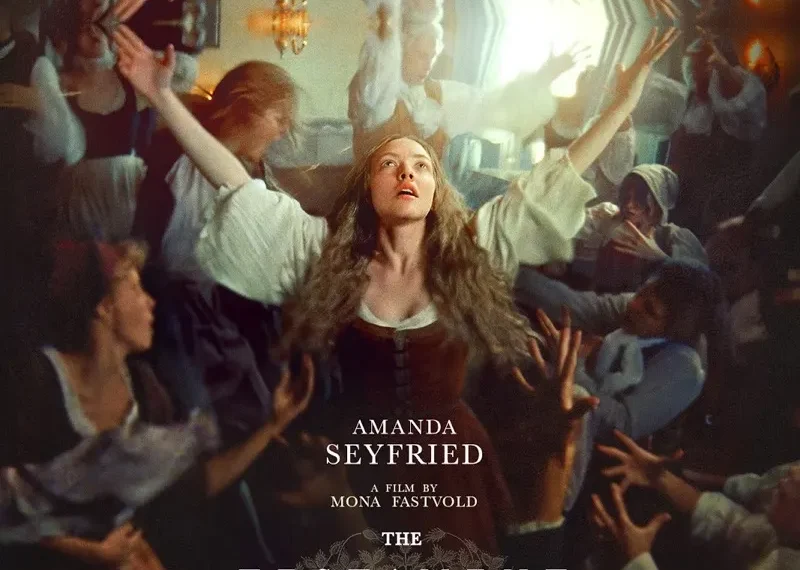
The Testament of Ann Lee unfolds as a strange folk ballad brought to life: part historical drama, part devotional fever dream. Set against the backdrop of religious migration and the yearning for a spiritual blank slate, the film follows a band of believers as they chase the promise of a new world where their offbeat branch of Christianity might finally take root. It has already drawn attention for delivering what many are calling the finest screen work of Amanda Seyfried’s career.
Though not a musical in the traditional sense, music pulses through nearly every frame. Songs drift in and out of the narrative, sometimes rooted in the characters’ world, other times breaking the fourth wall entirely. Composer Daniel Blumberg provides a haunting tapestry of sound, blending reimagined Shaker hymns with original material that moves between lullaby, lament and ritual chant.
The story begins in 1736 Manchester, where Ann Lee is born into the grind of early industrial England. Childhood is defined by factory labour alongside her younger brother William and an early trauma that leaves her with a lifelong association between sexuality and sin. As an adult, working in an infirmary leads her toward a small, radical religious circle led by James and Jane Wardley, Quakers who preach that Christ’s second coming will take female form. Ann, William and her niece Nancy are swept up in the movement’s ecstatic worship, with its trembling bodies and spontaneous song, earning them the nickname “Shaking Quakers.”
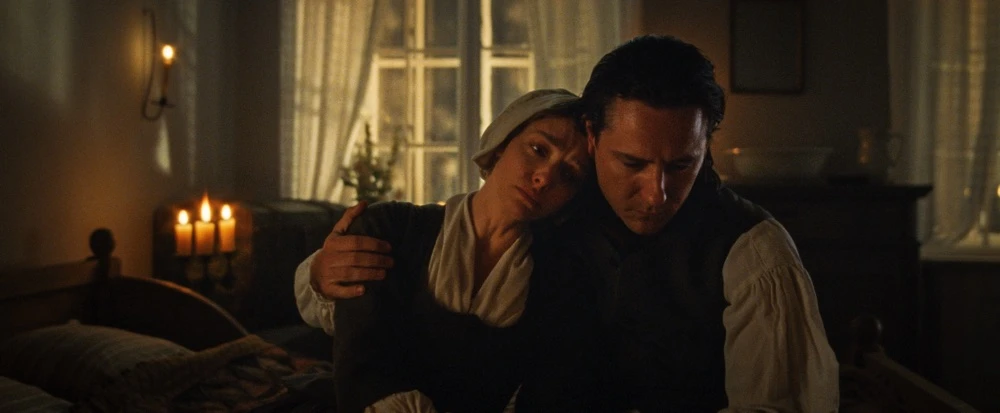
Tragedy shadows Ann’s life. Four children die in infancy, and hostility from neighbours grows as the group’s beliefs become more pronounced. Attempts to spread their doctrine ignite clashes with both locals and authorities, culminating in imprisonment. It is during this confinement that Ann experiences the vision that defines her legacy: a call for absolute celibacy, even within marriage. The declaration fractures her domestic life, particularly with her husband Abraham, but galvanises her followers.
Gradually elevated to a messianic status, she becomes “Mother Ann,” a figure of prophecy and authority. With the backing of a benefactor, the sect secures passage to America, hoping distance will grant them the freedom denied at home. The transatlantic journey begins with only a small band of disciples, and Ann’s uncompromising doctrine proves difficult to sustain. Numbers thin, loyalties strain, yet the vision persists, a promised land shaped by faith and sacrifice.
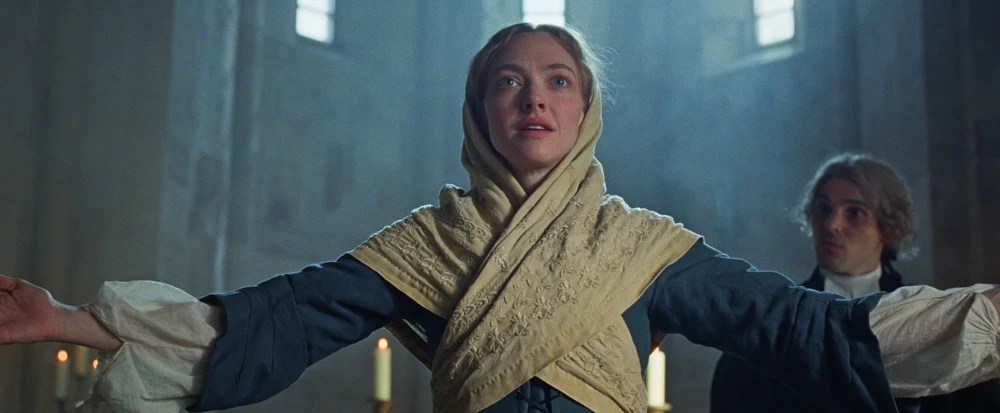
Stylistically, Fastvold leans hard into mythmaking. A follower’s voiceover frames the narrative like a fireside legend passed down through generations. It arguably bends the cinematic maxim of showing rather than telling, yet it lends the film a timeless, almost folkloric texture. When worship erupts into movement, the choreography, courtesy of Celia Rowlson, veers into the surreal, recalling the operatic intensity of a Lady Gaga visual, all convulsive bodies and hypnotic rhythms. The soundtrack mirrors this duality, shifting from delicate folk melodies to unsettling waves of murmured prayer and keening wails.
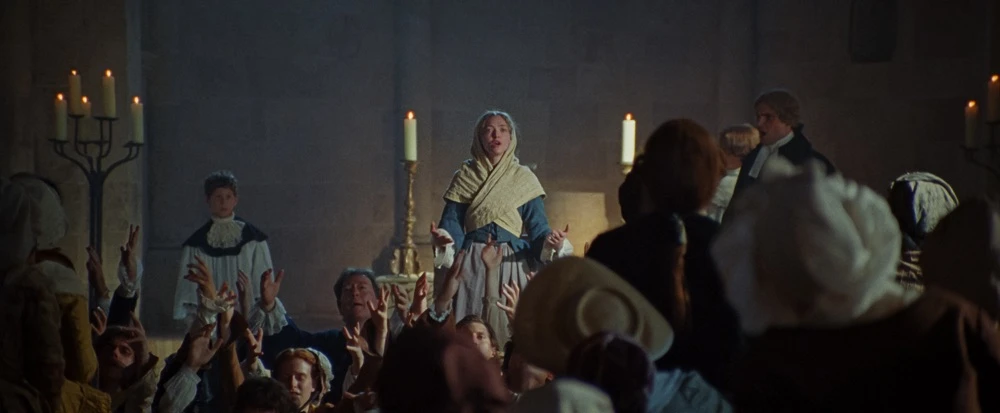
At over two hours, the film sprawls deliberately, embracing an epic cadence as it moves from smoke-choked English mills to the raw expanse of the American frontier. It doesn’t shy away from darker textures either: scenes of intimacy, brutality and ideological fracture run counter to expectations for something that brushes against the musical form.
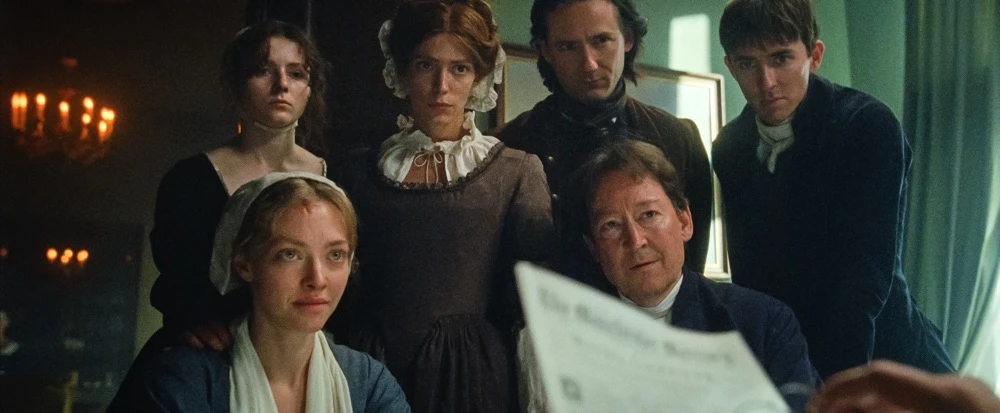
Seyfried anchors it all with a performance of startling conviction, shedding the gloss of earlier crowd-pleasers like Mean Girls and Mamma Mia!. Around her gathers a strong ensemble: Lewis Pullman, Christopher Abbott, Tim Blake Nelson, Scott Handy, David Cale and Matthew Beard, each adding weight to a story steeped in belief and doubt.
At its core, this is less a biopic than a meditation on belonging and exclusion. The film interrogates both the rigidity within Ann’s own sect and the suspicion faced by any group daring to believe differently. In an era still wrestling with questions of faith, identity and tolerance, the tale lands with an eerie, contemporary resonance, a centuries-old story that feels uncomfortably close to home.
Overall: 6.5/10

Movie Reviewer