Cast: Sopé Dìrísù, Godwin Egbo, Chibuike Marvellous Egbo
Genre: Drama
Director: Akinola Davies Jr.
In Irish Cinemas: 6th February 2026
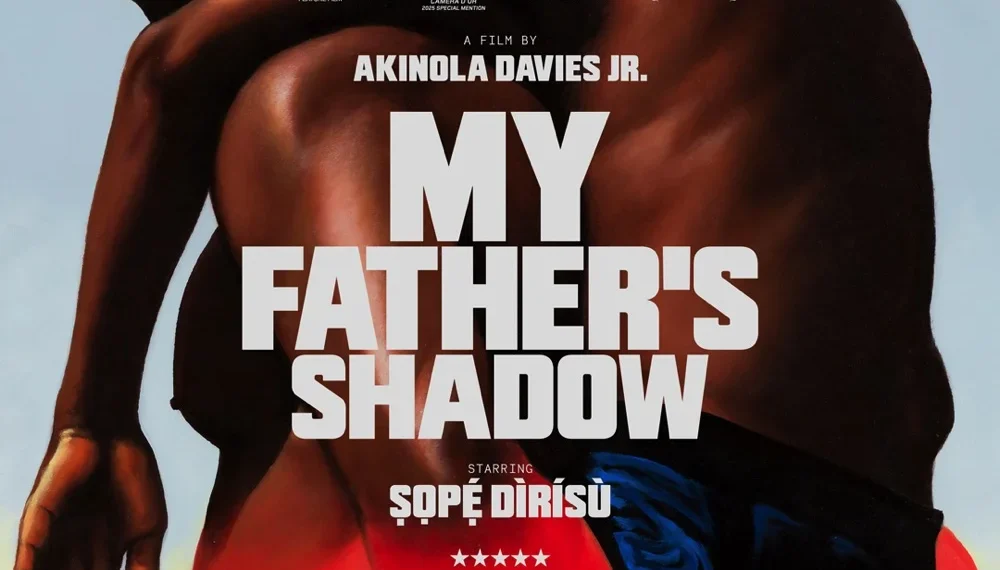
Akinola Davies Jr.’s debut feature arrives with the quiet confidence of a filmmaker who understands that history is often best felt at ground level. My Father’s Shadow, led by a finely calibrated performance from Sopé Dìrísù, unfolds over the course of a single, fateful day in Nigeria: June 12, 1993, when the country went to the polls for the first time in over a decade, hopeful that military rule might finally give way to democracy.
For much of the film’s opening stretch, however, the sweep of national politics remains distant background noise. Davies roots us instead in the sticky, sunbaked rhythms of childhood. Brothers Akin and Remi, living on the fringes of Lagos, pass the hours in petty squabbles and idle play, trying to escape the heat and the boredom of another long day. It is a deceptively gentle beginning, one that captures the small dramas of youth while the weight of something far larger presses in from beyond the frame.
Shot with a soft, attentive eye by cinematographer Jermaine Edwards, My Father’s Shadow establishes its world through texture and sensation rather than plot. The drone of insects, the rustle of leaves, the languid pauses between moments all place us firmly within the boys’ perspective. Davies draws from a lineage of Black diasporic cinema that favours mood and memory over exposition, echoing filmmakers such as Julie Dash and Charles Burnett, while filtering those influences through a distinctly personal lens.
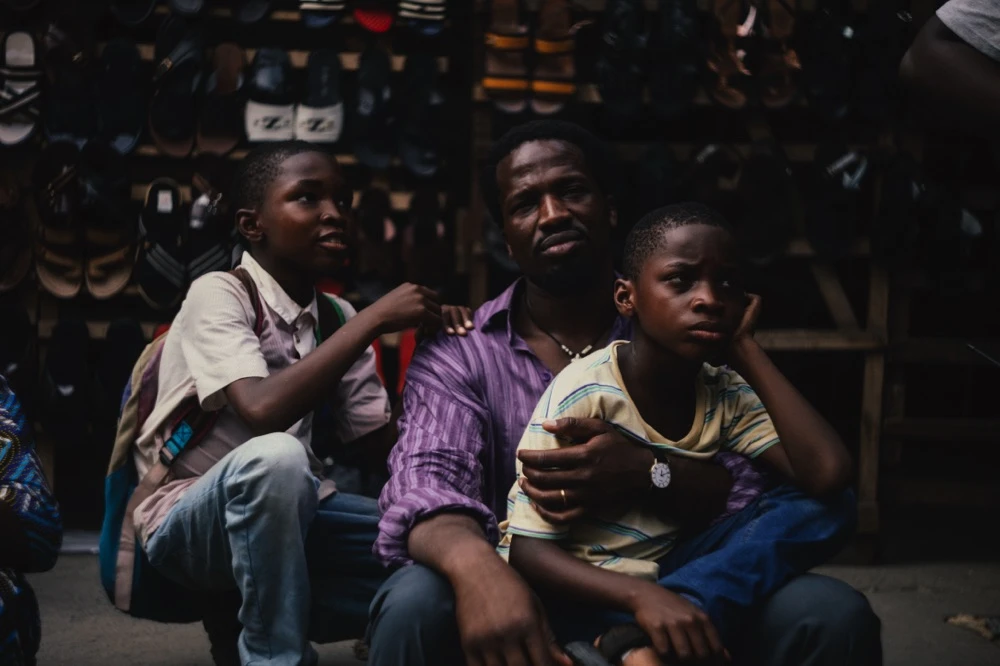
The film’s direction shifts when the boys encounter their father, Folarian. Played by Dìrísù with an imposing stillness, he is a distant, almost spectral presence in their lives. His sudden appearance in the family home – interrogating them over a missing watch freezes the boys in their tracks. The tension in the room is immediate and wordless, heavy with the emotional distance that defines their relationship.
Premiering in Cannes’ Un Certain Regard strand, My Father’s Shadow also carries historical significance as the first Nigerian feature ever to screen at the festival. Written by Davies alongside his brother Wale, the film draws loosely from their own childhood memories of a father who died when they were young. That autobiographical core lends the film its tenderness, even as Davies resists the urge to over-explain or sentimentalise.
On impulse, Folarian decides to bring Akin and Remi into the city with him, setting off a loose, wandering journey through Lagos. The trip opens the world for the boys: they cram onto a danfo bus, surrounded by strangers swapping gossip and political speculation, as the buzz of conversation replaces the natural sounds of their rural home. Gradually, fragments of the day’s significance emerge: stories of military violence, rumours of unrest, the knowledge that something fragile is at stake.
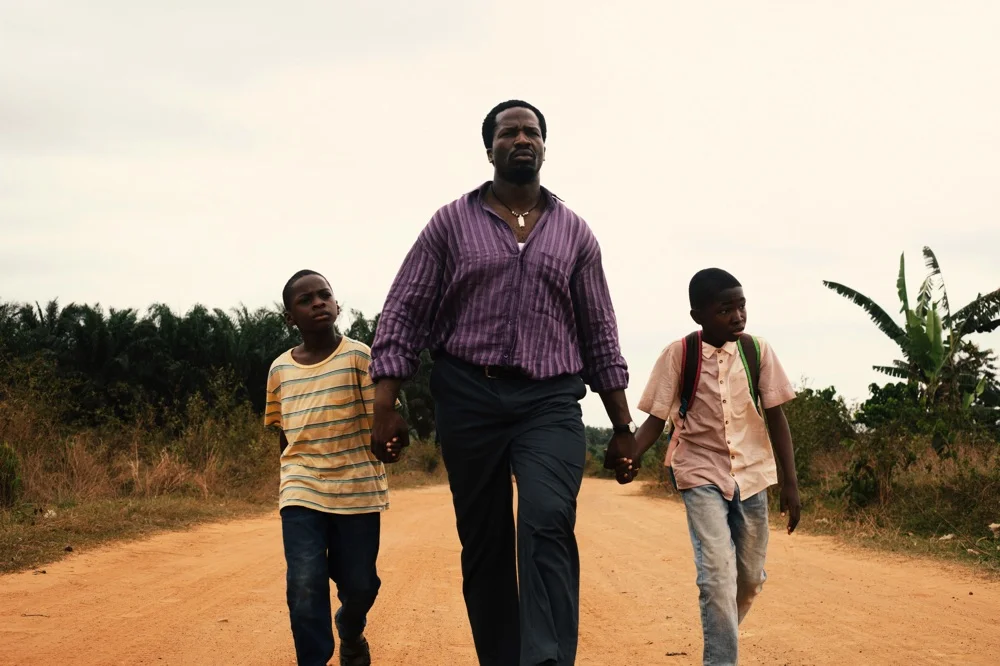
As the trio drift through the city, the boys are also offered fleeting glimpses into their father’s past. Old acquaintances surface, sharing half-formed anecdotes and hints of a life that existed before responsibility and regret set in. Davies favours suggestion over clarity, feelingleaving these encounters to feel incomplete, as if they were memories recalled long after the fact. While this elliptical approach may frustrate viewers looking for narrative certainty, it suits a film concerned with absence and emotional distance.
The most affecting moments occur in the quiet exchanges between father and sons. Folarian’s attempts at guidance are tentative and awkward, shaped by a man unsure how to bridge years of separation. Dìrísù plays him as someone torn between familial duty and an implied political life he cannot fully abandon. The young actors, Godwin Chimerie Egbo and Chibuike Marvellous Egbo, capture the push-and-pull of children craving affection while instinctively guarding themselves against disappointment.
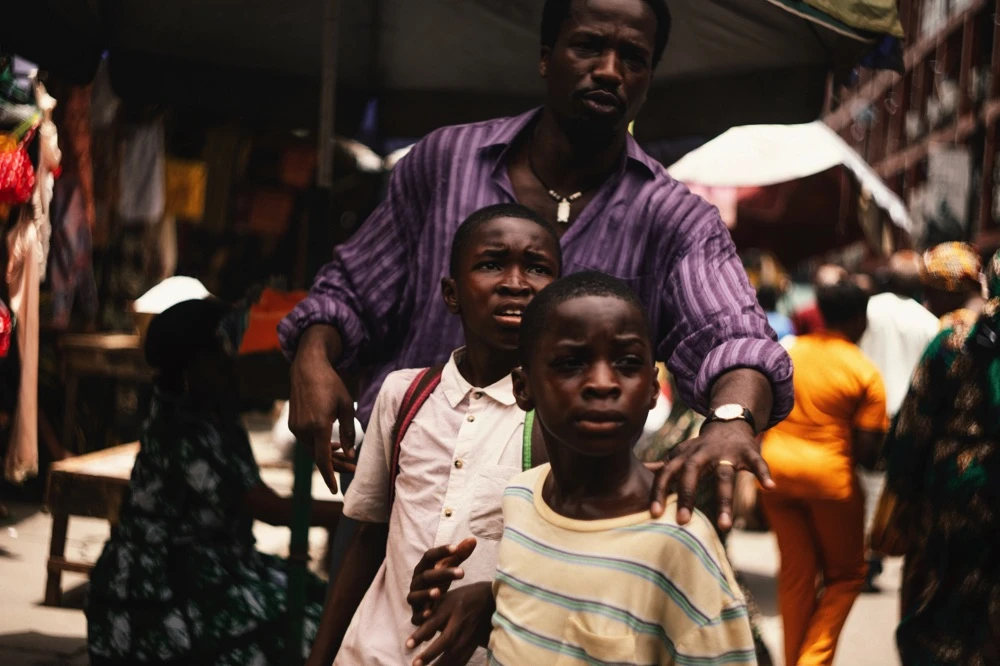
As evening falls and election results loom, the film’s mood darkens. Soldiers flood the streets, a curfew is imposed, and the city tightens with fear. Davies gradually replaces the film’s earlier languor with a mounting sense of unease, as the personal and the political finally collide. When violence erupts, the shock feels earned rather than sensational, grounded in the perspective of children suddenly exposed to the brutal consequences of power.
In its closing passages, My Father’s Shadow draws an implicit parallel between a nation betrayed by broken promises and a family struggling to hold itself together. Davies’ debut may be modest in scale, but it is rich in feeling and intent, a film that understands how private lives are shaped, and sometimes shattered, by forces far beyond their control. It marks the arrival of a filmmaker with a rare sensitivity to memory, history and the fragile bonds between fathers and sons.
Overall: 7/10

Movie Reviewer