Reviewed on 18th February at the 2025 Berlin International Film Festival – Main Competition. 100 Mins.
Genre: Biography, Comedy, Drama, History, Music, Romance
Cast: Ethan Hawke, Margaret Qualley, Andrew Scott, Bobby Cannavale
Director: Richard Linklater
In Irish Cinemas: 28th November 2025
“Blue Moon” begins with a bedraggled man literally singing in the rain, hardly a Gene Kelly figure. This soaked wanderer, drunk and mumbling, staggers through a dim laneway before collapsing beside a rubbish bin, a pitiful punctuation mark on a long downward slide. Only later does the film reveal that this is no anonymous sad sack but Lorenz Hart (Ethan Hawke), the legendary lyricist who, with Richard Rodgers, formed one of the most influential songwriting duos in American musical history. Their collaborations fueled dozens of films and stage productions over two decades, leaving behind indelible standards like “The Lady Is a Tramp” and “My Funny Valentine,” songs that remain instantly recognisable nearly a century on.
Their partnership ended after Hart suffered an alcoholic relapse; that rain-soaked stumble was soon followed by a hospital stay, where he died on Nov. 22, 1943. “Blue Moon” is titled after the duo’s 1934 ballad and directed by Richard Linklater from a script by Robert Kaplow, quickly shifts from the alley to March 31, 1943: opening night of “Oklahoma!” on Broadway. There the film settles, drawing a portrait of Hart in the twilight of his career, stranded in circumstances he never desired.
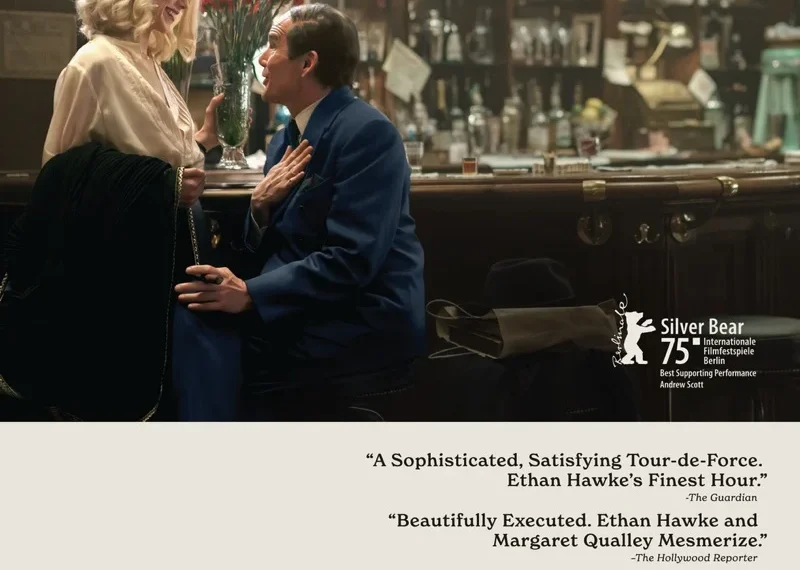
“Oklahoma!” bears Rodgers’s name, but the composer (played by Andrew Scott), exasperated by Hart’s repeated alcohol-fueled disappearances, has taken up a new partnership with Oscar Hammerstein II (Simon Delaney). Watching the performance from a box seat, the wounded Hart feels certain of two things: the show is fluffy nonsense, and it will be a massive triumph. Before the curtain calls finish, he slips out to Sardi’s, the famed West 44th Street haunt where the cast and creators will soon gather to drain martinis and await critics’ verdicts. Hart intends to play graciously despite the betrayal; favours are needed, and without new work, he risks fading into irrelevance.
Because Hart was famously short and Hawke stands at an average height, the filmmakers appear to have exaggerated the scale of Sardi’s and dressed Hawke in an oversized double-breasted suit that playfully dwarfs him, evoking Hart’s fondness for farce. The barstool he mounts downstairs feels like familiar territory, the launchpad for countless binges and tall tales.
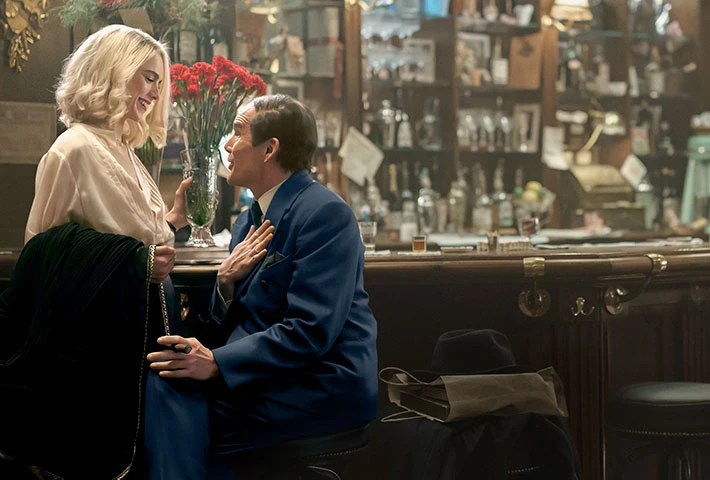
Yet Hart has recently quit drinking in a final attempt to reclaim both career and life. He asks Eddie the bartender (Bobby Cannavale, perfectly cast) for a shot of bourbon to contemplate while sipping water and nursing his bruised pride. Between stories, he launches into complaints about “Oklahoma!,” which he deems “fraudulent on every possible level,” a judgment sharpened by his history with its composer. Some listeners have clearly heard these laments before; others are new to the saga. But the monologue is aimed as much inward as outward.
Nearly every line in “Blue Moon” doubles as exposition, and much of the action plays like delightful easter eggs for theatre aficionados. The approach risks stiffness, yet the film embraces its own theatricality with such commitment that it works. Hart, for example, recognises a quiet martini drinker as E. B. White “Andy,” as he calls him, and before long casually drops a remark that later blossoms into a beloved novel. The moment is unabashedly corny, yet warmly affectionate. As the “Oklahoma!” contingent filters into Sardi’s, luminaries drift through, toss off quips, or are pointedly introduced; familiarity with their legacies enhances the humour, but accuracy matters little. Theatre has always thrived on a bit of mythmaking.
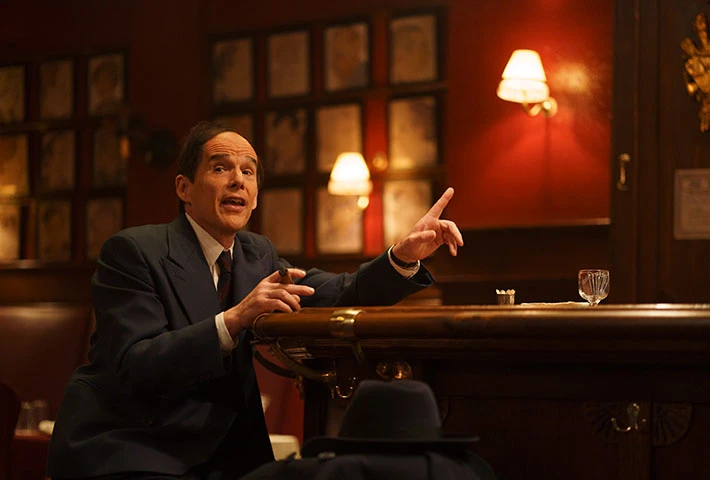
The key to enjoying “Blue Moon”, a film both delightful and streaked with melancholy, is surrendering to its stage-like spirit, especially Hawke’s performance. This is a departure from his usual roles: Hart is self-aware, fragile, and fighting for emotional survival. The film becomes an unbroken stream of Hart’s chatter, witty, cutting, tender, occasionally dishonest — and Hawke delivers every beat with nimble charm beneath a tragic comb-over.
The world around Hart is equal parts sorrowful and sharply funny. He is a wrecked genius armed with mordant humour, a master of verbal play and self-mockery, aching at the seams yet still dazzling. Though he never spoke openly about his sexuality, many believed he was gay; here, he labels himself “ambisexual,” a seeker of beauty in any form. He professes a grand, improbable love for Elizabeth (Margaret Qualley), a luminous Yale student more than young enough to be his daughter. When she finally arrives, her fondness is unmistakable, yet romantic interest is absent. Hart, however, clings to the fantasy as a source of comfort, if not fulfilment.
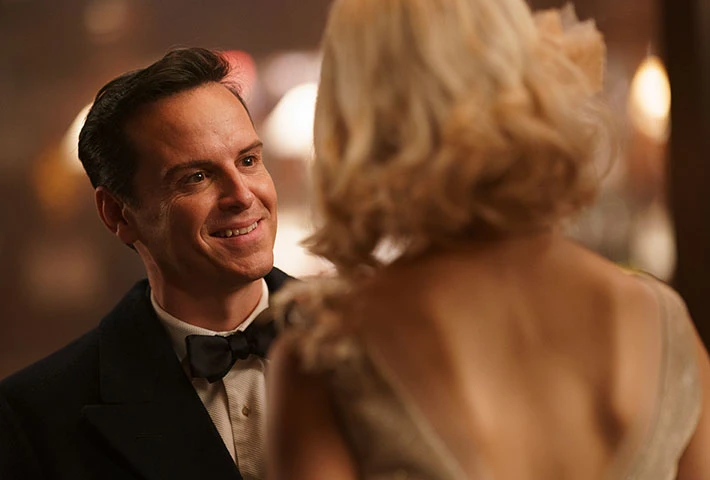
His bond with Rodgers, by contrast, is fraught with devotion and anguish. When Rodgers appears at Sardi’s to greet admirers, Hart’s desperation becomes excruciating. Scott captures a man floating between humility, professionalism, and the thrill of fresh success. The film subtly unpacks the balance of power between the former collaborators who lifted whom, who needed whom, and how their dynamic helped shape American musical theatre. This is one of two Linklater projects this year exploring artists at work; the other, “Nouvelle Vague,” celebrates the youthful bravado of early creative partnerships. “Blue Moon,” seasoned and bruised, considers how those ideals warp with age and resonates more deeply for it.
Late in the film, an extended scene lays bare Hart’s yearning to be needed, and the painful truth that he may care far more for those around him than they do for him. The title song’s lyric — “I heard somebody whisper, ‘Please adore me’” hovers over the moment. The audience already knows Hart’s fate, lending the story an inescapable tragic weight. Yet the curtain falls on a fleeting moment of companionship and gentleness. Whatever storms defined his life, the art he created still yielded flashes of beauty and, through that beauty, a measure of love.
Overall: 7/10

Movie Reviewer