
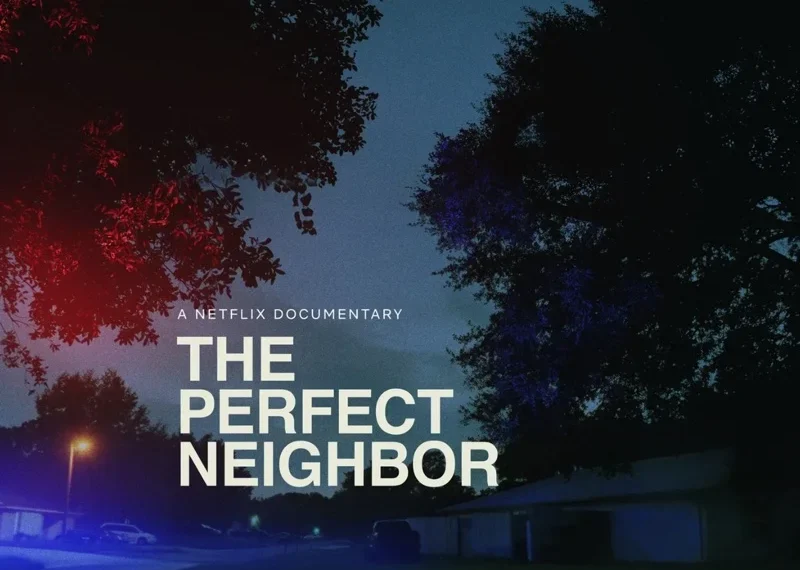
Reviewed on 1st February at the 2025 Sundance Film Festival – U.S. Documentary Competition 96 Mins.
Director: Geeta Gandbhir
Genre: Crime, Documentary, Drama, Thriller
Streaming on Netflix: 17th October 2025
Director Geeta Gandbhir’s searing new documentary The Perfect Neighbour transforms raw police bodycam footage into a tense, revelatory portrait of how everyday biases and systemic failures can converge into catastrophe. Through the chilling reconstruction of a neighbourhood conflict turned deadly, Gandbhir reveals how racialised fears and misplaced authority can transform a simple dispute into a fatal act of violence.
Most of us grew up knowing that one neighbour, the irritable gatekeeper of suburbia, whose front lawn was sacred ground and whose glare sent kids scattering. Usually, their bark was worse than their bite. But sometimes, as Gandbhir’s film disturbingly illustrates, that hostility becomes something far more dangerous.
The “neighbour” in question is Susan Lorincz, a white Florida woman whose mounting frustrations with the children next door escalated into the fatal shooting of Ajike “AJ” Owens, a Black single mother. What might have been a trivial argument over noise and boundaries spiralled into a tragedy that shook the community and reignited conversations about race, privilege, and the perilous misuse of police authority.
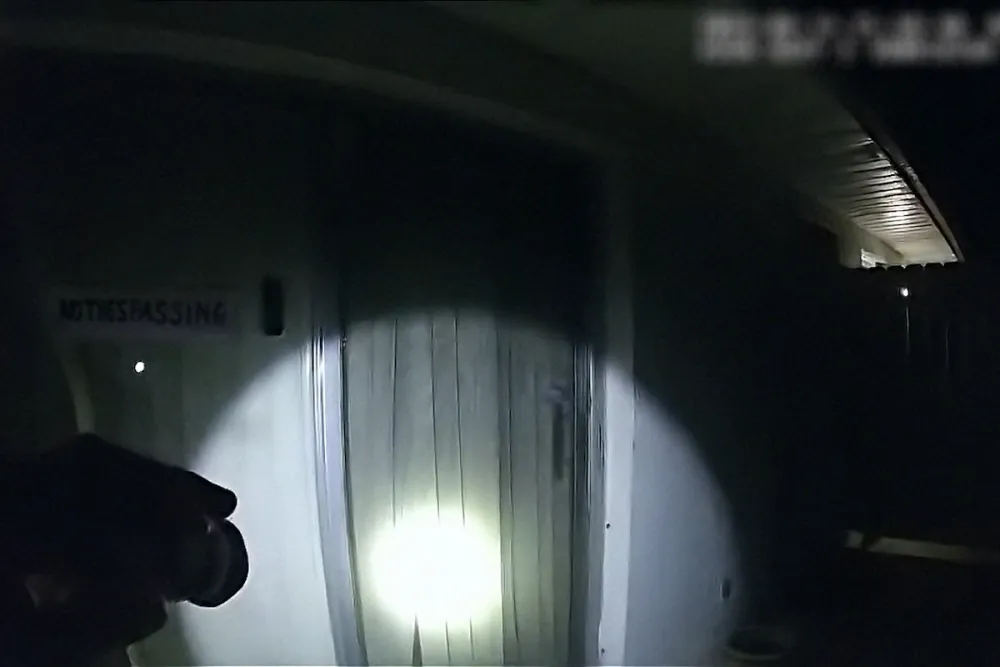
Formally daring and morally incisive, The Perfect Neighbour unfolds almost entirely through official recordings, primarily bodycam and 911 footage, creating an unnervingly immersive experience. Gandbhir resists the temptation to resort to traditional interviews or dramatisations. Instead, she lets the raw material speak for itself, forcing audiences to confront the uncomfortable reality of what law enforcement actually sees and how they interpret it.
The approach makes for a film that feels part End of Watch, part Paranormal Activity, but with the weight of real lives on the line. Viewers are placed in the officers’ shoes as they parse incomplete information, conflicting accounts, and escalating tempers. The result is both gripping and devastating, a procedural thriller made from the bones of reality.
Gandbhir’s documentary doesn’t sensationalise Lorincz’s crime; instead, it dissects the systemic and psychological scaffolding that enabled it. Through repeated 911 calls, we watch Lorincz portray herself as the victim, weaponising the police as a shield and a sword against her Black neighbours. Her actions and the responses they provoke lay bare a disturbing truth: in America, whiteness can still operate as a form of power, even when it manifests through fear and fragility.
The film also confronts the troubling elasticity of “stand your ground” laws, which have repeatedly excused killings rooted in racial prejudice. Gandbhir deftly uses Lorincz’s case to expose how self-defence can be distorted into justification, and how certain lives—namely, those of Black victims are still too easily discounted in the eyes of the law.
Beyond the politics, The Perfect Neighbour taps into something hauntingly familiar: the volatile psychology of suburban coexistence. Neighbours quarrel over noise, parking, fences, but rarely do such disagreements become fatal. Gandbhir’s film suggests that beneath the manicured lawns and homeowners’ associations lies a simmering tension between entitlement, fear, and resentment.
Ironically, it was Lorincz, not Owens, who most frequently called the police, complaining about neighbourhood children, noise, and imagined threats. The footage captures officers arriving to find nothing amiss, their patience tested as Lorincz’s paranoia grows. One neighbour calls her “bossy.” A child labels her a “Karen.” What begins as petty irritation gradually reveals itself as something more sinister: the performance of victimhood as power.
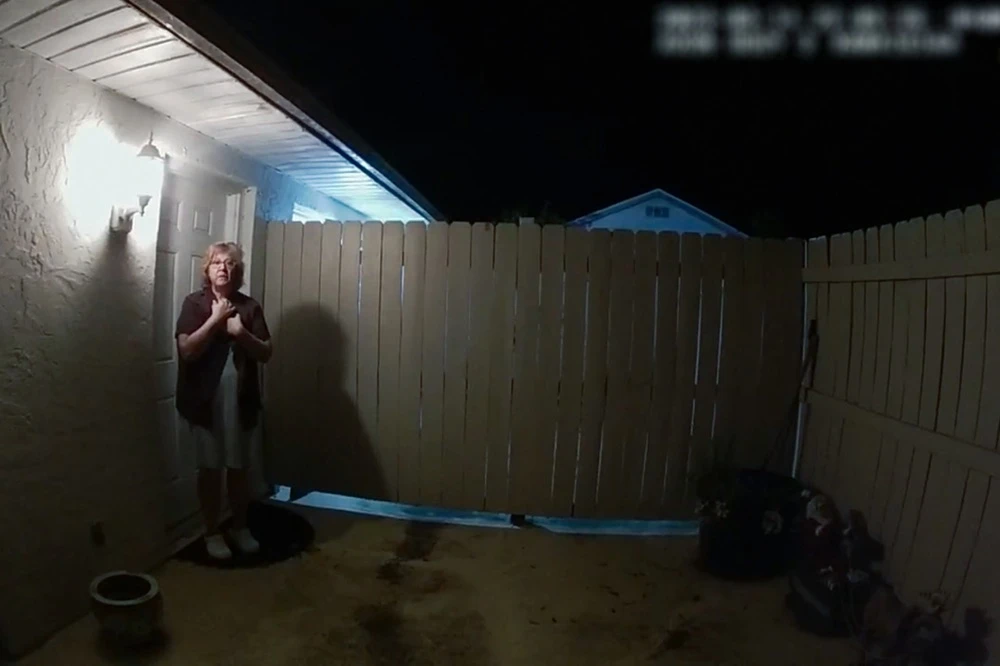
When the inevitable tragedy strikes, it happens off-camera, but Gandbhir reconstructs the scene through audio and corroborating evidence, allowing viewers to feel the horror without exploiting it. By that point, the audience knows enough to sense how many opportunities for de-escalation were missed not by the police, who appear measured and empathetic, but by a woman whose anger and fear became fatal.
The documentary’s closing stretch doubles as a community reckoning. Residents protest not just Owens’ death, but the unequal standards of justice that govern cases like hers. Gandbhir positions the film as both an autopsy and a mirror, inviting viewers to examine their own assumptions about race, danger, and who gets believed when the police arrive.
The Perfect Neighbour is more than a true-crime exposé; it’s a moral study of how prejudice hides in plain sight, reinforced by institutions meant to protect. Gandbhir’s restrained yet powerful storytelling transforms bodycam footage often used to justify or obscure violence into a tool of accountability. What emerges is a chilling portrait of ordinary life warped by fear, privilege, and the illusion of safety.
In the end, the most shocking revelation isn’t the shooting itself, but how easily it could have been prevented. The Perfect Neighbour shows us a system that still allows individuals like Lorincz to manipulate authority and a culture that too often lets them.
Overall: 8/10
Movie Reviewer