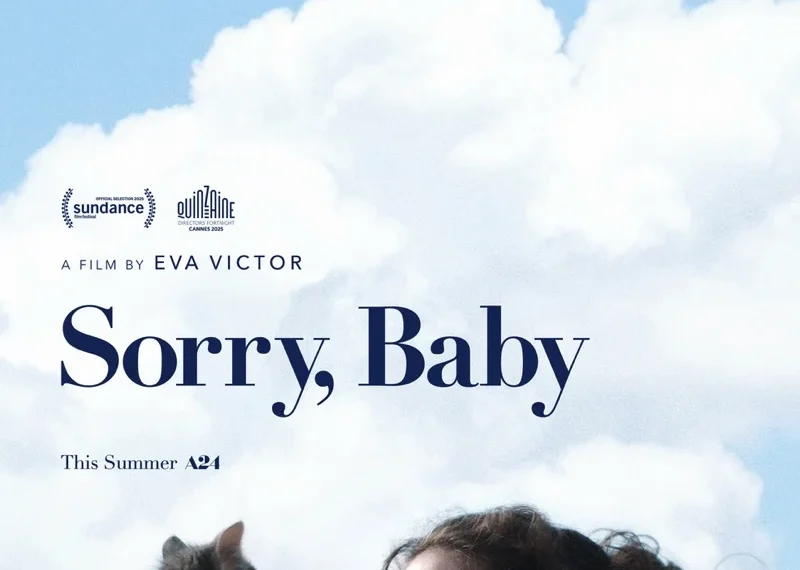
Reviewed on January 30th at the 2025 Sundance Film Festival – U.S. Dramatic Competition. 103 Mins
Cast: Louis Cancelmi, Naomi Ackie, Eva Victor
Genre: Comedy, Drama
Director: Eva Victor
In Irish Cinemas: 22nd August 2025
Agnes (played with quiet, almost surgical precision by Eva Victor) is a gifted young professor whose adulthood is quietly shadowed by a sexual assault she endured as a student. What distinguishes her journey is not a dramatic eruption of disclosure or a melodramatic confrontation, but rather a painstaking, deeply human process of living with what happened — on her terms and in her rhythm.
At a time when many films shaped by the MeToo movement have turned to heightened drama or explicit re-enactments of trauma, Victor’s self-starring directorial debut, Sorry, Baby, makes a strikingly different choice. Instead of chasing spectacle, the film withholds its darkest moments, refusing to let them be consumed as shock or voyeurism. What takes shape instead is a work that feels radically humane — restrained, often unexpectedly funny, and attentive to the quiet contradictions of healing. Victor, who first cultivated an audience through her sharp, self-aware comedy sketches on Twitter in the late 2010s, here reveals a cinematic voice both unsentimental and unusually tender, alive to irony but never cynical.
The film unfolds in three distinct chapters, each signposted by a title card. The opening act, “The Year with the Baby,” begins almost where one might expect the story to end. Agnes, now a respected academic, welcomes her old roommate Lydie (played with understated warmth by Naomi Ackie) to stay in her home. Unlike their peers, who are advancing through the familiar rites of adulthood — mortgages, weddings, children, promotions — Agnes seems caught in a curious state of suspension. She still occupies her former student house, works in the same cramped office once shared with her tutor, and meanders through a tentative relationship with her sweet, slightly adrift neighbour (Lucas Hedges, radiating quiet sincerity). This arrested development could easily be framed as a failure or pathology, but Victor refuses that interpretation. Instead, it becomes the stage on which Agnes’s lived experience is revealed: not a failure to “move on,” but a different way of carrying the past.
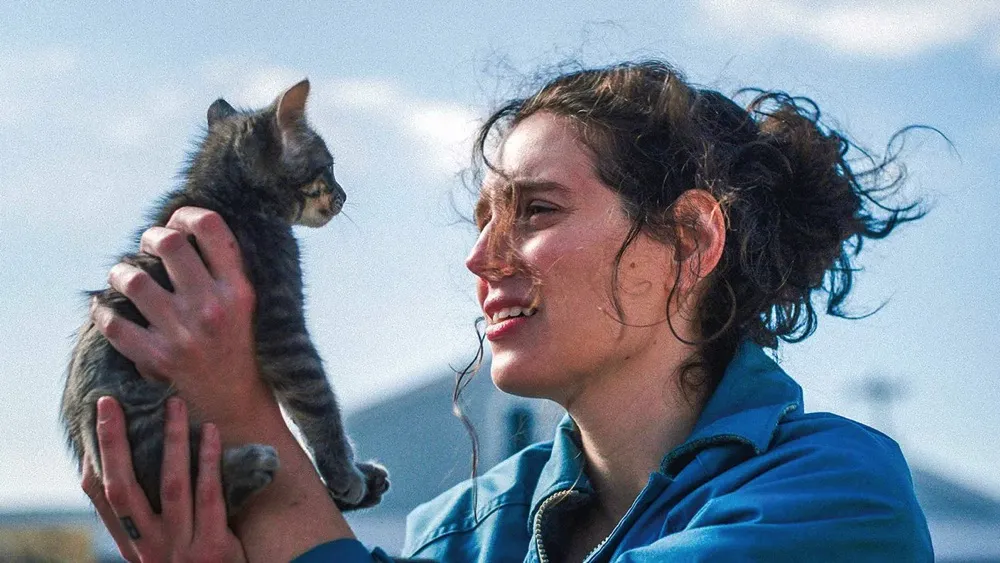
The film then rewinds in its second act, “The Year with the Bad Thing,” to Agnes’s student years. Here she is brilliant, eager, and vulnerable, admired by Professor Decker (Louis Cancelmi), who gradually erodes the line between mentorship and exploitation until it collapses entirely. The assault itself remains unseen. What we witness instead is the void left behind: the silence that isolates her, the bewildering churn of guilt and disbelief, the struggle to name what has occurred. Victor’s structure is deliberately fragmented, weaving between timelines like an emotional collage. In these leaps, Agnes’s life emerges not as a linear story of wound and recovery but as a patchwork of grief, resilience, and ordinary living — bolstered by Lydie’s unwavering friendship and, in one of the film’s most tender motifs, the simple companionship of a cat.
But Sorry, Baby is not content to sit neatly in the category of “trauma film.” Victor resists the easy narrative arc where pain is endured, processed, and transcended. Instead, the film insists that the “Bad Thing” is formative but not definitive: it shapes Agnes without swallowing her whole. The nonlinear storytelling reinforces this perspective. Alongside moments of reflection on legal failures and cultural scripts about womanhood, we see Agnes navigating everyday questions about work, friendship, and her decision to remain child-free. One of the film’s most memorable scenes finds her reaching a sudden, piercing insight about the nature of trauma — while absentmindedly eating a sandwich. It’s a wry, ordinary moment that captures something profound: that life-altering realisations arrive not in operatic fashion, but in the middle of our most banal routines.
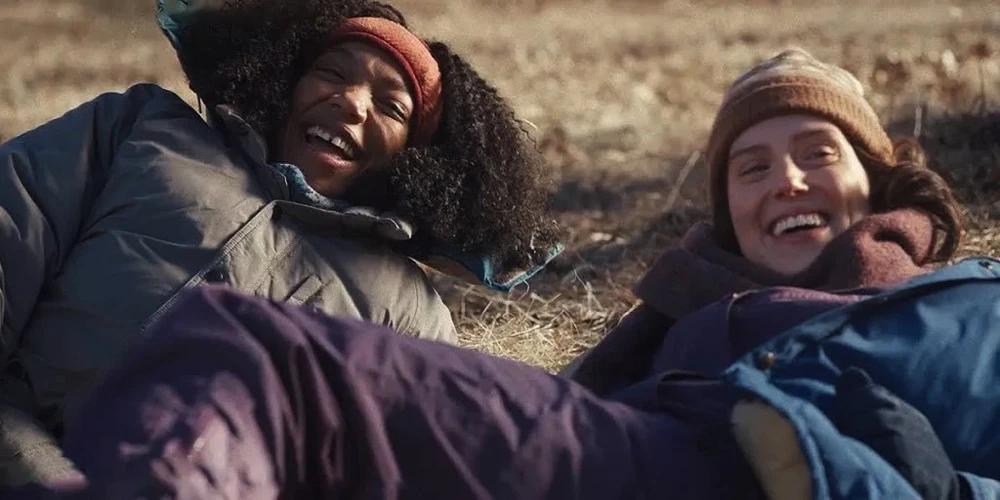
This tonal balance — moving fluidly between grief, humour, and ordinariness — places Sorry, Baby in conversation with works like Manchester by the Sea. Yet Victor’s sensibility is distinctly her own: ironic without cruelty, compassionate without sentimentality, sceptical without despair. By reimagining the so-called “trauma plot” into something richer and less prescriptive, the film refuses the idea that healing must look like closure. Instead, it makes space for contradiction: the coexistence of hurt and laughter, detachment and intimacy, anger and acceptance.
The result is not a grim memorial to pain but something rarer — a film that feels both generous and necessary in the post-MeToo landscape. Less a bleak black comedy than a nimble interweaving of wit and weight, Sorry, Baby is at once disarmingly funny, deeply humane, and marked by an unusual grace. It is a debut that not only tells a story of survival but also redefines how such stories can be told.
Overall: 7.5/10

Movie Reviewer